Why the Developmental Window Matters - and Why It's Not the Whole Story
Puppies and kittens have a sensitive period for socialization - roughly the first 3 to 14 weeks of life for dogs and 2 to 7 weeks for cats - during which positive exposure to people, animals, sounds, and environments shapes long-term comfort and adaptability. Pets who didn't receive that exposure often develop fear, reactivity, or avoidance behaviors that persist into adulthood.
This doesn't mean adult socialization is futile. The brain retains some capacity for new learning throughout life, and many pets - especially dogs from shelters or rescue situations - can make meaningful behavioral progress with the right approach. What changes is the pace and the method: late socialization requires more repetition, more patience, and a lower-pressure environment than early developmental work. Setting realistic expectations from the start protects both you and your pet from frustration.
For context on your pet's broader developmental health journey, see The First Year With a New Pet.
Aggression Needs Professional Help
If your pet shows aggressive responses - lunging, snapping, biting - to people, other animals, or everyday stimuli, do not attempt to manage this with exposure alone. Consult a certified applied animal behaviorist or a veterinarian with behavioral expertise before continuing. Pushing past aggression thresholds without guidance can worsen the problem and create safety risks.
What You'll Need Before You Begin
Successful late socialization isn't just about technique - preparation matters. Before starting any structured exposure work, make sure you have the right tools and support in place.
What you will need
High-value treats
Used to create positive associations with new stimuli during controlled exposure sessions.
Secure harness or leash
Keeps your pet safe and gives you control during outdoor or public exposure exercises.
Treat pouch or bag
Allows quick, hands-free treat delivery so you can reward calm behavior immediately.
Calming mat or designated safe space
Provides a retreat where the pet can decompress after any socialization session.
Certified professional trainer or behaviorist contact
Provides expert guidance when fear responses are severe or progress stalls.
If your pet's reactions are severe or you're unsure how to read their stress signals, reaching out to a certified professional trainer (look for credentials like CPDT-KA) or a veterinary behaviorist early will save time and prevent setbacks.
Step-by-Step: Socializing an Adult Pet
The following steps apply broadly to dogs and cats, though the specific triggers and environments will differ by species. Work through each stage methodically - skipping ahead typically leads to regression.
Flooding Is Counterproductive
"Flooding" - forcing a pet to remain in a scary situation until it stops reacting - is widely considered harmful and can intensify fear rather than reduce it. Always introduce new stimuli at a distance and intensity your pet can tolerate without shutting down or panicking.
Rule Out Medical Contributors
Before starting any behavioral program, schedule a veterinary exam. Pain, thyroid dysfunction, neurological issues, and other medical conditions can amplify fearfulness or reactivity. A vet visit ensures you're working with behavior, not masking an underlying health problem.
Build a Safe, Predictable Home Base
An under-socialized pet needs to feel secure at home before you can make progress in the wider world. Establish a quiet retreat - a crate, a pen, or a dedicated room - where your pet can disengage from stimuli at will. See our guide to setting up a comfortable space for practical setup advice.
Pair this with a consistent daily schedule. Predictability lowers baseline stress and makes it easier for pets to engage with new experiences. Our article on building a daily routine covers how to structure feeding, rest, and activity windows effectively.
Identify Your Pet's Fear Triggers and Thresholds
Make a list of the stimuli your pet reacts to - strangers, traffic noise, other dogs, grooming tools, etc. For each trigger, identify the threshold distance or intensity at which your pet first notices but doesn't yet panic. This sub-threshold point is where productive learning happens.
Common stress signals to watch for include: yawning, lip licking, whale eye (showing the whites of the eyes), tucked tail, flattened ears, freezing, or attempting to flee. Recognizing these early prevents you from inadvertently pushing past tolerance.
Begin Controlled, Sub-Threshold Exposure
Start exposures at a distance or intensity well below your pet's reaction threshold. Present the trigger briefly, immediately pair it with a high-value treat, then move away. The sequence - trigger appears, good thing happens, trigger disappears - is the foundation of counter-conditioning.
Keep initial sessions short: two to five minutes is enough for many fearful pets. End each session before your pet shows signs of stress, not after.
Gradually Increase Exposure Over Time
Only increase the intensity or proximity of a trigger once your pet is consistently calm and taking treats at the current level. Progress is measured in weeks or months - not days. Keep a log of each session to track genuine improvement versus wishful thinking.
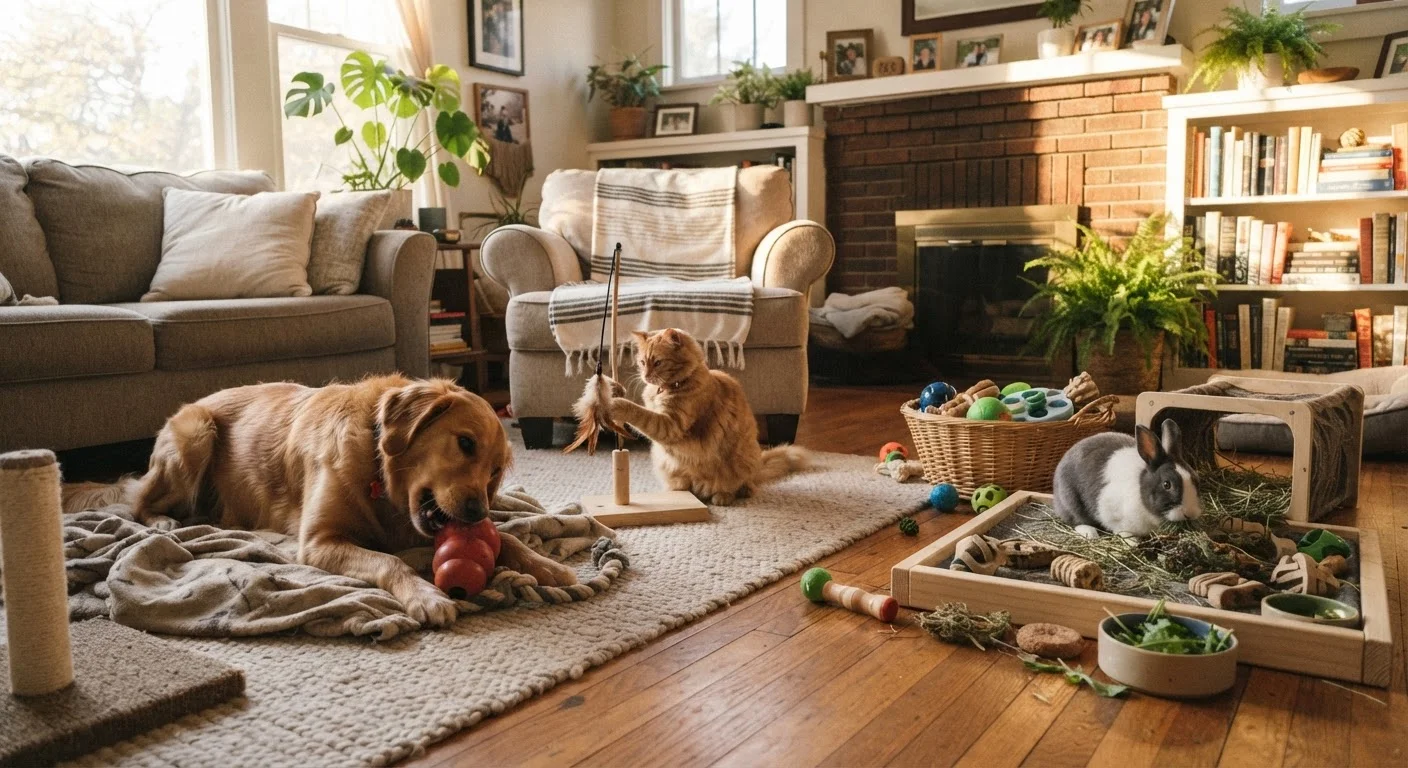
[tip_callout]Enrichment activities that build confidence - puzzle feeders, scent work, gentle handling practice - support socialization indirectly by expanding your pet's comfort zone at home. Our enrichment ideas guide offers age-appropriate strategies.
Generalize Skills Across New Environments
A pet that's calm around strangers in your neighborhood may still react in a pet store or veterinary waiting room. Socialization gains don't always transfer automatically, so practice in varied, controlled settings. Carry treats on every outing and reward calm, offered behavior consistently.
When to Expect Progress - and When to Ask for Help
Most under-socialized pets show some improvement within four to eight weeks of consistent, low-pressure work. However, pets with significant fear histories or those who were isolated for extended periods may need six months or more before reliably calm behavior generalizes across environments.
If progress has stalled completely after six to eight weeks, or if your pet's fear is interfering with basic care like grooming, vet visits, or leash walks, consult a veterinary behaviorist. In some cases, short-term anti-anxiety medication prescribed by a vet can reduce baseline reactivity enough that behavioral training becomes possible - this is a medical decision your vet is best positioned to evaluate.
Once your pet is reliably comfortable at home with household visitors and basic outings, you may be ready to think about the next social challenge: introducing a second pet into the household.
This article is for general educational purposes and is not a substitute for professional veterinary or behavioral advice. If your pet shows signs of fear-based aggression or significant distress, please consult a licensed veterinarian or certified animal behaviorist.