
Why Predictability Matters More Than You Think
Animals experience time differently than humans, but they are acutely sensitive to patterns. Dogs, cats, rabbits, and many other companion animals regulate their stress responses partly through environmental predictability. When feeding, exercise, and rest happen at consistent intervals, a pet's nervous system learns that the world is manageable - and that reduces anxiety-driven behaviors like excessive barking, destructive chewing, or inappropriate elimination.
Veterinary behaviorists consistently note that many common behavioral complaints - separation anxiety, aggression, hyperactivity - have a partial root in chaotic or unpredictable household schedules. Structure is not a luxury for pets; it functions more like a basic need, right alongside nutrition and shelter. For owners juggling work, family, and other obligations, the good news is that consistency doesn't require clockwork precision. A window of 30 to 45 minutes around a scheduled activity is generally sufficient for most healthy adult pets.
“Predictability is one of the most powerful tools we have for reducing fear and anxiety in companion animals. When a pet knows what to expect and when, their baseline stress level drops - and that makes training, health, and the human-animal bond all easier to sustain.”
— American Veterinary Society of Animal Behavior, Professional organization for veterinary behavior specialists
The Four Pillars of a Reliable Daily Pet Routine
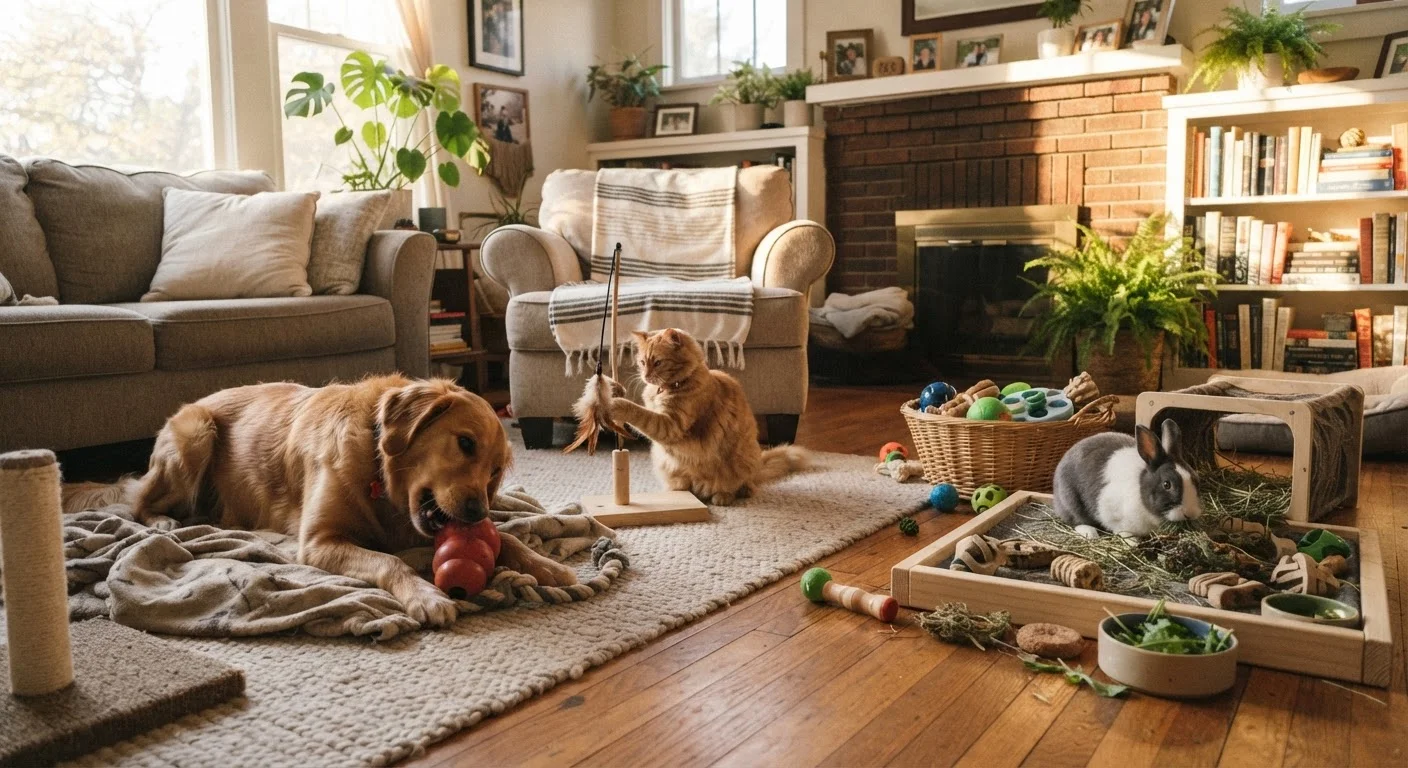
A well-built daily routine anchors four core categories: feeding, physical activity, mental enrichment, and rest. Each pillar reinforces the others, and neglecting one tends to create pressure in the remaining areas.
Feed at the same times every day rather than free-feeding or grazing.
Scheduled meals anchor the entire daily routine and give owners a daily opportunity to observe appetite changes - one of the earliest indicators of illness. Free-feeding makes it harder to monitor intake and can contribute to weight management challenges in some pets.
Schedule physical exercise at consistent times rather than fitting it in opportunistically.
Pets - particularly dogs - build physical and psychological anticipation around exercise windows. When walks or play sessions happen at predictable times, excess energy is metabolized on schedule, reducing restlessness and destructive behavior.
Designate a consistent, quiet rest area your pet can rely on.
Pets need a safe retreat that is predictably available and undisturbed. A reliable resting space reduces overstimulation and gives anxious animals a consistent way to self-regulate. This is especially important in busy or multi-person households.
Weave mental enrichment into the daily structure, not just physical activity.
Physical exercise alone does not fully satisfy the cognitive needs of most companion animals. Mental stimulation - through puzzle feeders, training sessions, scent work, or varied environment exploration - reduces boredom-driven behaviors and supports emotional wellbeing.
Monitor water intake as part of the daily routine.
Hydration needs vary by species, diet, size, and ambient temperature. Incorporating a quick check of water bowls into the morning feeding ritual ensures your pet always has access to fresh water and helps you notice changes that may indicate a health concern.
For a broader look at monthly tasks that support these daily habits, see our monthly pet care checklist.
Building a Routine That Fits Your Real Life
The most effective pet routine is one you can actually sustain. A schedule that demands a 6 a.m. walk seven days a week may work for some owners and collapse for others. Start by mapping your existing daily anchors - wake time, work schedule, mealtimes - and slot your pet's needs around those fixed points rather than starting from scratch.
Start Small and Build Gradually
If your current schedule is highly irregular, don't try to overhaul everything in one day. Pick one anchor - such as a consistent morning feeding time - and hold it steady for a week before adding another fixed point. Gradual structure is far more sustainable than an ambitious routine that collapses by day three.
Remember that puppies, kittens, and senior pets have different energy curves and biological needs than healthy adults. Younger animals typically require shorter, more frequent activity and feeding intervals, while older pets may need adjusted exercise intensity. Enrichment strategies should also evolve with age - our article on enrichment across different life stages covers this in more detail.
When your schedule changes - seasonal shifts, travel, job changes - introduce adjustments gradually over several days rather than all at once. This is especially important for pets with a history of anxiety.
Grooming and home health checks can also be folded into a daily or weekly routine to help catch problems early. See our guide on building a home care routine for a practical framework.
This article is for general informational purposes only and does not constitute veterinary advice. Consult a licensed veterinarian for guidance specific to your pet's health, age, and behavioral needs.