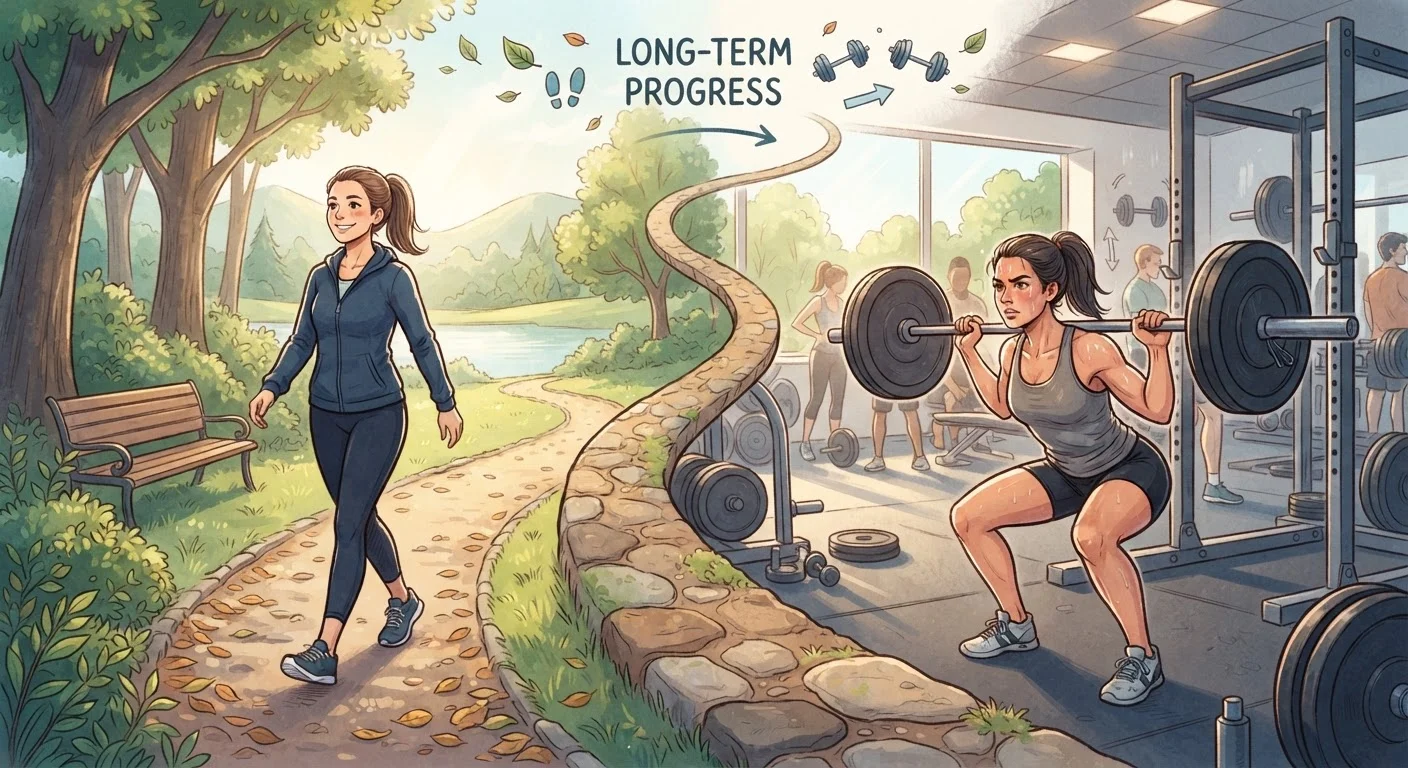

What Each Type of Exercise Actually Does
The confusion between cardio and strength training often comes down to a false premise: that they compete with each other. In reality, they train different physiological systems - and understanding that distinction is the most useful starting point.
Cardiovascular training - sometimes called aerobic exercise - includes activities like running, cycling, swimming, and brisk walking. It challenges your heart and lungs to deliver oxygen more efficiently to working muscles. Over time, regular aerobic exercise can lower resting heart rate, improve blood pressure, reduce the risk of type 2 diabetes, and support mental health through changes in brain chemistry.
Strength training, also called resistance training, involves working muscles against an opposing force - whether that's free weights, machines, resistance bands, or your own bodyweight. Its primary adaptations happen in muscle tissue and bone: muscles grow stronger and denser, connective tissue becomes more resilient, and resting metabolism gets a modest boost because muscle is more metabolically active than fat.
Neither replaces the other. Cardio does not meaningfully build muscle mass, and strength training alone does not provide the cardiovascular conditioning the heart needs. This is precisely why most exercise science research - and public health guidelines - points toward combining them.
What the Guidelines Say
The U.S. Department of Health and Human Services Physical Activity Guidelines for Americans recommend that most adults aim for at least 150 minutes of moderate-intensity aerobic activity per week (or 75 minutes of vigorous-intensity activity), plus muscle-strengthening activities targeting all major muscle groups on two or more days per week.
These aren't arbitrary numbers. They reflect a substantial body of research on the doses of activity associated with meaningful reductions in chronic disease risk, premature mortality, and functional decline. Importantly, the guidelines treat both types as complementary, not interchangeable.
| Criterion | Cardiovascular Training | Strength Training |
|---|---|---|
| Primary system trained | Heart, lungs, circulatory system | Muscles, bones, connective tissue |
| Key health benefits | Heart health, endurance, mood | Muscle mass, bone density, metabolism |
| Calorie burn during exercise | Typically higher per session | Lower per session, higher at rest |
| Equipment needed | Often none (walking, jogging) | Weights, bands, or bodyweight |
| Recommended weekly frequency | 150+ min moderate or 75 min vigorous | 2+ days targeting all major muscle groups |
| Age-related importance | Consistent across all adult ages | Increases in importance after 40 |
It's also worth noting that doing some of both matters more than doing either perfectly. Research consistently shows that even modest amounts of physical activity - below the full recommended targets - provide real health benefits compared to being sedentary. Consistency over intensity is a theme that holds across almost every exercise context.
How to Structure Both in Your Week
The practical challenge most people face isn't understanding that both types matter - it's fitting them into a realistic weekly schedule. There are several approaches that work well depending on available time.
- Alternating days: Dedicate specific days to cardio and others to strength training. This avoids fatigue overlap and keeps each session focused.
- Combined sessions: Some people prefer shorter, mixed workouts - for example, a 20-minute strength circuit followed by 20 minutes of cardio. This can work well when time is limited, though performance in each may be slightly reduced.
- Prioritise by goal: If you have a specific goal - such as running a 5K or building strength after a period of inactivity - weight one type more heavily in the short term, but keep the other present at a maintenance level.
If you are newer to exercise or returning after a break, starting with two days of each per week is a manageable baseline. Building a weekly exercise routine from the ground up offers a practical framework for doing exactly that.
150 min
Weekly aerobic activity recommended for adults
Per the U.S. Department of Health and Human Services Physical Activity Guidelines for Americans, moderate-intensity aerobic activity is the weekly target for most adults.
2+ days
Strength sessions recommended per week
The same federal guidelines call for muscle-strengthening activities on two or more days per week, covering all major muscle groups.
~3-8%
Resting metabolic rate increase from strength training
Research published in exercise physiology literature suggests consistent resistance training can modestly increase resting metabolic rate as muscle mass grows.
One area worth addressing directly: the concern that cardio will undermine muscle-building, sometimes called the "interference effect." Research does suggest that very high volumes of endurance training alongside heavy strength work can blunt some muscle gains - but at the moderate activity levels most everyday people exercise at, this effect is minimal and not a reason to avoid cardio. Many common fitness fears don't hold up to scrutiny.
If you are over 40, the calculus around strength training deserves extra attention. Strength training after 40 involves some real physiological shifts - particularly around recovery - but the case for including it only strengthens with age.
This article is for general informational purposes only and is not a substitute for personalised medical or fitness advice. Consult a qualified healthcare provider before beginning a new exercise program, particularly if you have an existing health condition.