What Homeowners Insurance Actually Covers
Homeowners insurance is a multi-peril policy - meaning it bundles several types of protection into a single contract. A standard policy (often called an HO-3 in insurance terminology) typically includes coverage for the physical structure of your home, your personal belongings, liability if someone is injured on your property, and additional living expenses if a covered event forces you out of your home temporarily.
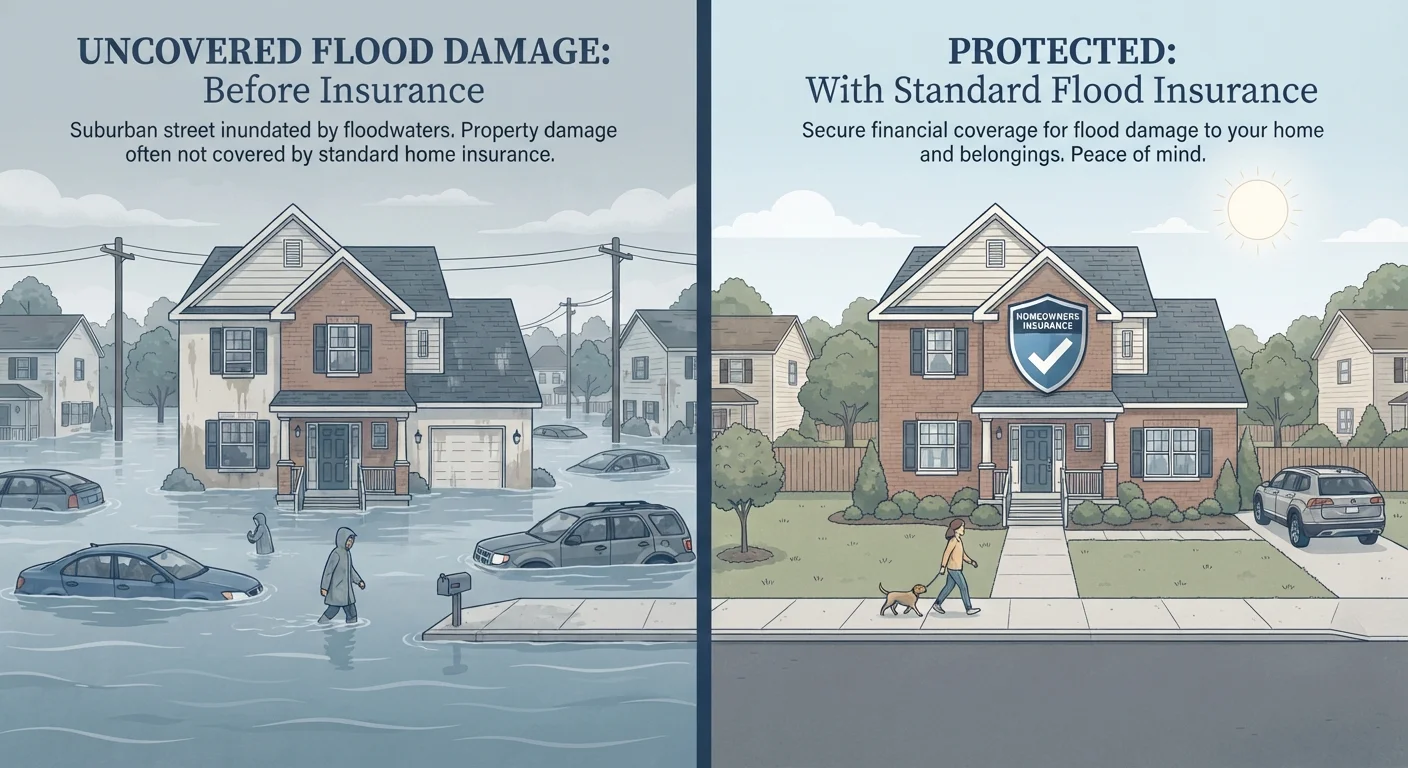
Covered perils usually include fire, lightning, windstorm, hail, vandalism, and theft. Some forms of water damage - such as a burst pipe inside your home - are generally covered. What homeowners insurance specifically excludes, however, is flood damage caused by water entering from outside: overflowing rivers, heavy rainfall accumulation, storm surge, and similar events.
This exclusion is not a loophole or an oversight. It is an intentional, industry-standard boundary written into virtually every standard homeowners policy in the United States. If your basement fills with water because a nearby creek overflowed, your homeowners policy will not pay for it. Understanding this distinction is essential. See our common insurance myths guide for other coverage assumptions that can leave policyholders underprotected.
| Criterion | Homeowners Insurance | Flood Insurance |
|---|---|---|
| Primary purpose | Broad property & liability protection | Protection from flood-related water damage |
| Flood damage covered? | No - explicitly excluded | Yes - core purpose of the policy |
| Typical provider | Private insurance companies | NFIP (via private agents) or private insurers |
| Structure coverage | Included in standard policy | Available; must be elected |
| Contents coverage | Included in standard policy | Separate election required |
| Waiting period | Usually effective quickly after binding | Typically 30 days (NFIP) |
| Mortgage requirement | Required by nearly all lenders | Required in high-risk flood zones (federally backed loans) |
| Liability protection | Yes - included | No - not included |
How Flood Insurance Works Differently
Flood insurance is a standalone policy purchased specifically to cover losses caused by flooding. In the United States, it is most commonly available through the National Flood Insurance Program (NFIP), which is managed by the Federal Emergency Management Agency (FEMA) and sold through participating private insurers. Private flood insurance is also available outside the NFIP and may offer different coverage limits or terms.
An important structural feature of flood policies is that building coverage and contents coverage are treated separately. If you want both your home's structure and your furniture, appliances, and belongings protected, you generally need to elect both types of coverage explicitly - they do not automatically come bundled together the way they do in a standard homeowners policy.
~25%
Flood claims from low-to-moderate risk zones
According to FEMA, roughly one in four flood insurance claims comes from properties outside high-risk flood zones, underscoring that flood risk is not limited to designated flood plains.
$3.75B+
Average annual NFIP claims paid
The NFIP has historically paid billions of dollars in claims each year, reflecting the widespread and costly nature of flood events across the United States.
Another critical point: flood insurance policies typically carry a 30-day waiting period from the date of purchase before coverage becomes active. This means you cannot purchase a flood policy the day before a hurricane is forecast and expect to be covered. Planning ahead is essential.
For a broader look at where flood and homeowners insurance fit within the full landscape of property protection, our overview of major insurance categories provides helpful context. You can also explore how insurance coverage actually works in plain language.
This article is for general informational purposes only and does not constitute insurance, financial, or legal advice. Coverage terms, eligibility, and requirements vary by insurer, policy, and location. Always read your actual policy documents carefully and consult a licensed insurance agent or adviser regarding your specific situation.