What Each Filter Actually Does
Your vehicle has two separate air filtration systems, and most drivers don't realize both exist until something goes wrong. Understanding what each one does makes it far easier to know when each needs attention.
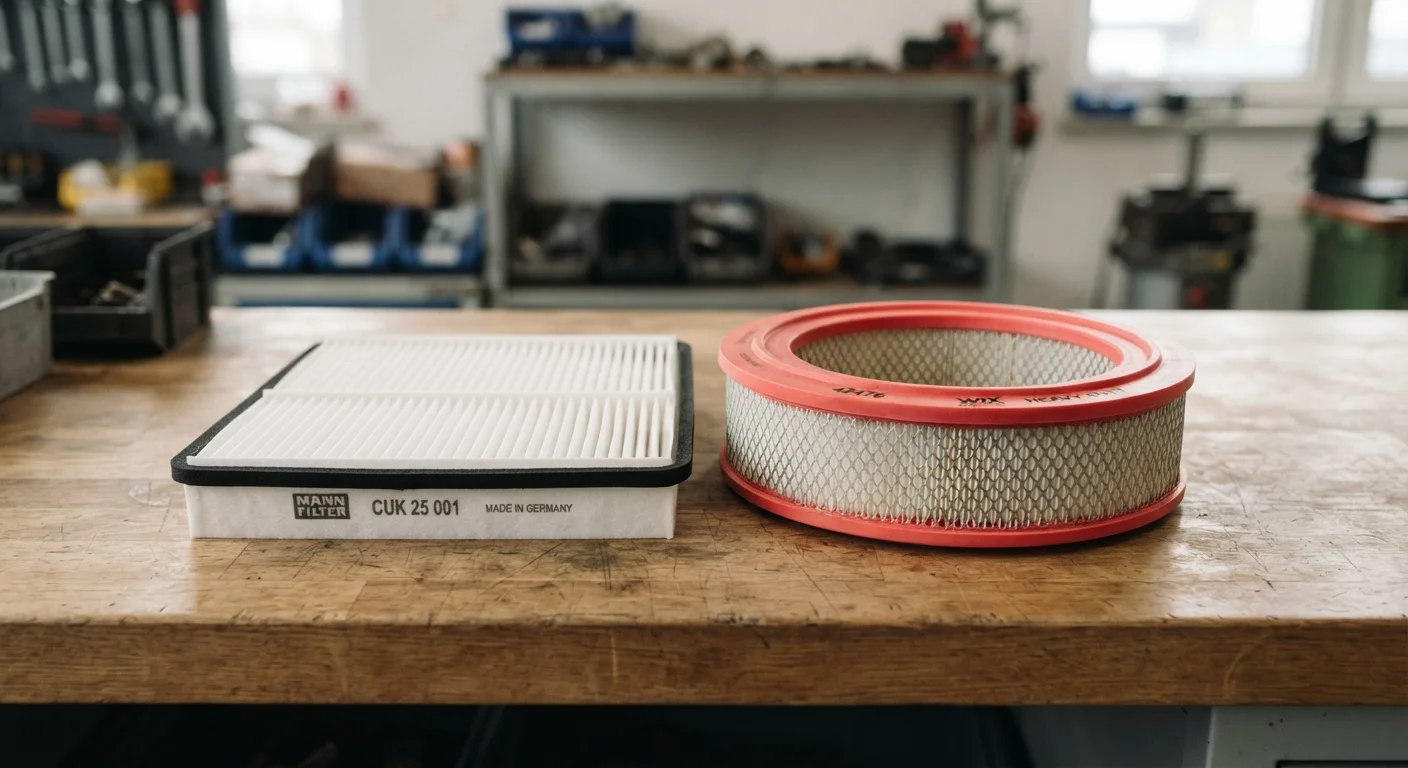
The engine air filter sits between the outside air intake and your engine's intake manifold. Its job is to trap dirt, dust, insects, and debris before they can enter the engine's combustion chambers. An engine running without adequate filtration would suffer accelerated wear on cylinders, pistons, and valves - components that are expensive to repair. The filter is typically a pleated paper or synthetic element housed in a plastic airbox under the hood.
The cabin air filter is part of your car's heating, ventilation, and air conditioning (HVAC) system. It cleans the air that flows through your dashboard vents before it reaches you and your passengers. Most cabin filters trap dust, pollen, mold spores, and larger particulates. Some higher-grade filters also capture certain exhaust gases and fine particles. It's usually located behind the glove box, under the dashboard, or under the hood near the base of the windshield - depending on the vehicle.
These two systems don't interact. A clean engine filter tells you nothing about the cabin filter's condition, and vice versa.
Side-by-Side: How They Compare
Despite performing separate functions, the two filters share a few surface similarities - both are made of pleated filtration media, both need periodic replacement, and both are accessible without specialized tools on most vehicles. Beyond that, the differences are significant.
| Criterion | Cabin Air Filter | Engine Air Filter |
|---|---|---|
| Primary function | Filters air entering the passenger cabin | Filters air entering the engine |
| Location | Behind glove box or under dashboard | Under the hood in an airbox |
| What it protects | Passengers' health and HVAC system | Engine internals and combustion |
| Typical replacement interval | 15,000-25,000 miles | 15,000-30,000 miles |
| Key warning signs | Weak airflow, musty smell, more interior dust | Poor fuel economy, sluggish acceleration |
| DIY accessibility | Usually straightforward, no tools needed | Straightforward on most vehicles |
One practical note: because these filters are located in different areas of the vehicle and replaced at overlapping but not identical intervals, it's easy for one to be serviced while the other is overlooked. When you take your vehicle in for routine maintenance, it's worth asking your mechanic to inspect both. Common maintenance myths sometimes lead drivers to assume one filter check covers the other - it doesn't.
Warning Signs Each Filter Sends
Filters don't fail suddenly - they degrade gradually, and both give recognizable signals when they're past due.
Engine Air Filter Warning Signs
- Reduced fuel economy - a restricted filter forces the engine to work harder to pull in air, burning more fuel in the process
- Sluggish acceleration - the engine isn't getting the air-fuel ratio it needs for efficient combustion
- Unusual engine sounds - coughing or rough idling can sometimes be traced to airflow restriction
- Check engine light - in some cases, a severely clogged filter triggers sensor readings that trigger the warning light
Cabin Air Filter Warning Signs
- Weak airflow from vents - even on high fan settings, air output feels reduced
- Musty or stale odor - trapped moisture and debris in the filter can produce unpleasant smells
- Increased dust on interior surfaces - a saturated filter stops catching fine particles effectively
- Allergy symptoms worsening inside the car - pollen and dust passing through an exhausted filter can aggravate sensitivities
Cabin Filters Vary by Grade
Standard cabin filters capture larger particles like pollen and road dust. Activated carbon or HEPA-style cabin filters also target finer particulates and some odors. The type your vehicle uses matters when shopping for a replacement - check your owner's manual for the specification. Upgrading filter grade is possible on some vehicles, but confirm compatibility first.
For a broader look at how these tasks fit into your year-round vehicle care routine, see our seasonal maintenance calendar.
Replacement Intervals and What Affects Them
General guidance from most vehicle manufacturers puts engine air filter replacement between 15,000 and 30,000 miles, and cabin air filter replacement between 15,000 and 25,000 miles. Your owner's manual will list the intervals specific to your make and model - that document takes priority over any general rule.
Several factors push those intervals shorter:
- Dusty or unpaved road driving - a gravel road generates far more airborne debris than city streets
- High-traffic urban commuting - stop-and-go traffic means more time idling in exhaust-heavy air
- Seasonal pollen surges - cabin filters in high-pollen regions may need more frequent attention in spring
- Wildfire smoke or construction zones - heavy particulate events can clog a cabin filter noticeably faster
Skipping either filter for multiple cycles compounds the problem. Deferred maintenance has a cumulative cost - what starts as a $20 filter replacement can turn into a diagnostic visit when performance degrades enough to trigger other symptoms.
Visually inspecting both filters is something many drivers can do themselves. A filter that looks uniformly gray or brown, or that releases visible dust when tapped, is past its service life regardless of mileage. When in doubt, a qualified mechanic can assess and advise.