
Why Shopping Habits Matter More Than Individual Purchases
Most people focus on whether a single purchase was worth it. But the bigger lever is the pattern - the set of defaults, routines, and mental shortcuts that determine how you shop across dozens of decisions every month. A bad habit repeated 50 times a year does far more financial damage than one regrettable splurge.
Think of shopping habits as a system with inputs and outputs. The inputs are your intentions, information, and emotional state at the moment of purchase. The outputs are the items you own, the money you've spent, and whether those purchases are actually serving your life. Improving the system - rather than white-knuckling individual decisions - is what creates lasting change.
This is similar to the principle behind building any healthy habit from scratch: small, consistent shifts in behavior compound into meaningful results over time. The same logic applies to how you spend.
~$314
Average monthly impulse spending per U.S. consumer
According to a Slickdeals survey, American consumers reported spending an average of roughly $314 per month on unplanned purchases.
57%
Shoppers who regret impulse purchases
A CreditCards.com survey found that a majority of impulse buyers reported regretting at least some of their unplanned purchases.
3-5x
Cost-per-use advantage of durable goods
Consumer research consistently shows that higher-quality items with longer lifespans often deliver a lower cost-per-use than cheaper alternatives replaced more frequently.
Set a Spending Framework Before You Shop
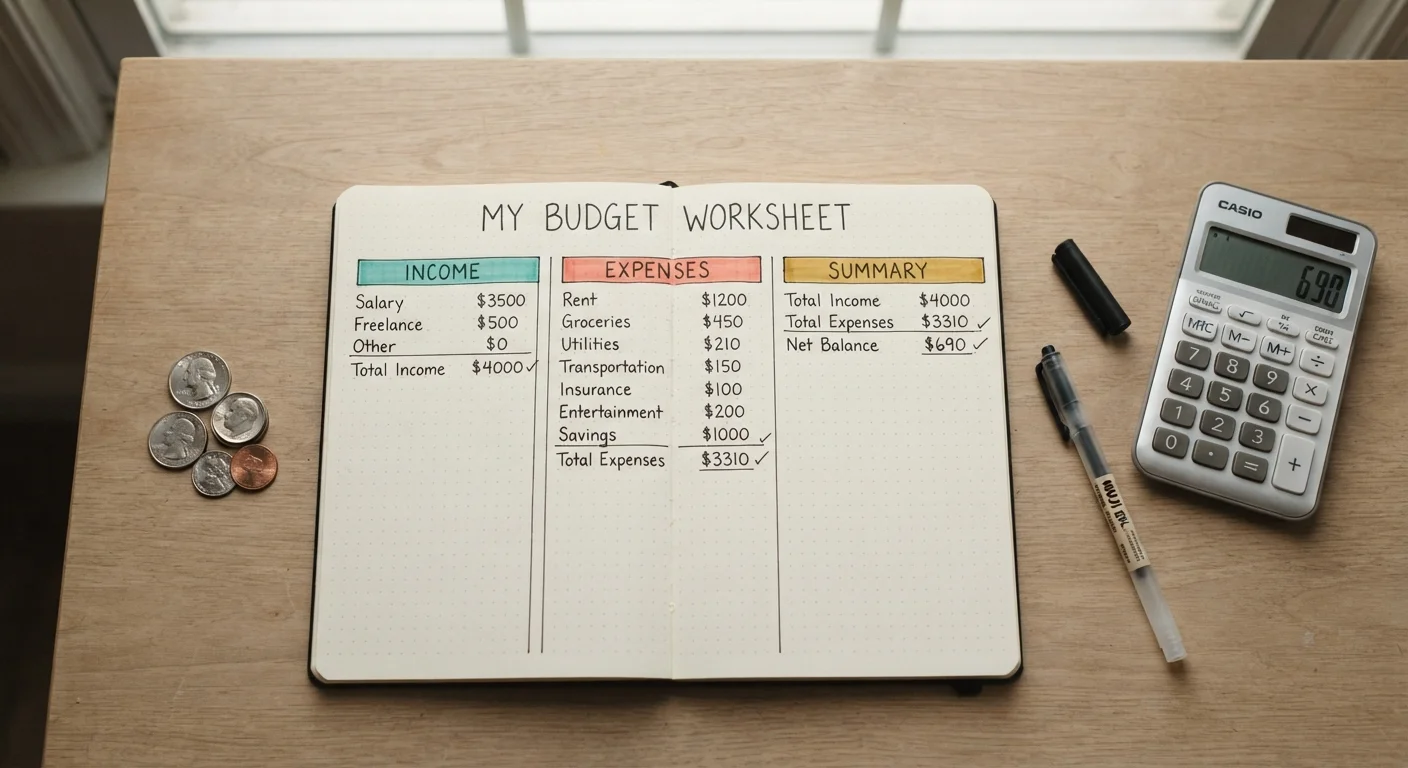
Before researching any product, you need a clear picture of what you can spend and what you're spending it on. That means having a working budget - not a perfect spreadsheet, but a functional picture of income versus outflows. If you don't have one, the complete guide to building a personal budget is a practical starting point.
A useful shopping framework has three components:
- Discretionary spending limits: Know your monthly ceiling for non-essential purchases before the month starts, not after you've already exceeded it.
- Category priorities: Decide in advance which categories matter most - clothing, home, electronics, groceries - so spending reflects values, not impulse.
- A "want vs. need" filter: Before adding anything to a cart, ask whether it solves an active problem or is responding to a moment of desire.
If you're weighing different budgeting structures, the 50/30/20 rule offers a widely-used starting point, though it works better for some income levels than others.
Start With One Category, Not Your Entire Budget
Trying to overhaul every spending category at once is one of the fastest routes to abandoning the effort entirely. Pick the one area where you consistently overspend or feel the most buyer's remorse - clothing, food delivery, subscriptions - and apply your framework there first. Once the habit is established in one area, it transfers more naturally to others.
Research That Actually Moves the Needle
Not all pre-purchase research is equally useful. Scrolling through star ratings for 20 minutes often produces no better decision than a 5-minute targeted search. The goal is to answer three specific questions efficiently:
- Is this the right category of product for my need? (e.g., Do I need a full appliance or a simpler tool?)
- What quality signals should I look for? (Materials, construction, warranty terms, country of manufacture where relevant.)
- What do long-term owners say - not first-week reviewers? Look for reviews dated 6-12 months post-purchase. These surface durability and real-world performance, not unboxing enthusiasm.
For clothing and fashion specifically, understanding the true cost of different sourcing approaches matters. The trade-offs between secondhand and fast fashion extend well beyond price tag - quality, longevity, and effort all factor in.
Search for the product name plus the word 'review after 6 months' or '1 year later' to surface long-term owner experiences rather than initial impressions.
First-week reviews capture excitement, not durability. Long-term reviews reveal whether a product holds up to real use - which is what actually matters for cost-per-use calculations.
Before finalizing any significant purchase, check whether your credit card offers extended warranty or purchase protection - it may already be part of your card's benefits.
Many consumers pay for protection plans they've already effectively bought, simply because they didn't check existing card benefits first.
Timing, Impulse Control, and the Purchase Pause
Retail environments - physical and digital - are engineered to compress decision-making. Countdown timers, low-stock warnings, and one-click purchasing all push toward immediacy. The simplest countermeasure is also one of the most effective: wait 24-48 hours before completing any non-essential purchase.
This "purchase pause" forces the item out of emotional context. Many purchases that felt urgent on Tuesday feel unnecessary by Thursday. If the item still makes sense after the pause - and fits your framework - proceed with confidence.
Watchlist Features Can Work Against You
Saving items to wishlists or browser tabs can extend consideration time, but it also keeps products in your attention and can create a false sense of obligation to eventually buy. If an item has been on your list for more than 30 days and you haven't purchased it, that's a strong signal it wasn't actually a need. Clear wishlists regularly as a deliberate reset.
Tracking where impulse purchases tend to happen also helps. Do you overspend on weekends? After stressful workdays? On specific platforms? Recognizing your own patterns creates natural friction before a habit takes hold. For a deeper look at how different tracking methods shape behavior, see cash envelopes vs. digital spending trackers.
Post-Purchase Evaluation: Close the Loop
Most people skip this step entirely, which means they repeat the same mistakes indefinitely. A brief post-purchase check-in - even just a mental note - turns every purchase into a data point that sharpens future decisions.
Ask yourself:
- Did this item solve the problem I bought it for?
- Do I use it as often as I expected?
- Would I buy it again at the same price? At a higher price?
- Did the research process serve me well, or did I miss something I should have checked?
If you consistently find unused items accumulating, that's a signal your "want vs. need" filter needs recalibration - not that you need more willpower. Building a more curated approach to what you own, like applying capsule wardrobe principles, can make the gap between what you buy and what you actually use much more visible.
Your Consumer Rights as a Shopping Tool
Consumer protections aren't just a safety net - they're part of the value calculation when you make any purchase. Knowing your rights before you buy changes how you evaluate options.
Key rights to understand:
- Return policies
- Retailers set their own return windows, so check before purchasing - especially for final-sale items or online orders where fit or quality can't be assessed in advance.
- Implied warranty of merchantability
- In the U.S., most goods carry an implied warranty that they'll perform their basic stated function, regardless of whether an explicit warranty is offered.
- Credit card purchase protections
- Many credit cards extend return windows or offer dispute resolution for defective goods - a practical tool often left unused.
- FTC cooling-off rule
- For certain door-to-door or off-premises sales over $25, federal law gives you a three-day window to cancel without penalty.
Understanding the financial side of smart shopping - including how purchasing decisions connect to savings goals - is covered in the Saving & Debt hub, which addresses how spending patterns affect long-term financial stability.
This article is for general informational and educational purposes only and does not constitute financial, legal, or professional advice. Consult a licensed professional for guidance specific to your situation.