Why Preparation Matters Before Day One
Most fitness routines fail before they begin - not because of willpower, but because of missing groundwork. Skipping the preparation phase often means starting with an injury risk you didn't know about, gear that doesn't fit, or a schedule that collapses by week two. This checklist is designed to close those gaps before your first workout ever happens.
Whether you're picking up exercise for the first time or restarting after a long break, the steps below apply. Work through them at your own pace - this isn't a one-day sprint. Think of it as a structured pre-launch routine that sets you up to actually stick with movement long-term. Once you've worked through this list, building a weekly exercise routine from the ground up becomes a much smoother process.
See a Provider Before You Begin
If you have a heart condition, diabetes, high blood pressure, joint or bone issues, or have been largely inactive for an extended period, consult your healthcare provider before starting any new exercise program. This is general information, not personalized medical advice, and your provider is the right person to assess your individual readiness and any restrictions that apply to you.
Tools and Resources You'll Want on Hand
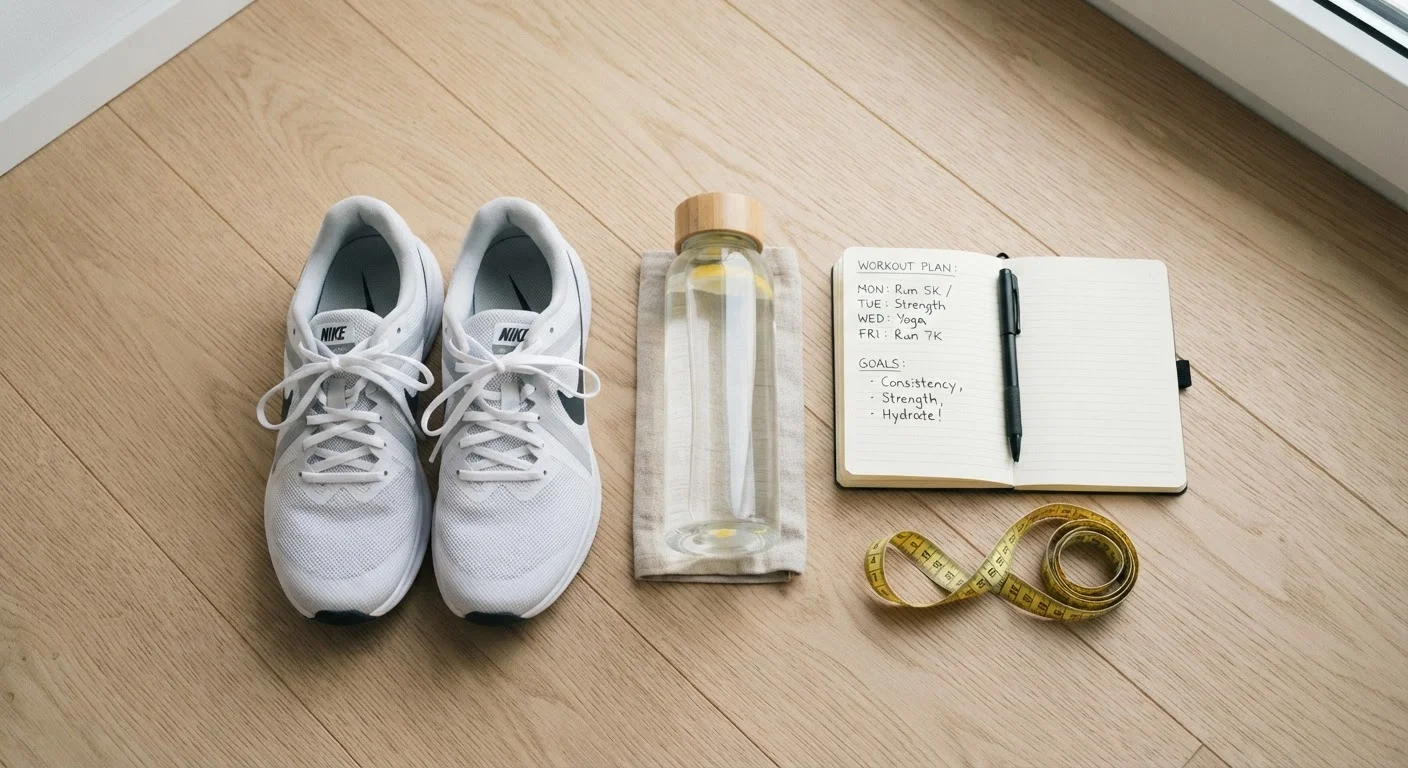
You don't need expensive equipment to start exercising, but a few practical items make the process smoother and safer. Gather what you can before working through the checklist below.
Athletic Footwear
Proper shoes matched to your activity reduce injury risk and improve comfort from the first session.
Water Bottle
Keeping hydration accessible during workouts supports performance and recovery.
Notebook or Notes App
Use it to record your goals, track workouts, and note how you feel after sessions.
Fitness Tracking App or Wearable
Optional tools that can help monitor activity levels, heart rate, and progress over time.
Exercise Mat
Useful for floor-based exercises, stretching, and bodyweight movements done at home.
Resistance Bands
Versatile, low-cost tools for strength training that don't require a gym or heavy equipment.
The Full Preparation Checklist
Work through each category in order. Items marked must are non-negotiable for safe, effective starting. Should items are strongly recommended, and nice-to-have items support long-term success when you're ready for them.
Health & Medical Baseline
Goal Setting
Gear & Environment
Scheduling & Accountability
Recovery & Nutrition Basics
If you're also looking to build broader healthy habits around your new routine, the practical introduction to building healthy habits from scratch is a useful companion guide.
Making It Stick: A Few Final Considerations
Completing this checklist doesn't guarantee results - no guide can - but it significantly improves the conditions for success. The biggest predictor of long-term consistency is how well your routine fits your actual life. A 20-minute walk you do three times a week beats an ambitious gym plan that lasts 10 days.
Pay particular attention to your sleep and recovery items. Many people underestimate how much rest affects performance, mood, and injury risk. If you want to evaluate how your existing daily habits are supporting your health before layering on a fitness routine, the daily wellness audit is a good place to start.
Don't Skip the Rest Days
Starting a new routine with too much intensity too quickly is one of the most common causes of early burnout and overuse injuries. Your muscles, joints, and connective tissue need time to adapt to new demands. Building in rest is not optional - it's how your body actually gets stronger and more resilient.
Finally, consider when in your day you'll exercise. Research on morning versus evening movement shows that the best time is simply the time you'll actually show up for consistently. See our morning routine vs. evening routine comparison for more on how timing can affect your habits.
This article is for general informational and educational purposes only and is not a substitute for professional medical advice. Always consult a qualified healthcare provider before beginning a new exercise program, particularly if you have any existing health conditions, injuries, or concerns about your fitness level.