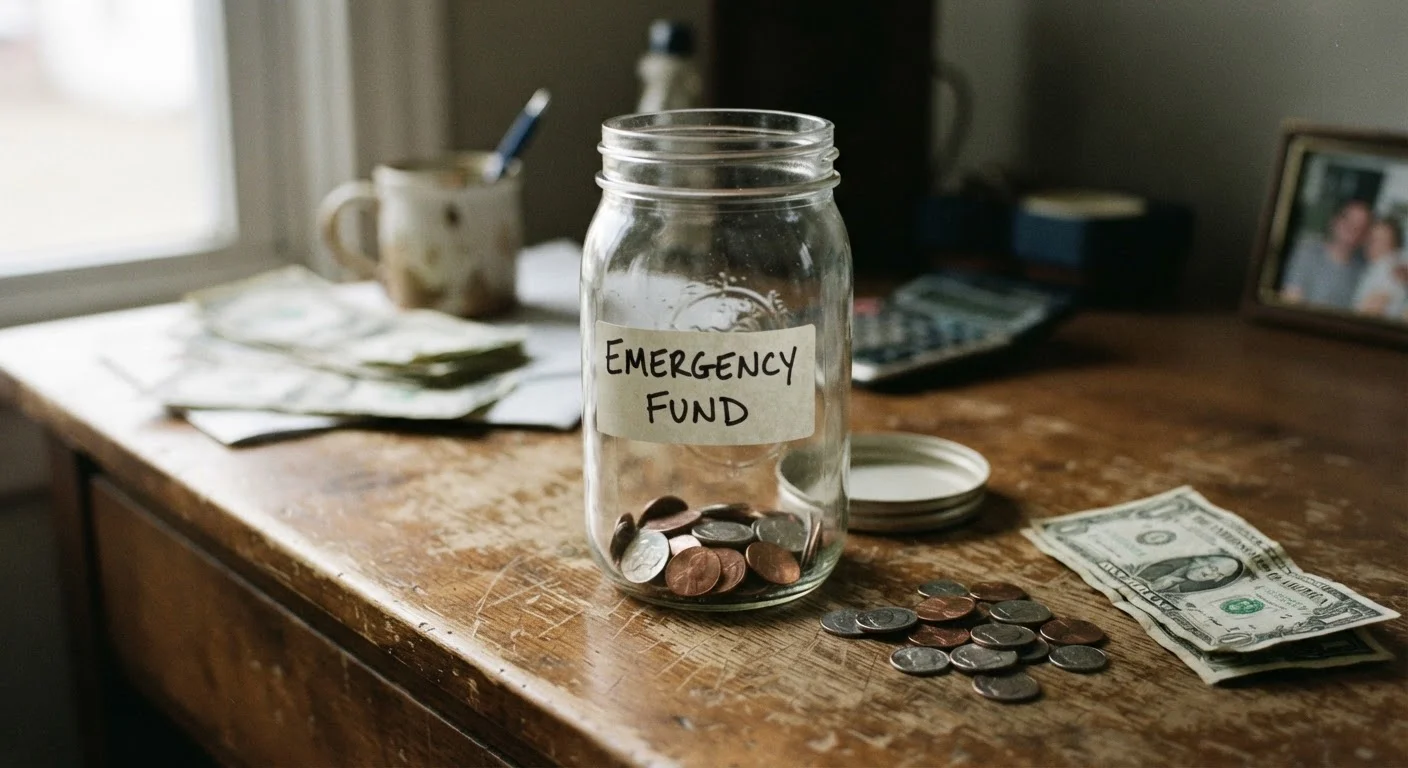

Why Most Budgets Crack Under Pressure
The average household budget fails not because the math is wrong, but because it assumes every month will look the same. A flat tire, a surprise medical copay, or a broken appliance doesn't fit neatly into a fixed spending plan - and when it arrives, the whole structure can collapse. As this breakdown of why budgets fail in month two explains, most people don't abandon their plan on day one; they drift away when reality stops matching their projections.
Building a budget that survives real life means designing for disruption from the start - not as an afterthought.
This Is General Financial Education
The strategies discussed here are general budgeting principles, not personalized financial advice. Every household's situation - income variability, debt obligations, and savings capacity - is different. Consider consulting a licensed financial professional before making significant changes to your financial plan.
The Core Practices That Create Budget Resilience
Resilient budgets share a set of structural habits. These aren't complex strategies - they're deliberate choices about where your money is allocated before a crisis arrives.
Add an explicit 'unexpected expenses' line to every monthly budget
Most budgets account for fixed and variable costs but leave no room for the unpredictable. A dedicated line item - even a modest one - creates a legitimate home for surprise costs so they don't force cuts elsewhere. Without it, any disruption is automatically an overage.
Audit and pre-categorize all annual and irregular expenses
Costs like car registration, insurance renewals, and school fees arrive on a schedule - yet most monthly budgets ignore them entirely. Mapping these out at the start of the year and dividing them into monthly amounts turns 'surprises' into planned line items. Spending categories that most budgets overlook offers a practical checklist.
Set up a separate savings account for your emergency fund
Keeping emergency savings in the same account as daily spending makes it too easy to dip into for non-emergencies. Physical separation - even at the same bank - reduces the temptation and gives the fund a clearer psychological boundary. Automating transfers right after payday removes the decision entirely.
Review and reset your budget at the start of each month
A static budget becomes inaccurate fast - income shifts, bills change, and spending patterns evolve. A monthly reset lets you carry forward lessons, adjust for upcoming known costs, and catch drift before it becomes a pattern. This is also the moment to replenish any buffer that was used the prior month.
Apply the 'one month ahead' principle when cash flow allows
Living one month behind your income - meaning this month's expenses are paid from last month's earnings - eliminates timing pressure entirely. When an unexpected cost arrives, you're never racing to cover it before the next paycheck. This approach requires an upfront savings effort but dramatically reduces financial stress over time.
Quick Actions to Strengthen Your Budget Today
You don't need to overhaul your entire financial plan to start building resilience. A few targeted adjustments can meaningfully reduce your vulnerability to unexpected costs.
For a deeper look at the irregular costs most people forget to plan for - from car registration to annual subscriptions - see spending categories that most budgets overlook.
Emergency Fund vs. Budget Buffer: Know the Difference
These two tools are often confused, but they serve distinct roles. A budget buffer is a small monthly cushion - typically $50 to $200 - built directly into your spending plan to absorb minor, routine surprises like a higher-than-expected utility bill or a one-time household item. It stays within your monthly cash flow.
An emergency fund is a separate savings reserve - commonly recommended at three to six months of essential expenses - held outside your checking account and reserved for genuine crises: job loss, major medical bills, or a significant home repair. If your emergency fund keeps getting depleted before it grows, the problem may be structural rather than behavioral.
~40%
Americans who could not cover a $400 emergency with cash
According to Federal Reserve survey data on household economic well-being, a significant share of U.S. adults report they would need to borrow or sell something to cover a $400 unexpected expense.
3-6 months
Recommended emergency fund coverage in essential expenses
Financial planning guidelines widely suggest holding three to six months of core living expenses in a liquid, accessible savings account as a baseline safety net.
A third tool worth adding is a sinking fund - a dedicated savings bucket for predictable future costs like annual insurance premiums, holiday gifts, or a car maintenance fund. Sinking funds prevent you from treating known future expenses as emergencies. For a comprehensive look at putting all these pieces together, the complete guide to personal budgeting covers the full framework from income to adjustment.
“A budget is telling your money where to go instead of wondering where it went.”
— Dave Ramsey, Personal finance author and radio host
This article is for general informational and educational purposes only and does not constitute personalized financial advice. Consult a qualified financial professional for guidance specific to your situation.