
What Debt Consolidation Actually Means
Debt consolidation is the process of combining multiple debt obligations - often credit cards, medical bills, or personal loans - into a single new loan or repayment plan. The goal is typically to simplify management (one payment instead of several) and, where possible, reduce the overall interest rate (APR) applied to the outstanding balance.
It's worth being clear about what consolidation is not: it does not erase debt. The principal - the original amount borrowed - remains and must be repaid. What changes is the structure and, potentially, the cost of repayment. For a plain-language refresher on terms like APR, amortization, and compound interest, see our financial terms reference guide.
Common Consolidation Methods
There is no single consolidation product - several approaches exist, each with distinct trade-offs:
- Personal consolidation loan: An unsecured loan used to pay off existing debts. Fixed interest rate and term mean predictable monthly payments.
- Balance transfer credit card: Moves high-interest card balances to a card with a low or 0% introductory APR. Effective only if the balance is paid off before the promotional period ends and transfer fees are factored in.
- Home equity loan or HELOC: Borrows against home equity, often at lower rates. Critically, this converts unsecured debt into debt secured by your home - a significant risk escalation.
- Debt management plan (DMP): Arranged through a nonprofit credit counseling agency. The agency negotiates reduced rates with creditors and you make one monthly payment to the agency. No new loan is taken out.
Secured Debt Carries Greater Risk
Using a home equity loan or line of credit to consolidate unsecured debt (like credit cards) converts that debt into a loan backed by your home. If you cannot make payments, you risk foreclosure. This trade-off deserves serious consideration and professional guidance before proceeding.
Each method has qualifying requirements. Lenders typically evaluate credit score, income stability, and debt-to-income ratio before approval.
When Consolidation Makes Financial Sense
Consolidation tends to be most beneficial when several conditions align:
- You qualify for a lower rate. If the new loan's APR is meaningfully below the weighted average of your current debts, you save on interest over the life of the loan.
- Your income is stable. A fixed monthly payment requires predictable cash flow. Consolidation into a term loan with a set payoff date rewards consistency.
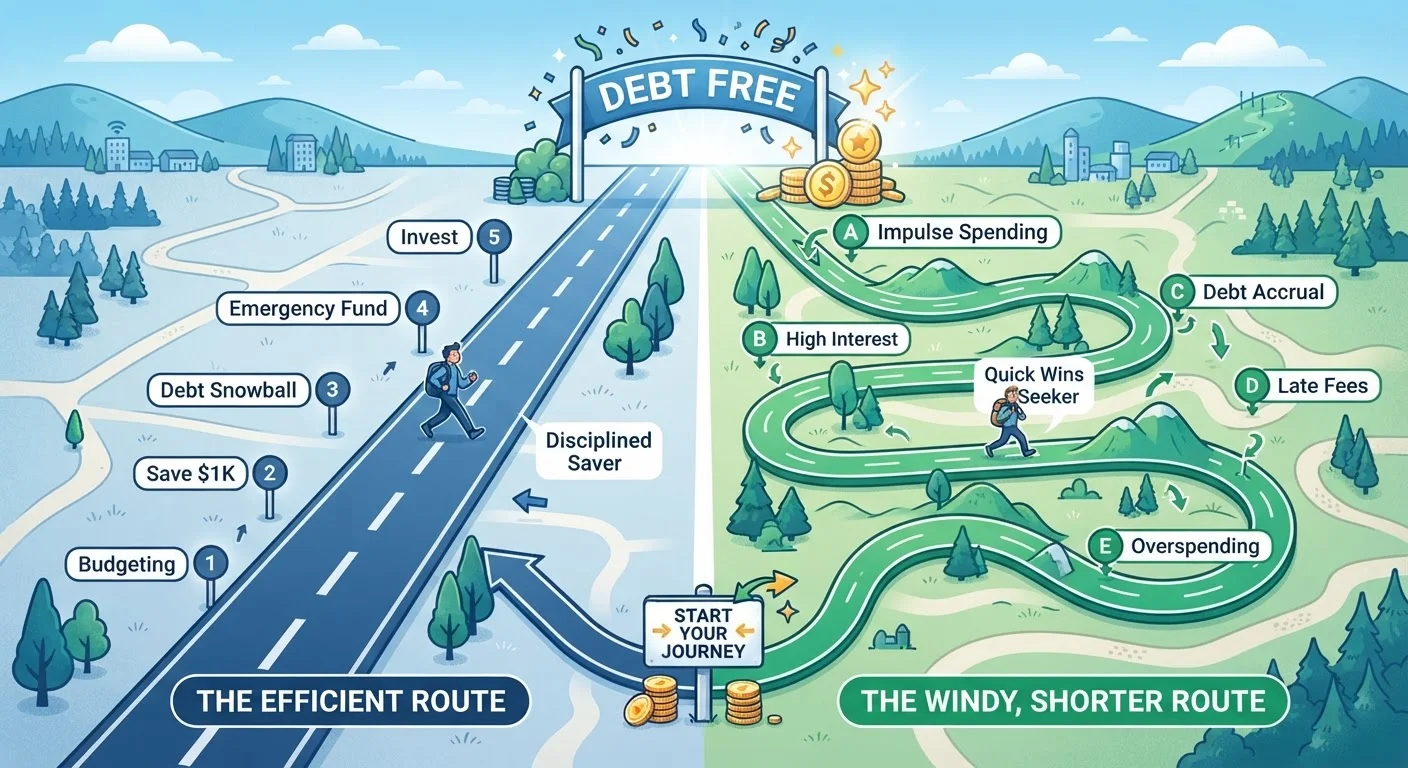
- You've addressed root causes. If overspending or under-budgeting drove the debt, consolidation without a budget adjustment often leads to accumulating new balances on the freed-up cards - a pattern sometimes called "reloading." Our budgeting basics hub is a practical starting point.
- The math checks out on total cost. A lower monthly payment stretched over a longer term can mean paying more in total interest, not less. Always compare total repayment cost, not just the monthly figure.
Before applying for a consolidation loan, calculate your current weighted average interest rate across all debts - then only proceed if the new rate is clearly lower after accounting for any origination fees.
Origination fees of 1-8% of the loan amount are common on personal loans and can offset months of interest savings, making a seemingly attractive rate less beneficial than it appears.
If you use a balance transfer card, set a calendar reminder one month before the promotional period ends and have a payoff plan in place well before that date.
Deferred interest clauses on some cards apply retroactively to the original balance if any amount remains when the promotional period closes, dramatically increasing the effective cost.
When Consolidation May Not Help
Consolidation is not a universal solution. Consider alternative strategies when:
- Your credit profile won't qualify you for a rate lower than what you currently pay. In that case, structured payoff methods - such as those described in our debt avalanche and snowball guide - may be more effective.
- The debt total is relatively small and payable within 12-18 months under an aggressive payment schedule.
- You're considering tapping retirement accounts to consolidate. Withdrawing from a 401(k) or IRA carries taxes, penalties, and long-term opportunity costs - a trade-off examined carefully in this analysis of using retirement savings for debt payoff.
- The consolidation loan extends your repayment timeline so significantly that the interest savings evaporate.
Consolidation Does Not Fix Overspending
The most common failure mode for debt consolidation is running up new balances on the cards paid off by the consolidation loan. Without an accompanying budget adjustment, borrowers can end up deeper in debt than before. Address spending patterns first - or at the same time - for consolidation to produce lasting results.
How Consolidation Affects Your Credit
Applying for a new consolidation loan triggers a hard inquiry on your credit report, which may cause a small, temporary dip in your credit score. Over time, however, consolidation can have neutral or positive effects if it:
- Reduces your overall credit utilization ratio (the share of available revolving credit in use) by paying down card balances.
- Establishes a consistent on-time payment history on the new loan.
- Simplifies your obligations, reducing the risk of a missed payment.
Closing credit card accounts after consolidating, while tempting, can increase utilization and shorten average account age - both of which may hurt your score. Consult a licensed financial professional about the best approach for your specific credit profile.
~$7,000
Average U.S. household credit card balance
Federal Reserve data has consistently shown average revolving balances in this range, illustrating the scale of debt many consolidation candidates carry.
1-8%
Typical personal loan origination fee range
Lenders vary widely; always factor this upfront cost into the total repayment comparison before choosing a consolidation loan.
Steps to Take Before You Apply
A methodical approach before applying for consolidation reduces the risk of making a costly mistake:
- List every debt: Note the balance, interest rate, minimum payment, and remaining term for each obligation.
- Calculate your weighted average interest rate: This is your benchmark. Any consolidation loan should beat it - not just look lower on paper.
- Check your credit report: Errors can suppress your score and lead to worse loan terms. Free annual reports are available from the three major bureaus through a federally authorized source.
- Model total repayment cost: Use a simple amortization table or online calculator to compare total interest paid under your current path versus the proposed consolidation loan.
- Consider the full picture: Consolidation works best alongside a plan to build savings while repaying debt, not instead of one.
Also take time to challenge assumptions. Some widely held beliefs about debt repayment are outright myths that can cost money - our debt myths article covers the most common ones.
This article is for general informational and educational purposes only and does not constitute personalized financial, legal, or tax advice. Consult a qualified financial professional before making decisions about your individual financial situation.