Two Budgeting Philosophies, One Goal
Every effective budget starts with the same core principle: know where your money goes and make deliberate choices about it. Where people differ is in how they track and constrain their spending. Cash envelopes - a method rooted in physical currency divided into labeled categories - and digital spending trackers, which aggregate transactions through apps or software, represent two distinct schools of thought. Understanding how each one shapes behavior is the first step toward choosing the right system for you.
This comparison is general financial information intended to help you understand your options. For guidance tailored to your personal financial situation, consider speaking with a licensed financial adviser.
How Cash Envelopes Work
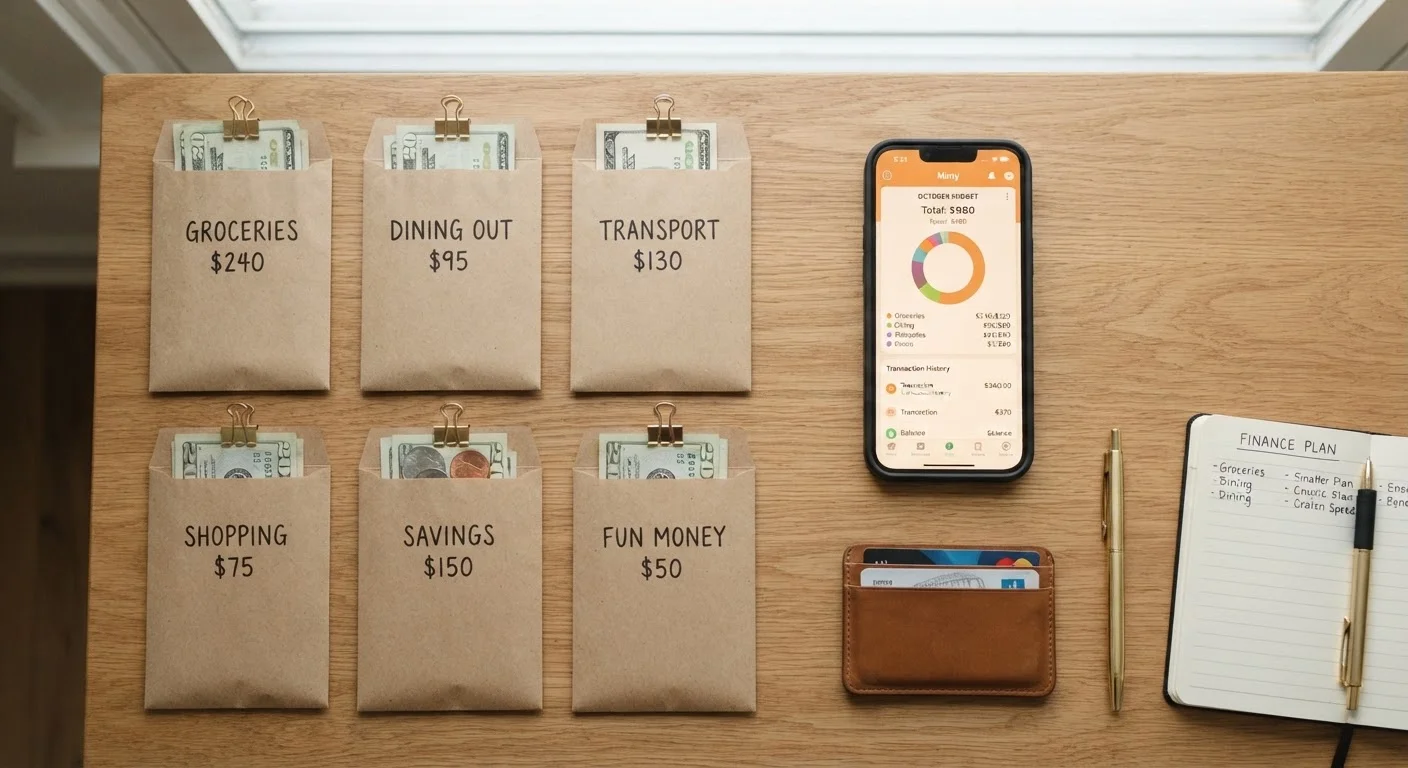
The cash envelope method involves withdrawing a set amount of physical cash at the start of each budgeting period and dividing it into envelopes labeled by spending category - groceries, dining out, entertainment, clothing, and so on. When the envelope is empty, spending in that category stops until the next cycle.
The psychological mechanism is straightforward: handing over physical bills registers more cognitively than a card tap. Research in behavioral economics has consistently found that people tend to spend less when using cash compared to cards, a phenomenon sometimes called the "pain of paying." The physical depletion of an envelope also gives you an at-a-glance signal of how much runway you have left - no login required.
Start With Your Problem Categories
If you consistently overspend in one or two areas - like dining out or impulse shopping - consider using cash envelopes only for those categories while keeping everything else digital. This targeted approach reduces friction while still leveraging the psychological power of physical limits where you need it most. You may also find it helpful to review common spending traps that catch even careful shoppers that can derail even well-planned budgets.
The primary limitation is practical friction. Cash envelopes don't work well for online purchases, recurring subscriptions, or digital bills. Carrying cash also introduces security concerns. And if you prefer the rewards or purchase protections that come with credit or debit card use, a cash-only system may mean giving those up. For a closer look at how small spending habits can quietly drain your budget, see our piece on spending leaks that undermine savings goals.
How Digital Spending Trackers Work
Digital budgeting tools - ranging from spreadsheet templates to dedicated apps that sync with your bank accounts - track spending by automatically or manually categorizing transactions. Most platforms generate charts, trend summaries, and alerts that show you spending patterns across weeks or months.
The key advantage is comprehensiveness. A well-configured digital tracker captures every card swipe, online payment, and bank transfer in one place. This is particularly valuable for people whose financial lives span multiple accounts or income sources. Automation also reduces the manual effort required to stay on top of your finances. If you're weighing the broader trade-offs of app-based tracking systems, our article on the tradeoffs of tracking habits with an app explores how digital accountability tools can motivate or overwhelm.
Automation Does Not Equal Accountability
A digital tracker that syncs your accounts will record every transaction - but it won't change your behavior on its own. Many people install budgeting apps and feel productive, then never review the data or act on it. Set a recurring weekly check-in with your tracker to turn data into decisions. Without that habit, the tool is just a log, not a budget.
Digital trackers do carry their own challenges. Category automation isn't always accurate and often requires manual corrections. Notification fatigue is real - if the app sends too many alerts, many users begin ignoring them entirely. And unlike a depleted envelope, a negative budget balance in an app doesn't physically stop you from spending more. Consistent engagement is non-negotiable for these tools to be effective.
Side-by-Side Comparison
The table below compares cash envelopes and digital spending trackers across criteria that matter most to everyday budgeters.
| Cash Envelopes | Digital Spending Trackers | |
|---|---|---|
| Setup effort | Low - cash, envelopes, and labels | Medium - account linking and configuration |
| Works for online purchases | No - cash only | Yes - tracks all transaction types |
| Real-time visibility | Immediate - count remaining cash | Delayed - requires syncing or manual entry |
| Overspending prevention | Hard stop when envelope is empty | Soft alert; spending can continue |
| Automation | None - fully manual | High - auto-categorizes many transactions |
| Psychological friction | High - physical cash feels more real | Low - card swipes feel abstract |
| Cost | Free | Free to paid subscription tiers |
| Best for | Discretionary category control | Whole-budget visibility and analysis |
For many people, the friction of the cash system is a feature, not a bug - it forces deliberate decision-making at the point of purchase. Digital tools, by contrast, enable a "review and adjust" model, which suits those who are disciplined enough to act on data after the fact. Neither approach is inherently superior; each addresses a different type of budgeter. Learn more practical methods for keeping spending visible without extra effort in our guide on tracking spending without turning it into a second job.
Choosing - or Combining - Both Approaches
A growing number of budgeters use hybrid systems: cash envelopes for the two or three categories where they're most prone to overspending, while relying on a digital tracker for fixed expenses, bills, and card-based purchases. This approach captures the psychological friction of cash where it matters most, while maintaining the convenience and coverage of digital tracking everywhere else.
The most important factor isn't the tool - it's consistency. A method you find tedious will be abandoned within weeks. Consider starting with whichever approach requires less behavior change from your current habits, and adjusting as you learn what works. Building intentional spending habits is ultimately about more than the mechanics; it's about developing a framework that aligns your daily choices with your financial goals. For a broader framework on deliberate spending, see our article on building a smarter shopping habit from the ground up.
This article is for general informational and educational purposes only and does not constitute personalised financial advice. Consult a qualified financial professional for guidance specific to your circumstances.