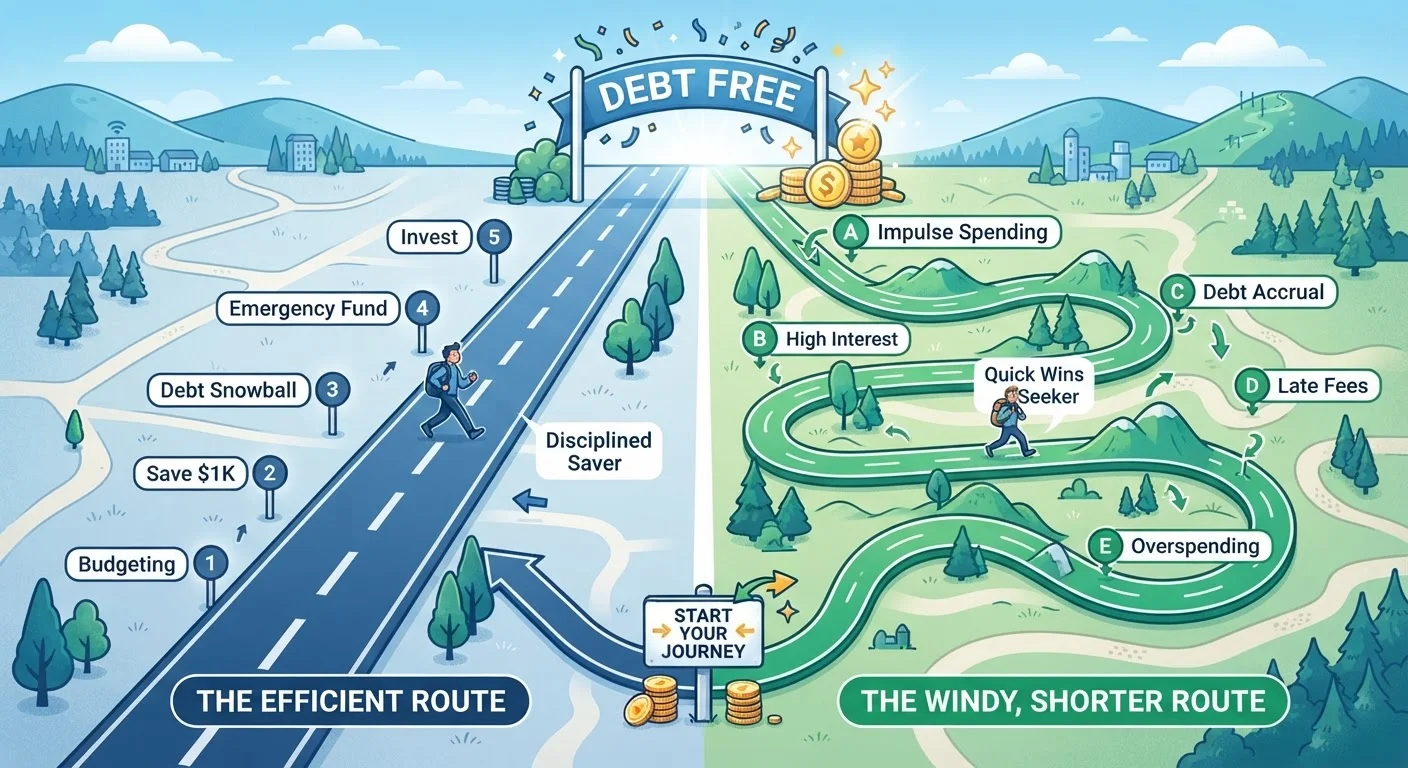

Why Waiting to Save Is Riskier Than It Sounds
The intuitive argument for paying off all debt before saving is appealing: eliminating a 20% interest rate is mathematically better than earning 4% in a savings account. But this framing ignores a critical variable - life is unpredictable.
Without savings, every unexpected expense becomes new debt. A $600 car repair charged to a credit card at 22% APR can undo months of aggressive payoff progress. Building even a small financial cushion first breaks this cycle. The goal of running both strategies simultaneously isn't to optimise to the last dollar - it's to build resilience while still reducing what you owe.
Understanding how saving and investing differ in purpose also matters here. A savings account is not a wealth-building tool; it is a stability tool. For more on that distinction, see The Real Difference Between Saving and Investing.
This Is General Information, Not Personal Advice
The strategies described here are general financial education, not personalised financial, tax, or legal advice. Everyone's debt balances, interest rates, income, and risk tolerance differ. Consult a licensed financial professional before making significant decisions about debt repayment or savings allocations.
How to Structure Your Approach
The steps below follow a prioritisation logic rather than a rigid formula. Your actual numbers will look different depending on your income, debt load, and goals - and that's expected. What matters is applying the underlying principles consistently.
What you will need
Debt inventory spreadsheet or app
Tracks each debt's balance, minimum payment, and interest rate in one place so you can prioritise accurately.
Separate savings account
Keeps emergency and goal-based savings physically separated from spending money to reduce the temptation to dip in.
Automatic transfer feature (bank or credit union)
Schedules recurring savings deposits and extra debt payments without requiring manual action each month.
Budget tracker
Identifies discretionary spending that can be redirected toward debt payments or savings contributions.
Build a Starter Emergency Fund First
Before allocating extra dollars to either aggressive debt payoff or long-term savings, set aside a small, dedicated emergency fund - commonly cited as $500 to $1,000. This buffer exists for one purpose: absorbing surprise expenses (a car repair, a medical copay) without forcing you to reach for a credit card.
Without even a starter cushion, every financial setback adds new debt, undermining the progress you're making elsewhere. Once this fund is in place, you have a stable foundation to split resources between debt and savings simultaneously.
Capture Any Employer Retirement Match
If your employer offers a matching contribution to a 401(k) or similar workplace retirement plan, contribute at least enough to capture the full match before directing any extra funds toward debt. An employer match is effectively an immediate 50-100% return on those dollars - a guaranteed gain that virtually no debt interest rate can outpace.
Skipping the match to pay down a 7% loan, for example, means forfeiting a 50% or 100% return in exchange for saving 7%. The math rarely supports that trade. For a broader look at the costs of tapping retirement funds for debt, see The Trade-Offs of Using Retirement Savings to Pay Off Debt.
Rank Your Debts by Interest Rate
List every debt you carry along with its annual percentage rate (APR). This ranking determines how urgently each balance needs extra payments beyond the minimum. High-rate debt - credit cards, payday loans, and some personal loans - erodes your financial position faster than almost any savings vehicle can compensate for.
Two structured approaches can guide your payoff sequence: the avalanche method (highest rate first, minimising total interest) and the snowball method (smallest balance first, building psychological momentum). The Debt Avalanche and Debt Snowball, Explained covers how each works and which situations each fits best.
Set a Split Ratio for Extra Dollars
After covering minimums on all debts and capturing any employer match, decide how to divide any remaining discretionary cash between extra debt payments and additional savings. A common starting framework is 70/30 or 80/20 in favour of high-rate debt, shifting toward a more even split as high-rate balances are eliminated.
The exact ratio should reflect your debt's interest rate relative to what savings can realistically earn. When your highest remaining debt rate approaches or falls below a savings account rate, the urgency of aggressive payoff diminishes. For context on what savings vehicles earn, compare options in our High-Yield Savings Accounts vs. Money Market Accounts article.
Automate and Review on a Regular Schedule
Set up automatic transfers for both your savings contribution and any extra debt payment so neither depends on a monthly willpower decision. Treat both as non-negotiable line items in your budget, not as leftovers from discretionary spending.
Review the split at least annually - or after any significant income change, debt payoff, or new financial goal. An annual financial checkup gives you a structured way to reassess balances, rates, and allocations so your strategy stays aligned with your actual situation.
Automate Both Transfers on Payday
Schedule your savings transfer and debt overpayment to process the same day your paycheck arrives. Money you never see in your checking account is money you won't spend. Automation strategies that actually stick can make this habit nearly effortless.
High-Interest Debt Demands Priority Attention
If you carry credit card balances at 20% APR or higher, directing large sums toward low-yield savings can cost you more in interest than you earn. Build a minimal emergency fund first, then aggressively target high-rate debt before expanding savings goals.
Once you've established a working system, small spending improvements compound the effect. The Smart Shopping hub offers practical ways to reduce everyday expenses, freeing up more dollars to split between debt repayment and savings.
This article is for general informational and educational purposes only and does not constitute personalised financial, investment, tax, or legal advice. Consult a qualified financial professional before making decisions about your specific debt or savings situation.