What Are Fixed Expenses?
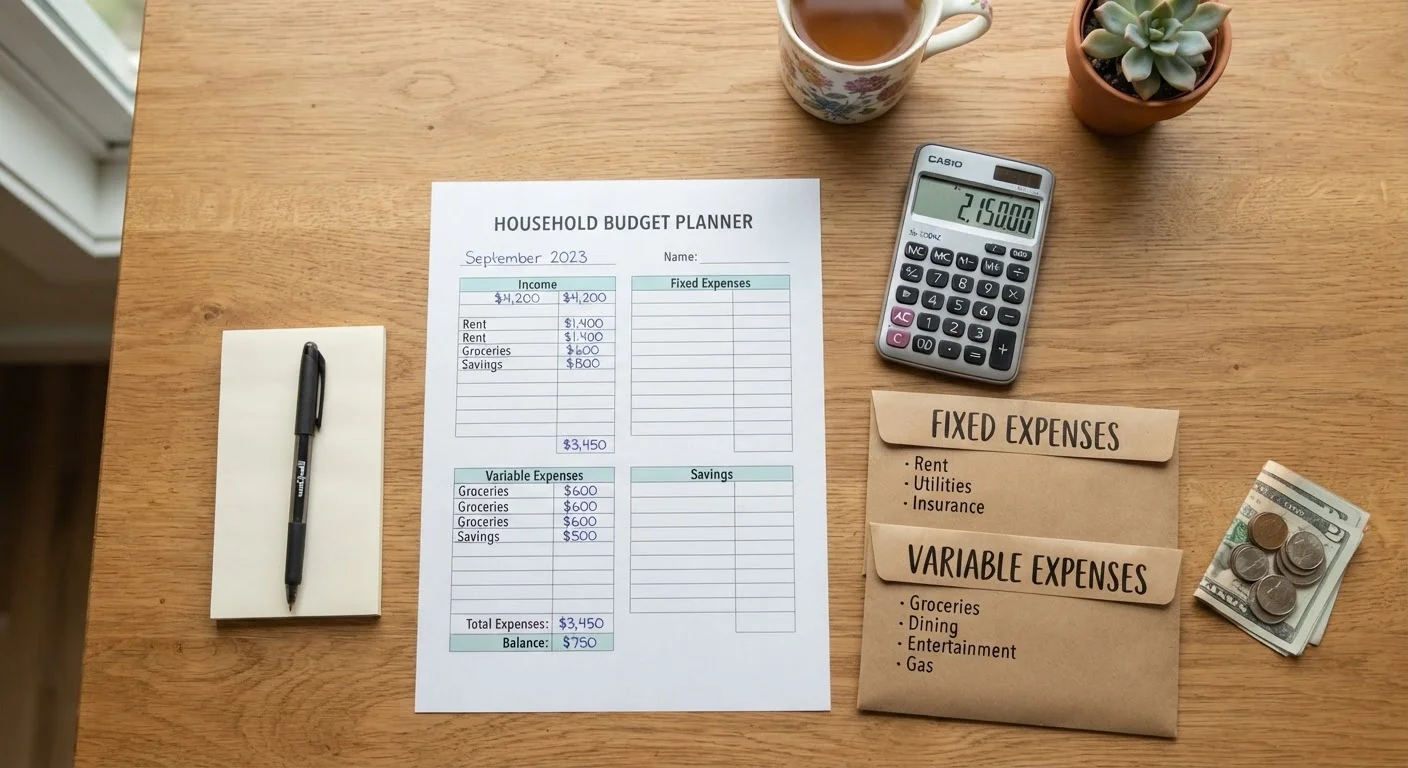
Fixed expenses are costs that remain constant from month to month regardless of your behavior or consumption. Your rent or mortgage payment, car loan installment, and term life insurance premium are textbook examples - the dollar amount due doesn't change based on how much you use the service or product.
This predictability is genuinely useful. Because fixed expenses don't require re-estimation each month, they form the structural skeleton of any solid budget. Once you list them, you know exactly how much income is already spoken for before you spend a single discretionary dollar.
Fixed expenses are also generally harder to reduce in the short term. Breaking a lease, refinancing a loan, or canceling a long-term contract all carry friction - time, fees, or credit consequences. That's worth understanding: stability cuts both ways. For a fuller grounding in the terminology you'll encounter while budgeting, see the budget glossary for beginners.
What Are Variable Expenses?
Variable expenses are costs that shift in amount from month to month, typically tied to usage, behavior, or circumstance. Groceries, gas, utility bills, dining out, clothing purchases, and entertainment all fall into this bucket. Spend more, pay more - spend less, pay less.
This category is where most of your day-to-day spending decisions live, and consequently where most budget adjustments are practically achievable. If your budget is under strain, trimming variable costs - fewer restaurant meals, reduced streaming services, more deliberate grocery shopping - delivers faster results than trying to renegotiate a fixed obligation.
Variable expenses can also be harder to predict accurately, which is why tracking them over two or three months before building a formal budget is worthwhile. Spending categories most budgets overlook, such as annual subscriptions and car registration, are often variable costs that surface irregularly and catch households off guard.
| Criterion | Fixed Expenses | Variable Expenses |
|---|---|---|
| Amount each month | Stays the same | Changes based on usage or choices |
| Predictability | High - easy to plan | Lower - requires tracking |
| Short-term flexibility | Limited - hard to change quickly | High - adjustable month to month |
| Common examples | Rent, car loan, insurance premium | Groceries, gas, dining, utilities |
| Budget role | Sets your financial floor | Defines your discretionary range |
| Best strategy | Minimize at contract renewal | Track and set monthly targets |
Semi-Variable Expenses: The Gray Zone
Not every cost fits neatly into one column. Semi-variable expenses - sometimes called mixed expenses - have a fixed component and a variable component layered on top. Your electricity bill is a good example: there may be a base service charge you always pay, plus usage charges that rise with how much power you consume.
Phone plans with a set monthly rate plus data overage charges, or gym memberships with add-on class fees, work the same way. For budgeting purposes, it's practical to estimate a realistic average for semi-variable items based on past statements, then treat that average as your planning figure - with the understanding that some months will run higher or lower.
Reclassifying Expenses Over Time
What counts as fixed or variable can shift as your circumstances change. A streaming service might feel fixed if you never consider canceling it, but it's technically variable - and cuttable. Periodically reviewing your full expense list with fresh eyes helps prevent "lifestyle creep," where optional costs quietly become treated as non-negotiable obligations.
How to Use This Distinction to Build a Stronger Budget
The practical value of separating fixed from variable expenses becomes clear when you map them against your income. Start by listing every fixed expense and summing them - this is your financial floor, the minimum your income must cover every month. What remains after fixed expenses is available for variable spending, savings contributions, and debt repayment.
From there, assign realistic targets to your major variable categories based on actual historical spending, not aspirational guesses. If you have inconsistent monthly income, this framework becomes even more critical. The guide to budgeting with irregular income walks through strategies for managing cash flow when paychecks vary.
Finally, build a buffer for unexpected costs. A budget with no flexibility tends to fail at the first surprise. The guide to building a budget that survives unexpected expenses covers practical ways to absorb financial curveballs without abandoning your plan.
~33%
Average share of income spent on housing
The U.S. Bureau of Labor Statistics Consumer Expenditure Survey consistently finds housing represents roughly a third of average household spending - the single largest fixed expense category.
2-3 months
Tracking period before setting variable targets
Financial planning practitioners commonly recommend reviewing at least two to three months of actual spending before assigning variable expense targets in a new budget.
This article is for general informational and educational purposes only and does not constitute personalized financial advice. Consult a qualified financial professional for guidance specific to your situation.