
Why Risk Tolerance Is the Starting Point for Investing
Before selecting any investment - a stock, a bond fund, or a simple savings instrument - every investor faces the same foundational question: how much uncertainty can I live with? That question is what risk tolerance answers.
Without a clear sense of your own risk tolerance, investment decisions become reactive rather than strategic. You might chase higher returns during a bull market, then sell everything at the first sign of a downturn - a pattern that systematically erodes wealth over time. Understanding your risk tolerance first creates a framework that keeps decisions grounded in your actual goals and circumstances rather than short-term market noise.
Risk tolerance is not a one-size-fits-all calculation. It sits at the intersection of your financial picture - income, savings, debts, dependents - and your psychological relationship with uncertainty. Both dimensions need honest attention.
~60%
Americans who report investing in stocks
According to Gallup polling, roughly 6 in 10 Americans say they own stocks - yet many do so without a clearly defined risk profile.
20-30%
Typical peak-to-trough decline in bear markets
Historical data from major U.S. market downturns shows equity portfolios can lose 20-30% or more in bear markets, underscoring why emotional preparedness matters.
The Two Dimensions: Capacity and Appetite
Risk capacity is the objective side of the equation. It asks: based on your income, expenses, emergency fund, debt obligations, and investment time horizon, how much financial loss could you absorb without derailing your life goals? Someone with a stable income, no high-interest debt, and 30 years until retirement has a higher objective capacity to weather investment losses than someone saving for a down payment in three years.
Risk appetite is the psychological side. It asks: how would you genuinely feel - and behave - if your portfolio lost 25% of its value in six months? Some investors can observe that kind of drop with calm confidence that markets tend to recover over time. Others experience significant stress that can lead to impulsive decisions. Neither response is wrong; the key is knowing which describes you.
The practical challenge is that people often overestimate their risk appetite during calm markets. It is only during actual volatility that your true comfort level reveals itself. This is why the behavioral pitfalls of early investing - like panic selling - are so closely linked to misread risk tolerance.
Test Your Gut Reaction Before Investing
Before committing to any investment strategy, ask yourself: if my portfolio dropped by 20% next month, what would I actually do? Be honest. If your instinct is to sell immediately, your risk tolerance may be lower than you assume. Building a portfolio you can hold steady through volatility is more important than chasing the highest theoretical return.
How Time Horizon Reshapes the Equation
Time horizon - how long before you need to access your invested money - is arguably the single most objective factor in assessing risk tolerance. The longer your money can stay invested, the more time you have to ride out market downturns and benefit from long-term growth trends.
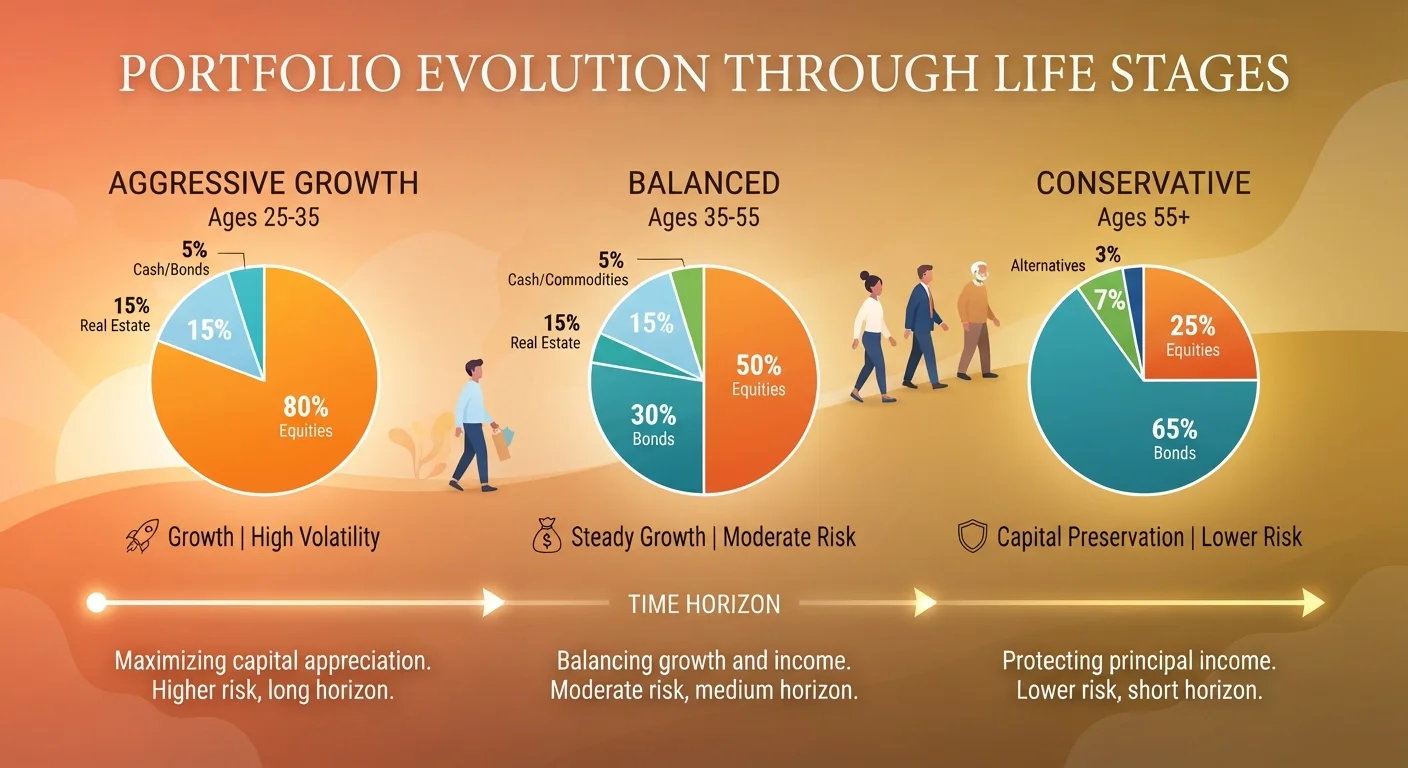
A 28-year-old investing for retirement at 65 has a roughly 37-year runway. Historical patterns of markets suggest that longer horizons have generally allowed investors to recover from significant downturns, though past performance never guarantees future outcomes. A 58-year-old investing for retirement in seven years has far less runway, meaning large losses in the near term could have lasting consequences.
This time-based reality is why portfolio composition tends to shift across life stages, with younger investors typically holding more growth-oriented assets and older investors gradually shifting toward more stable ones.
Translating Risk Tolerance Into Your Portfolio
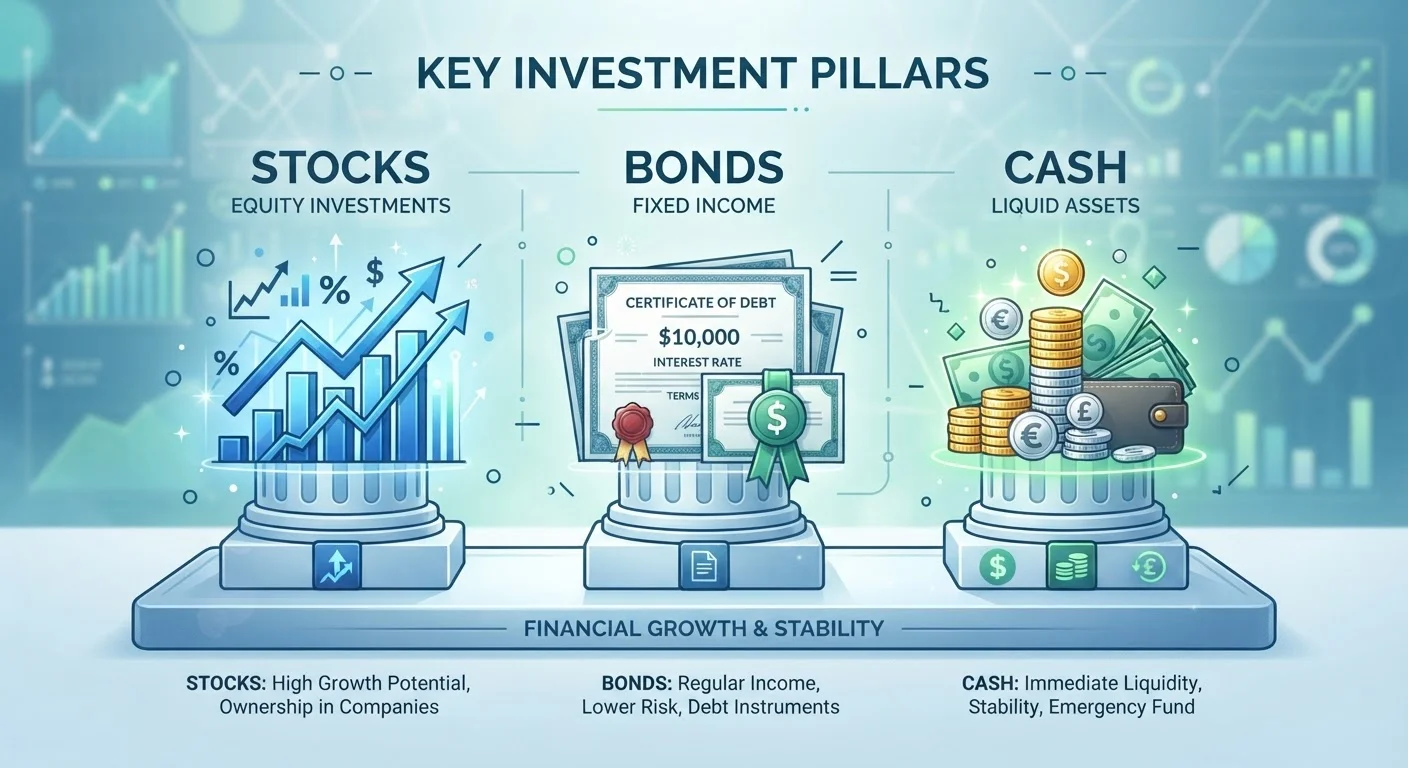
Once you have a realistic sense of your risk tolerance, you can begin matching it to actual investment decisions. The primary tool for this is asset allocation - the mix of stocks, bonds, and other asset classes in your portfolio. Stocks generally carry more short-term volatility but historically offer higher long-term growth potential. Bonds typically offer more stability with lower potential returns. Cash and equivalents provide maximum stability but minimal growth.
A higher risk tolerance might translate into a portfolio weighted more heavily toward stocks. A lower risk tolerance might favor a larger allocation to bonds and stable instruments. These are not permanent decisions - they evolve as your financial life changes. See our guide on stocks, bonds, and cash for a deeper look at how each asset class behaves.
Regardless of your profile, diversification is a broadly applicable principle - spreading investments across asset types and sectors helps reduce the impact of any single loss, which is particularly valuable for investors with lower risk tolerance.
Putting It Into Practice
Assessing your risk tolerance is not a one-time event. It is worth revisiting whenever your financial situation changes materially - a new job, a significant expense, a change in family circumstances, or a market event that tested your emotional response in real time.
Many online brokerages and robo-advisors include risk questionnaires as part of account setup. These can be a useful starting point, but they are no substitute for a candid conversation with a licensed financial adviser who can evaluate your full financial picture and help you build a plan aligned with both your capacity and your temperament.
If you are just beginning to invest, the framework for investing on any income offers a practical entry point for translating your risk profile into real account decisions - without requiring a large starting sum.
This article is for general informational and educational purposes only and does not constitute personalized financial, investment, or tax advice. Consult a qualified financial professional before making decisions about your own investments.