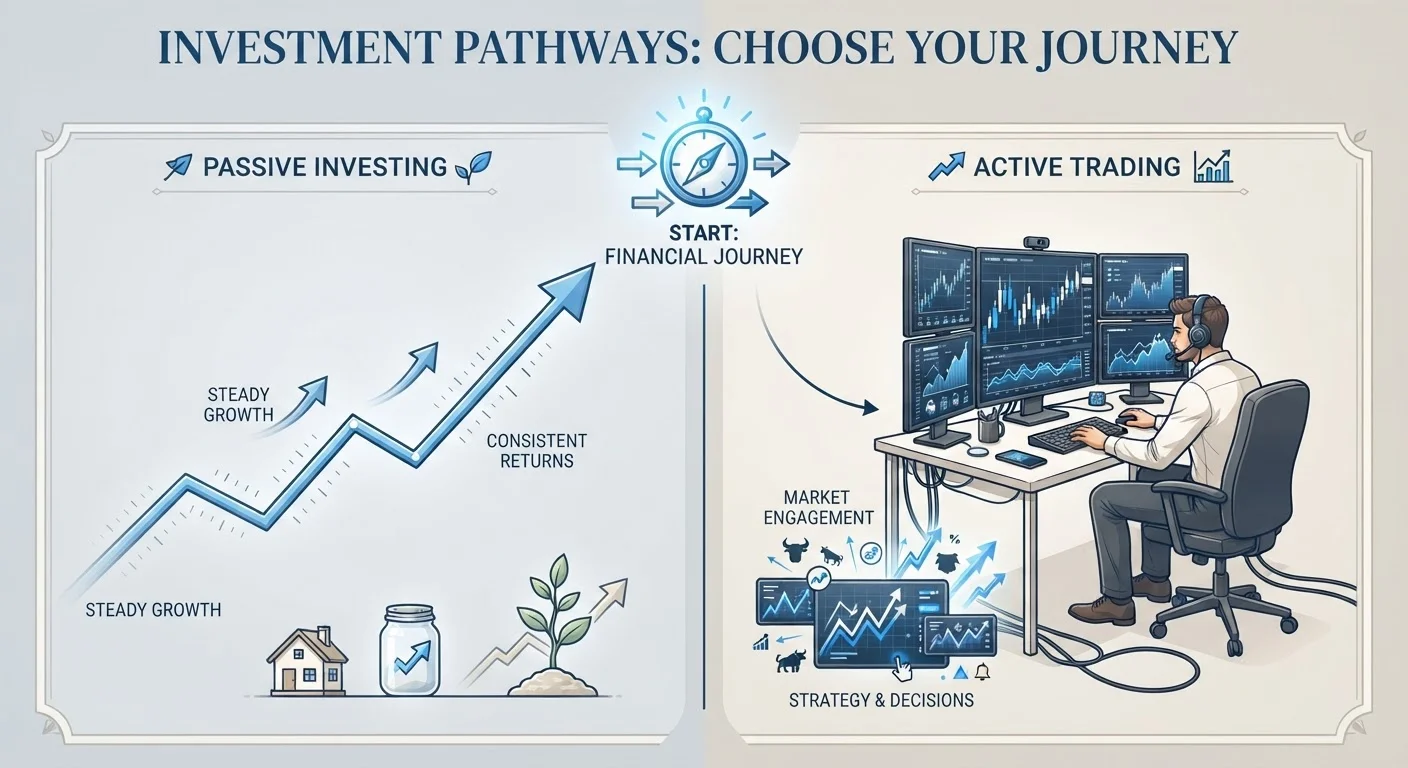
Why Early Behaviors Shape the Entire Investment Journey
The decisions made in the first few years of investing carry outsized weight. Not because the amounts are large - they rarely are - but because behavioral patterns established early tend to persist. An investor who panics and sells during their first major downturn often repeats that behavior in the next one. Conversely, someone who builds disciplined habits early benefits from decades of compounding, both in returns and in good judgment.
Most investment mistakes aren't the result of bad information. They stem from predictable emotional responses - fear, impatience, overconfidence - that interact poorly with how markets actually work. Recognizing those patterns is the first step toward neutralizing them.
This Is Education, Not Personalized Advice
The information in this article is general financial education and is not tailored to your individual situation. Investment decisions depend on your income, goals, timeline, and risk tolerance. Consult a licensed financial adviser before making changes to your investment strategy.
The Six Mistakes That Quietly Cost the Most
The following pitfalls are common across all experience levels, but they hit earliest investors hardest because there's less runway to recover lost ground. Each one has a logical emotional origin - which is exactly why they're so difficult to spot in your own decisions.
Panic selling during market downturns.
Why it happens: Watching a portfolio drop feels like an emergency. The brain's loss-aversion instinct treats paper losses as urgent threats, making selling feel like damage control.
Chasing recent top-performing investments.
Why it happens: Fund rankings, financial headlines, and social media amplify recent winners, making past outperformance feel like a reliable indicator of future results. It is not.
Ignoring investment fees and expense ratios.
Why it happens: Fees are expressed as small percentages that feel trivial in the moment. Most beginners focus on returns and overlook the compounding drag that fees quietly apply year after year.
Waiting for the 'perfect' time to invest.
Why it happens: Market uncertainty makes the present always feel like the wrong moment. Beginners often delay, convinced that a clearer, calmer entry point is just around the corner.
Failing to diversify across asset types.
Why it happens: Concentrating in a familiar company, a single sector, or one asset class feels intuitive - you invest in what you know. But familiarity doesn't reduce financial risk.
Neglecting to align the portfolio with your time horizon.
Why it happens: Many beginners pick investments without connecting them to a specific goal or timeframe, leading to mismatches - like holding highly volatile assets when retirement is only five years away.
~1.5%
Average annual gap: investor vs. fund returns
Morningstar's 'Mind the Gap' studies have repeatedly found that the average investor earns less than the funds they hold, largely due to poorly timed buying and selling decisions.
~$180,000
Estimated 30-year cost of a 1% fee difference
On a $50,000 starting investment with 7% average annual growth, a 1% annual fee vs. 0.05% can result in roughly $180,000 less at the end of 30 years - illustrating compounding costs.
Building Habits That Protect Against Behavioral Drift
Avoiding these mistakes isn't primarily about knowledge - it's about structure. Automating contributions, writing down your investment rationale before acting, and reviewing your monthly budget before making portfolio changes all create friction that benefits patient investors. So does keeping fees in check by staying informed about what you're actually paying for each fund you hold.
Fees Are Not Always Clearly Labeled
Fund expense ratios, advisory fees, and trading commissions may appear in different places - or not at all - on a platform's interface. Always read the fund prospectus or fee disclosure document before investing. A seemingly small annual fee of 1% vs. 0.05% can translate to a dramatically different account balance over 30 years.
Investors who struggle with impulse-driven financial decisions may find it useful to examine their broader spending psychology as well. The same mental shortcuts that drive impulse purchases - urgency, social proof, short-term thinking - also show up in reactive investing behavior.
Building wealth over time is less about selecting the perfect investments and more about avoiding the behaviors that interrupt compounding. A clear-eyed understanding of your own risk tolerance, a diversified portfolio matched to your timeline, and consistent contributions form the core of any durable approach. For a structured way to get started, see our investing on any income guide.
This article is for general informational and educational purposes only and does not constitute personalized financial, investment, tax, or legal advice. Consult a licensed financial professional before making investment decisions based on your individual circumstances.