How Each Fund Type Works
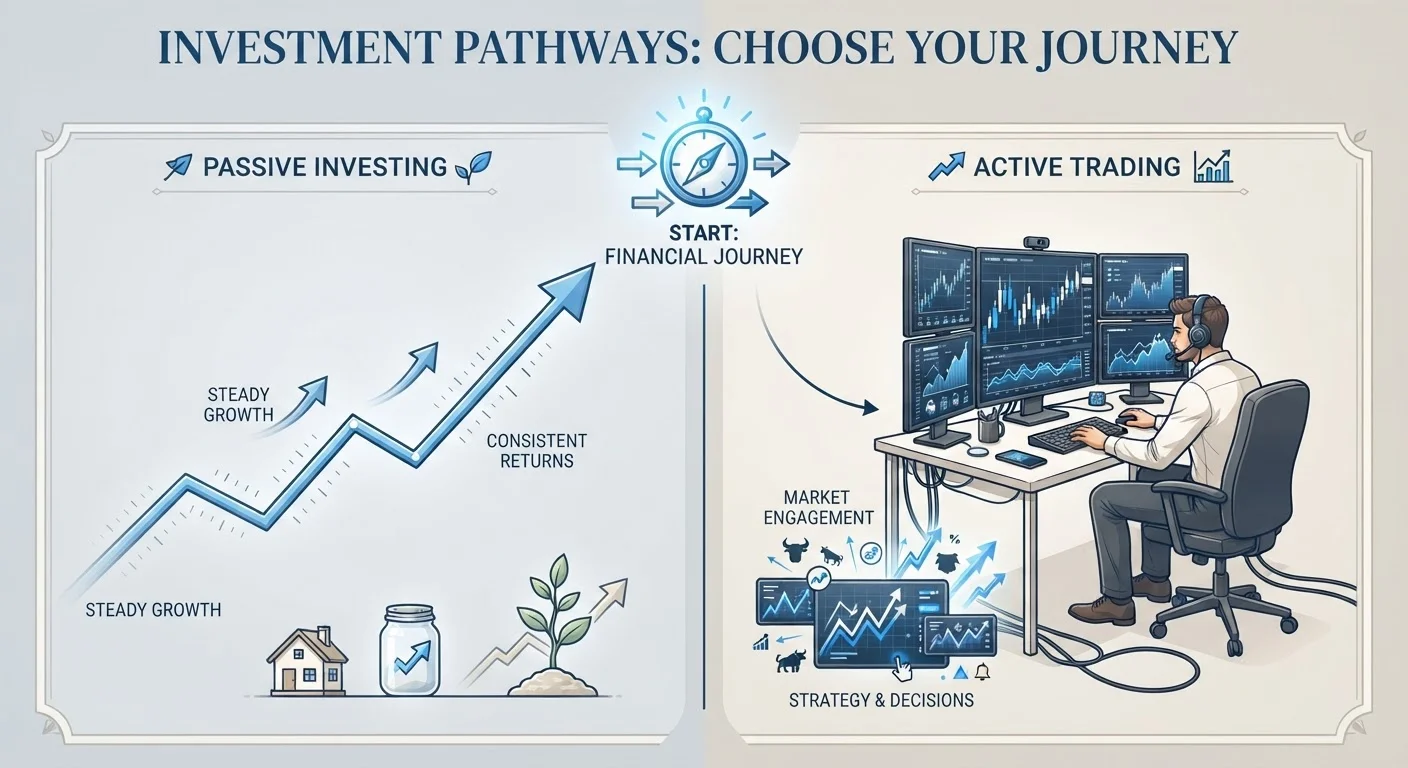
Before comparing costs and performance, it helps to understand the mechanics. An index fund is designed to replicate the holdings and returns of a specific market index - the S&P 500, for example - by holding the same securities in roughly the same proportions. No manager is deciding which stocks to buy or sell; the portfolio simply mirrors the index. Because trading is minimal and no research team is required, operating costs stay low.
An actively managed fund, by contrast, employs a portfolio manager (or team) whose job is to analyze companies, evaluate economic conditions, and make deliberate decisions about which securities to hold. The goal is to outperform a chosen benchmark. This requires more resources - research analysts, trading activity, and ongoing oversight - and those costs are passed on to investors.
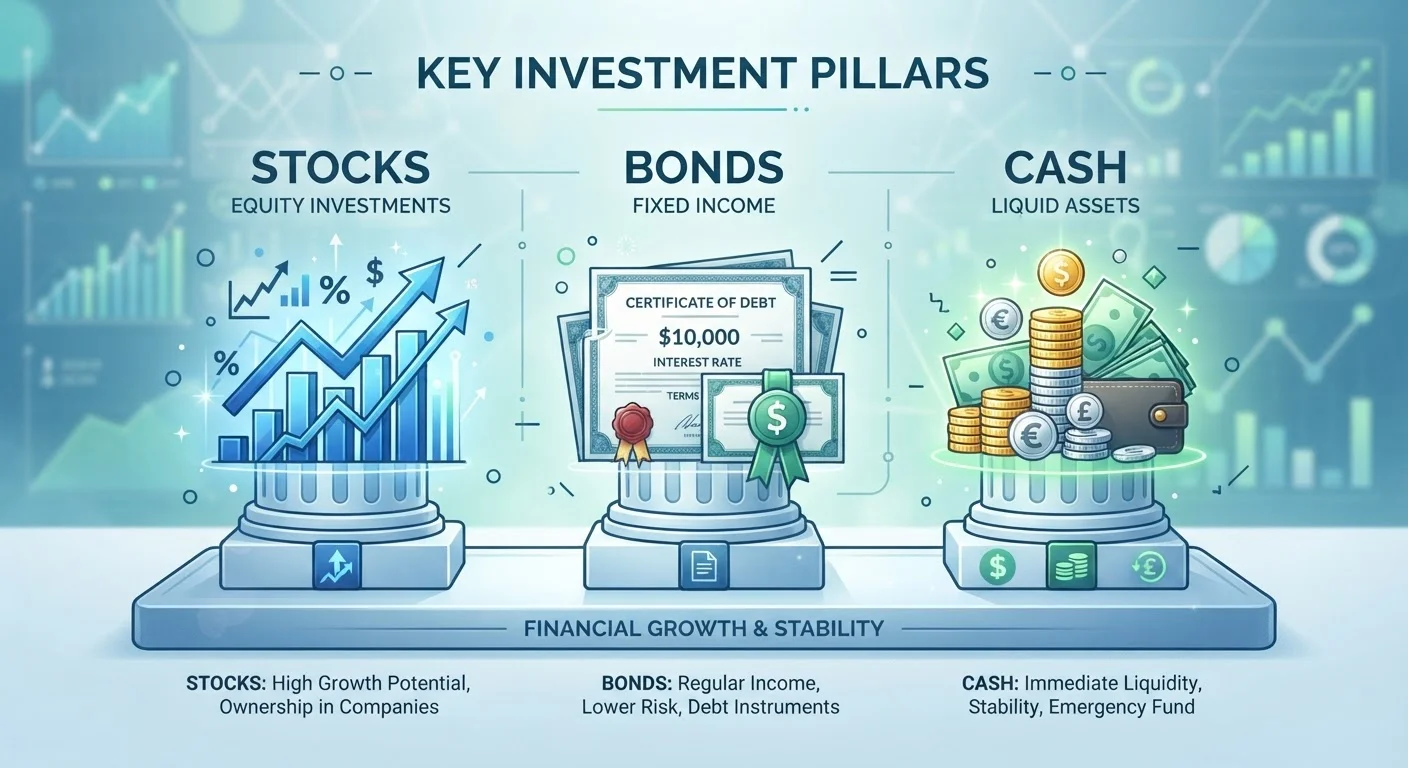
Both fund types give investors access to a diversified basket of securities, which is a meaningful advantage over picking individual stocks. If you're still building foundational knowledge about what those securities actually are, our guide to stocks, bonds, and cash explains how the main asset classes work and interact.
The Cost Gap - And Why It Matters
Fees are where the contrast becomes most concrete. Index funds are among the lowest-cost investment vehicles available. Many broad-market index funds carry expense ratios - the annual percentage of assets charged as a management fee - well under 0.10%. Some are even lower.
Actively managed funds typically carry expense ratios ranging from roughly 0.50% to more than 1.00% annually, though costs vary widely by fund category. That gap may sound small, but over decades, the compounding effect of even a fraction of a percentage point in additional annual cost is significant. A 0.75% difference in annual fees on a $50,000 portfolio held for 30 years can amount to tens of thousands of dollars in foregone growth, depending on return assumptions.
~90%
Active U.S. equity funds trailing S&P 500 over 20 years
According to S&P Dow Jones Indices' SPIVA U.S. Scorecard, roughly 90% of actively managed large-cap U.S. equity funds have underperformed the S&P 500 over 20-year periods.
0.03%-0.10%
Typical index fund expense ratio range
Many broad-market index funds available to U.S. retail investors carry annual expense ratios in this range, according to industry data from Morningstar.
0.66%
Average actively managed U.S. equity fund expense ratio
Morningstar's annual fee study has reported average asset-weighted expense ratios for active U.S. equity funds in this approximate range in recent years.
Fees aren't the only cost to consider with active funds. Higher portfolio turnover - more frequent buying and selling - can generate taxable capital gains distributions in non-retirement accounts, creating a tax drag that further erodes net returns. This is one of the early investing pitfalls that quietly undermine long-term returns many beginners overlook.
What the Performance Record Shows
The question investors most want answered is whether active management delivers returns that justify the higher cost. The long-run evidence is difficult to argue with: most actively managed funds underperform their benchmark index over extended periods, particularly after fees are factored in.
Research from S&P Dow Jones Indices, published in their ongoing SPIVA (S&P Indices Versus Active) scorecard, has consistently found that a large majority of actively managed U.S. equity funds trail the S&P 500 over 10- and 15-year periods. This pattern holds across most major fund categories, though the degree varies.
Active Funds Can Add Value in Some Markets
The underperformance data is strongest for large-cap U.S. equity funds, where markets are highly efficient and information is widely available. In less-efficient segments - such as small-cap stocks, high-yield bonds, or emerging markets - active managers may have a stronger opportunity to add value through research. Even so, identifying consistently outperforming managers in advance remains difficult, and costs still matter significantly.
That said, some actively managed funds do outperform their benchmarks over meaningful timeframes. The challenge is identifying them in advance - and research suggests that past outperformance is a weak predictor of future outperformance. Investors who chase recent winners often arrive after the advantage has faded.
| Criterion | Index Funds | Actively Managed Funds |
|---|---|---|
| Management style | Passive - tracks a benchmark | Active - manager makes decisions |
| Typical expense ratio | Often under 0.10% | Typically 0.50%-1.00%+ |
| Portfolio turnover | Low | Higher |
| Goal | Match market returns | Outperform market returns |
| Long-run performance (vs. benchmark) | Matches benchmark before fees | Most trail benchmark after fees |
| Tax efficiency | Generally higher | Lower due to turnover |
| Complexity for investors | Low - straightforward to hold | Higher - requires manager evaluation |
Choosing What Fits Your Situation
For most beginner investors, the combination of lower cost, predictable strategy, and strong long-run performance relative to active peers makes index funds a logical starting point. They pair naturally with a dollar-cost averaging approach - investing fixed amounts at regular intervals regardless of market conditions - which reduces the temptation to time the market.
Actively managed funds aren't without merit. Some investors incorporate them selectively in areas where they believe active research has a stronger edge - certain bond categories, international markets, or sectors where information is less uniformly priced in. The key is weighing whether the potential for outperformance justifies the certainty of higher costs.
This decision fits within the broader question of how your portfolio is constructed over time. Asset allocation across life stages shapes which fund types are even relevant at a given point in your investing journey.
This article is for general informational and educational purposes only and does not constitute personalized investment, financial, tax, or legal advice. All investments carry risk, including the possible loss of principal. Past performance does not guarantee future results. Consult a qualified, licensed financial professional before making decisions about your own financial situation.