
How Compound Interest Actually Works
At its core, compound interest is the process of earning returns on returns. Consider a straightforward example: you deposit $1,000 into a savings account earning 5% annually. After year one, you've earned $50 in interest, bringing your balance to $1,050. In year two, that 5% applies to the full $1,050 - not just your original $1,000 - so you earn $52.50. By year three, you earn $55.13. The amounts may seem incremental at first, but the pattern accelerates significantly over decades.
This differs fundamentally from simple interest, where you'd earn exactly $50 every year, no matter how long the account has been open. With compounding, each period's earnings become part of the base that grows next period.
A useful mental shortcut is the Rule of 72: divide 72 by your annual interest rate to estimate how long it takes your money to double. At 6% annual returns, money doubles approximately every 12 years. At 8%, roughly every 9 years. This rule helps illustrate why rate and time together drive long-term outcomes.
~12 years
Time to double money at 6% annual return
Based on the Rule of 72, a widely used financial estimation shortcut (72 ÷ interest rate = doubling time).
$1,000+
Value of $500 after 20 years at 6% compounded annually
Illustrates how compounding can more than double an initial deposit over two decades without additional contributions.
10x
Potential growth multiplier over 40 years at 6%
A general illustration of long-term compounding; actual results depend on rate, contributions, and fees.
Why Time Is the Most Powerful Variable
The math of compounding rewards patience above almost everything else. A common illustration: someone who invests $5,000 per year starting at age 25 and stops contributing at age 35 - putting in $50,000 total - may end up with more at retirement than someone who invests the same $5,000 per year from age 35 to 65, contributing $150,000 total. The early investor's money had more years to compound, which more than compensated for fewer contributions.
This is why financial educators consistently emphasize starting early, even when contribution amounts are small. The myth that you need a lot of money to begin investing is one of the most persistent misconceptions in personal finance - compounding is available to anyone with even a modest recurring contribution.
“Compound interest is the eighth wonder of the world. He who understands it, earns it; he who doesn't, pays it.”
— Commonly attributed to Albert Einstein, Quote widely cited in financial literature; attribution is disputed but the principle is universally accepted by financial educators
Pairing regular contributions with compounding amplifies the effect further. Investing fixed amounts on a consistent schedule keeps money entering the market regularly, giving it more opportunity to compound over time.
Compounding in Savings and Retirement Accounts
Compounding is most visible in everyday savings accounts, certificates of deposit (CDs), and long-term retirement accounts. High-yield savings accounts express their compounding benefit through the Annual Percentage Yield (APY) - a figure that accounts for compounding frequency, making it easier to compare accounts accurately.
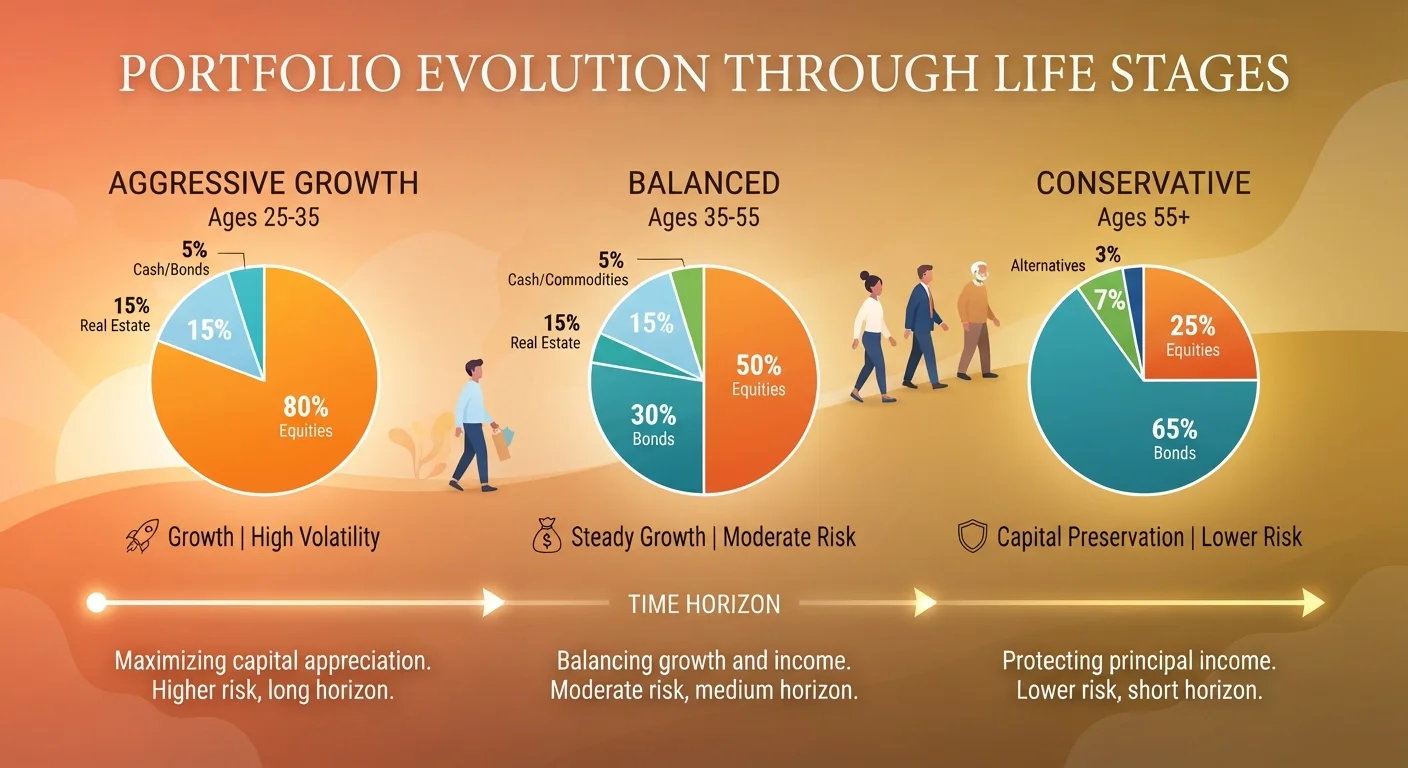
In tax-advantaged retirement accounts such as 401(k)s and IRAs, compounding carries an additional advantage: earnings are not reduced by annual taxes. This allows the full balance - contributions plus accumulated gains - to keep growing uninterrupted. The longer the account remains untouched, the more pronounced this benefit becomes. Understanding how portfolio composition evolves across life stages matters here, since the assets held in an account influence the rate at which compounding works.
Reinvest Dividends to Maximize Compounding
If you hold dividend-paying investments, opting to reinvest those dividends automatically - rather than taking them as cash - keeps more money in the compounding cycle. Many brokerage and retirement accounts offer automatic dividend reinvestment at no additional cost. Over long periods, reinvested dividends can account for a substantial share of total portfolio growth.
Automating contributions is one of the most effective ways to ensure compounding works consistently in your favor. Setting up recurring transfers removes the temptation to skip contributions and keeps the compounding timeline intact.
When Compounding Works Against You
The same mechanism that builds savings can accelerate debt. Credit cards, for instance, typically compound interest daily on unpaid balances. If you carry a balance month to month, interest is being charged on your growing balance - not just the original amount spent. Over time, this can make a modest balance genuinely difficult to pay off.
Understanding how fixed and variable interest rates on debt differ is part of managing this risk. Variable-rate debt adds unpredictability to an already compounding balance. Behaviors that seem harmless in the short term - minimum payments, deferred loans, ignored balances - can quietly compound into significant financial burdens. The same principle of erosion applies to investing: fees, taxes on gains, and poor decisions all reduce the base on which compounding operates.
This article is for general informational and educational purposes only and does not constitute personalized financial, investment, or tax advice. Consult a qualified financial professional for guidance specific to your situation.