What Is a Capsule Wardrobe, Really?
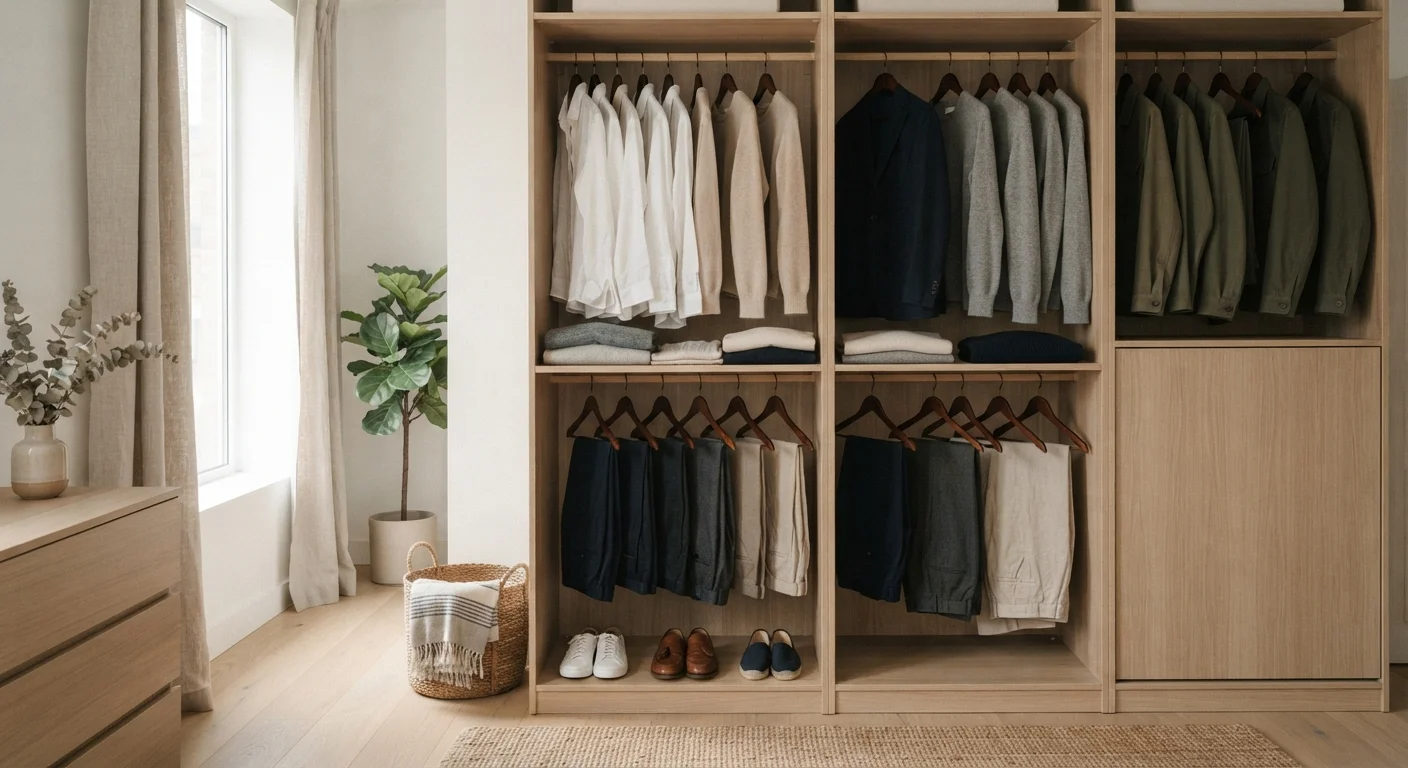
The term gets used loosely, but a capsule wardrobe has a clear functional definition: a curated set of clothing where every piece works with multiple others, covering your actual daily needs without excess. It is not a minimalist aesthetic, a specific item count, or a mandate to own only grey basics.
The original concept, popularized in the 1970s by London boutique owner Susie Faux, was simply about owning fewer, better-chosen clothes that wouldn't go out of style season to season. That core idea remains practical today: you spend less time deciding what to wear, waste less money on impulse purchases, and feel more consistently put-together.
What a capsule wardrobe is not is a one-size-fits-all formula. A teacher's capsule looks different from a freelancer's. A capsule designed for a humid Southern climate differs from one built for New England winters. The fundamentals are universal; the specifics are yours to define.
Capsule wardrobe
A small, intentional collection of clothing where every piece works well with several others, covering your daily needs without redundancy or excess.
Core pieces
The foundational garments in a capsule - typically versatile, neutral, and able to combine with most other items you own.
Color cohesion
The practice of choosing a consistent palette across your wardrobe so that items mix and match easily without clashing.
Outfit formula
A repeatable combination structure (such as top + bottom + layer) that generates multiple outfits by swapping interchangeable pieces.
One-in, one-out rule
A personal guideline where adding one new clothing item means removing one existing item, helping keep the wardrobe from growing unchecked.
Auditing What You Already Own
Before you buy a single item, pull everything out of your closet. Every item. This step is non-negotiable, and skipping it is why most capsule attempts stall early.
Sort clothing into three groups as you go:
- Keepers: Items you reach for regularly, that fit well now, and that you feel good wearing.
- Candidates: Items you like in theory but rarely wear - examine why honestly (fit? occasion? condition?).
- Out: Items that don't fit, are damaged beyond repair, or that you haven't worn in over a year without a clear reason to keep.
Pay attention to patterns in what you actually wear versus what you bought hoping to wear. That gap is where most wardrobe budgets quietly disappear. Once your keepers are identified, you have a real baseline - and you'll likely discover you need fewer additions than you thought. For guidance on rotating items in and out seasonally, see our season-by-season clothing storage checklist.
Don't Buy Before You Audit
One of the most common capsule wardrobe mistakes is shopping for new 'capsule basics' before assessing what you already own. You'll often discover you already have most of what you need, or that gaps are much smaller than they appear. Buying first leads to duplication and more clutter, not less.
Choosing Your Core Pieces
Core pieces are the load-bearing elements of a capsule - items that combine with nearly everything else you own. When selecting them, two factors matter most: fit and color cohesion.
Fit is the most overlooked variable. A well-fitting garment of modest quality reads better than an expensive piece that doesn't suit your proportions. If you want to understand the principles behind visual fit and proportion, our piece on dressing for body proportion covers this in practical terms.
Color cohesion means choosing a palette where your pieces genuinely mix. A workable approach:
- Pick two or three neutral base colors that you wear comfortably (navy, charcoal, black, tan, off-white).
- Add one or two accent colors you genuinely like - not ones that are trending, but ones you actually enjoy wearing.
- Verify that any new piece you consider works with at least three items already in your closet.
Common categories most people need to cover: tops (casual and slightly elevated), one or two pairs of well-fitting trousers or jeans, a versatile outer layer, a simple dress or blazer depending on lifestyle, and two to three shoe options that span casual to dressed-up.
The Three-Outfit Test for New Purchases
Before adding any piece to your capsule, identify three complete outfits you'd wear using that item and things you already own. If you can't name three, the piece likely doesn't earn its place yet. This test alone can prevent a significant amount of wardrobe clutter and buyer's remorse.
Building Outfits, Not Just Items
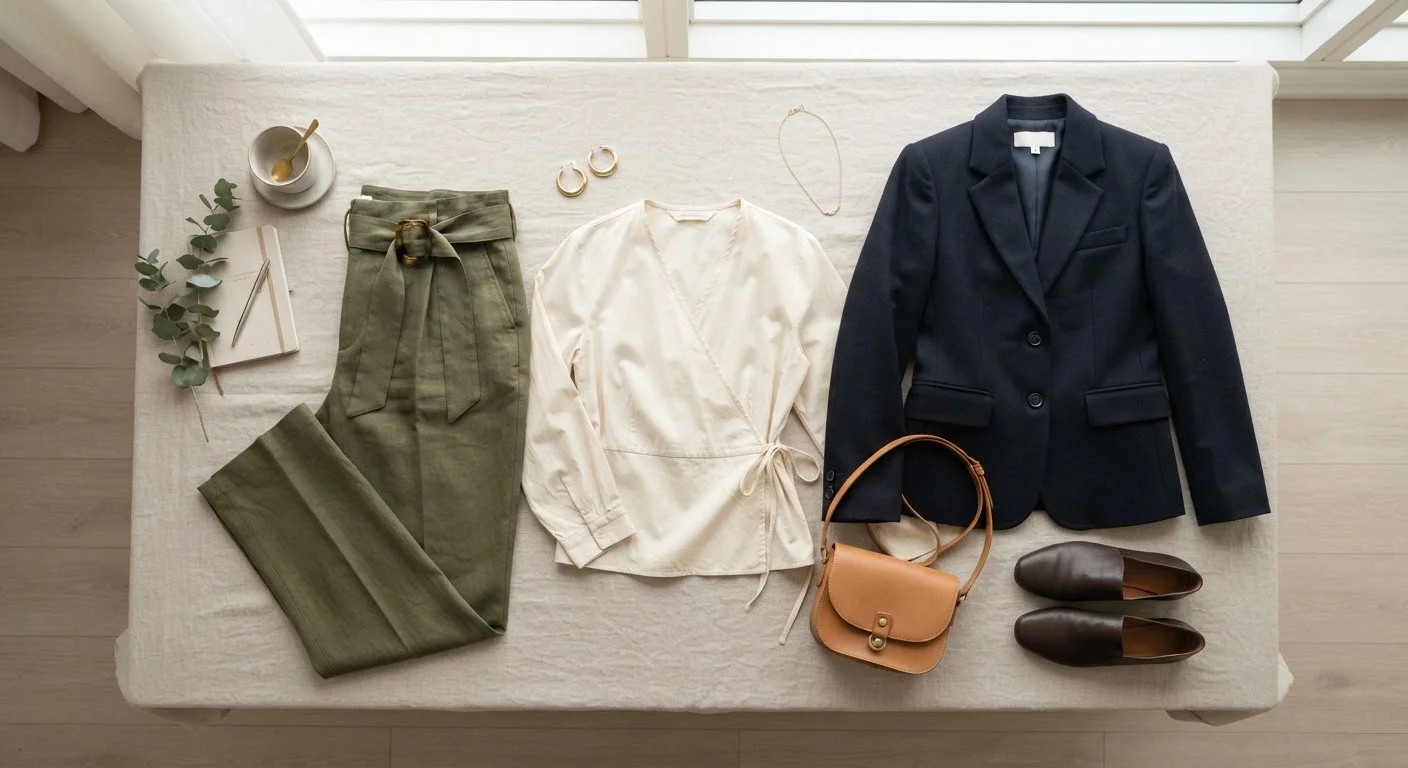
A capsule wardrobe fails if individual pieces don't connect into wearable combinations. Before adding any item - even a replacement - mentally build three complete outfits around it using things you already own. If you can't, it doesn't belong in the capsule yet.
A practical exercise: photograph your keeper pile laid flat, then experiment pairing items digitally or on the floor before hanging everything back up. This makes gaps visible and prevents duplicate purchases (the fourth navy top, the third pair of black pants).
Think in outfit formulas rather than individual items. A formula might be: one trouser + one fitted top + one layering piece. If you have three bottoms, four tops, and two layers that all mix, that formula generates dozens of combinations - more than enough for a full working week and casual weekends.
Building intentional shopping habits around this thinking can help you stay on track. For a broader framework, see our guide to building smarter shopping habits.
Maintaining and Evolving Your Capsule
A capsule wardrobe is not a one-time project - it's a system you tend. A light seasonal review (roughly every three to four months) is more effective than an annual overhaul, because small adjustments are easier than wholesale rebuilds.
At each review, ask three questions about every item: Did I actually wear this? Does it still fit well? Is it in good enough condition to keep? Items that fail two of three should be reconsidered honestly.
When adding new pieces, apply a one-in, one-out principle as a default. It's not a rigid rule, but it creates useful friction before an impulse buy. If a new piece is genuinely better than something you own and serves the same function, make the trade. If it's just additional, pause.
Your capsule will naturally shift as your life does - a new job, a move to a different climate, a change in how you spend your weekends. That's expected. The goal isn't a frozen wardrobe; it's a wardrobe that stays honest about how you actually live.
Capsules Look Different for Everyone
There is no single capsule wardrobe template that works universally. Lifestyle, climate, profession, and personal style all shape what belongs in yours. Guides and examples online can be useful for inspiration, but treat them as starting points rather than blueprints - your closet should reflect your real life, not a curated social media aesthetic.