The Six Required Sections of Every Pet Food Label
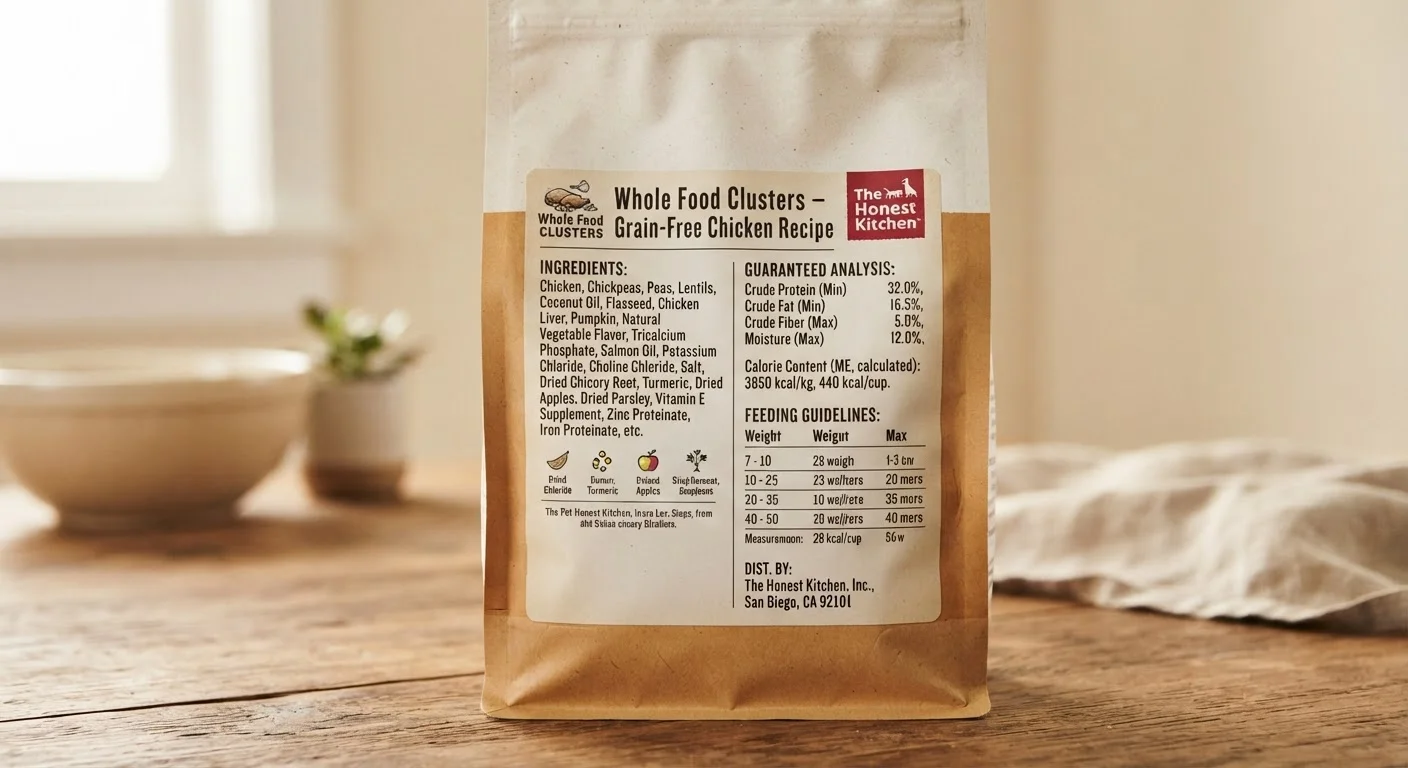
Pet food sold in the United States must meet labeling standards set by the AAFCO and, where applicable, state feed control laws. Every compliant label includes six mandatory elements: the product name, the net weight, the manufacturer's name and address, the ingredient list, the guaranteed analysis, and the nutritional adequacy statement. Understanding what each section actually communicates - and what it doesn't - is the foundation of reading any label clearly.
The product name is more regulated than it looks. AAFCO rules govern what percentage of a named ingredient must be present based on the wording used. A product called "Beef Dog Food" must contain at least 95% beef (excluding water). Add the word "dinner," "entrée," or "formula," and that threshold drops to 25%. A label reading "with beef" only requires 3% beef. These rules apply to the named ingredient, not overall protein content.
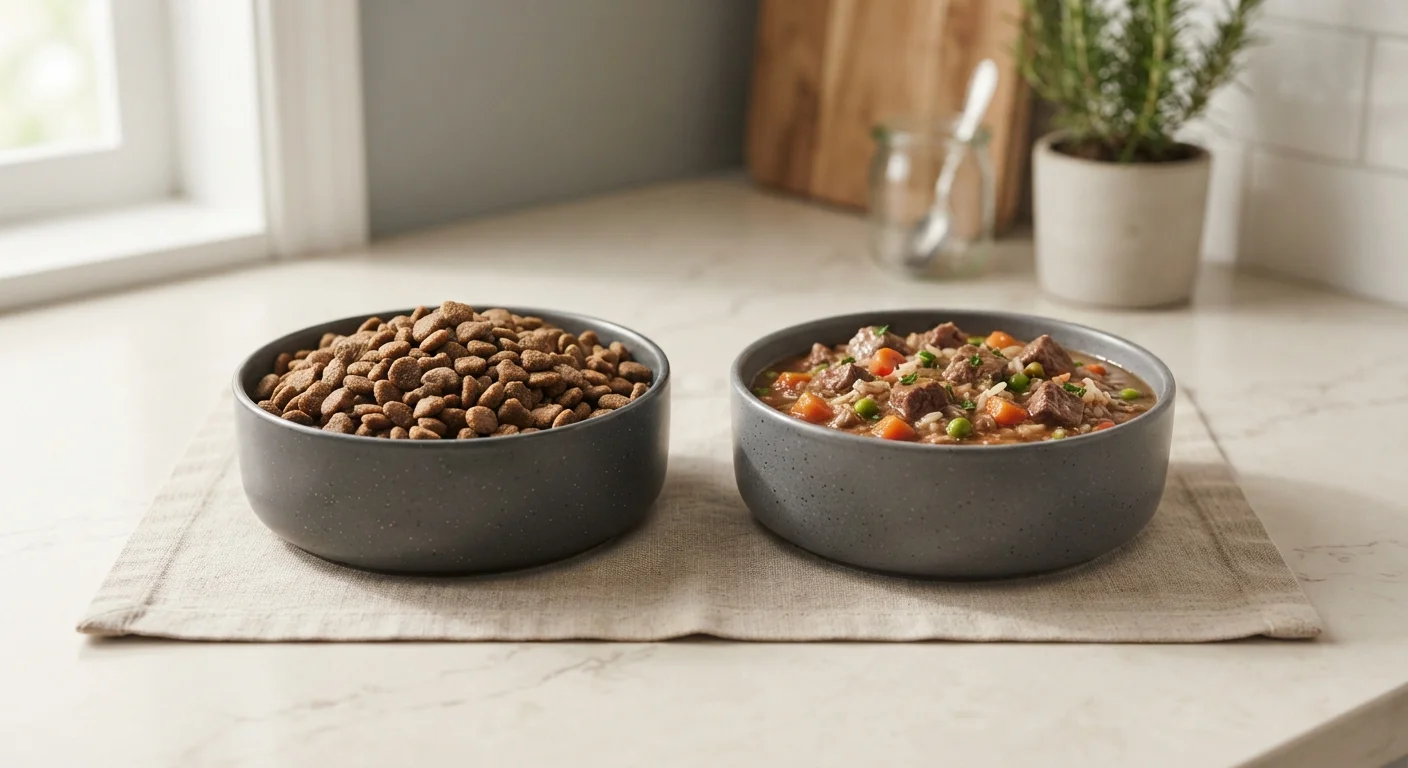
For a deeper look at what different feeding formats mean nutritionally, see our comparison of dry kibble and wet food.
Ingredient Lists: What the Order Tells You
Ingredients are listed by weight before processing, heaviest first. This sounds straightforward, but moisture content complicates it. Fresh chicken is about 70% water, so it weighs more before cooking than after. Once processed, chicken meal - which is pre-dried - often contributes more protein per pound than whole chicken listed above it. Neither format is inherently superior; knowing this helps you interpret the list rather than assume the first ingredient tells the whole story.
Watch for ingredient splitting, a practice where a single ingredient (such as corn) appears multiple times under different names (corn flour, corn gluten meal, ground corn). Each entry weighs less individually, which pushes the ingredient lower on the list even though it represents a significant portion of the total formula.
Ingredients that sound alarming - like "meat by-products" - are defined by AAFCO. By-products include organ meats such as liver and kidney, which can be nutritionally dense. The term doesn't mean low quality by default, though it does mean the specific parts aren't always disclosed. When precise sourcing matters to you, look for labels that specify the organ or tissue.
For context on how macronutrients function in a diet, the article protein, carbs, and fat: what each macronutrient actually does offers useful background applicable to pets as well as people.
Guaranteed Analysis and the AAFCO Adequacy Statement
The guaranteed analysis panel lists minimum percentages of crude protein and crude fat, plus maximum percentages of crude fiber and moisture. Note that these are guarantees of minimums or maximums - not exact values. Actual nutrient content in a given batch can be higher than the minimums stated.
One important limitation: comparing guaranteed analysis figures across wet and dry foods requires a conversion to a dry matter basis. Wet food typically contains 75-82% moisture; dry kibble contains around 10%. Removing moisture from both before comparing gives a true apples-to-apples view of nutrient density. Divide the stated nutrient percentage by the dry matter percentage (100 minus moisture %) to get the dry matter value.
Guaranteed Analysis
A mandatory panel showing minimum crude protein and fat percentages plus maximum crude fiber and moisture. Values represent guarantees, not exact nutrient content.
AAFCO Adequacy Statement
A label declaration confirming a pet food meets established nutrient profiles or passed feeding trials for a specific life stage. It is set by the Association of American Feed Control Officials.
Dry Matter Basis
A method of comparing nutrient content across foods with different moisture levels by removing moisture from the calculation, enabling accurate comparisons between wet and dry products.
Ingredient Splitting
A formulation practice where a single ingredient appears under multiple names on the ingredient list, causing each entry to weigh less and appear lower on the list individually.
By-Products
Secondary animal-derived ingredients such as organ meats defined by AAFCO. The term does not inherently indicate low nutritional quality, but the specific tissues included are not always disclosed.
Crude Protein
A measure of total nitrogen-containing compounds in a food, used as a proxy for protein content. It includes protein from all sources, not just animal-sourced ingredients.
The AAFCO nutritional adequacy statement is one of the most important lines on the bag. It indicates whether the food has been formulated to meet AAFCO nutrient profiles or was tested through feeding trials for a specific life stage (adult maintenance, growth, reproduction, or all life stages). A food stating it "meets AAFCO nutrient profiles" was calculated against a nutrient database. A food backed by feeding trials has been tested on live animals - a more rigorous standard, though neither guarantees it suits every individual animal.
Always pair label reading with guidance from your veterinarian, particularly when feeding growing puppies, kittens, pregnant animals, or pets with diagnosed health conditions. Labels tell you what's in the bag; your vet can tell you whether it fits your individual pet's needs. See why portion size matters more than most owners realize for how feeding amounts interact with nutritional value.
This article is for general informational purposes only and does not constitute veterinary or dietary advice. Consult a licensed veterinarian for guidance specific to your pet's health and nutritional needs.