
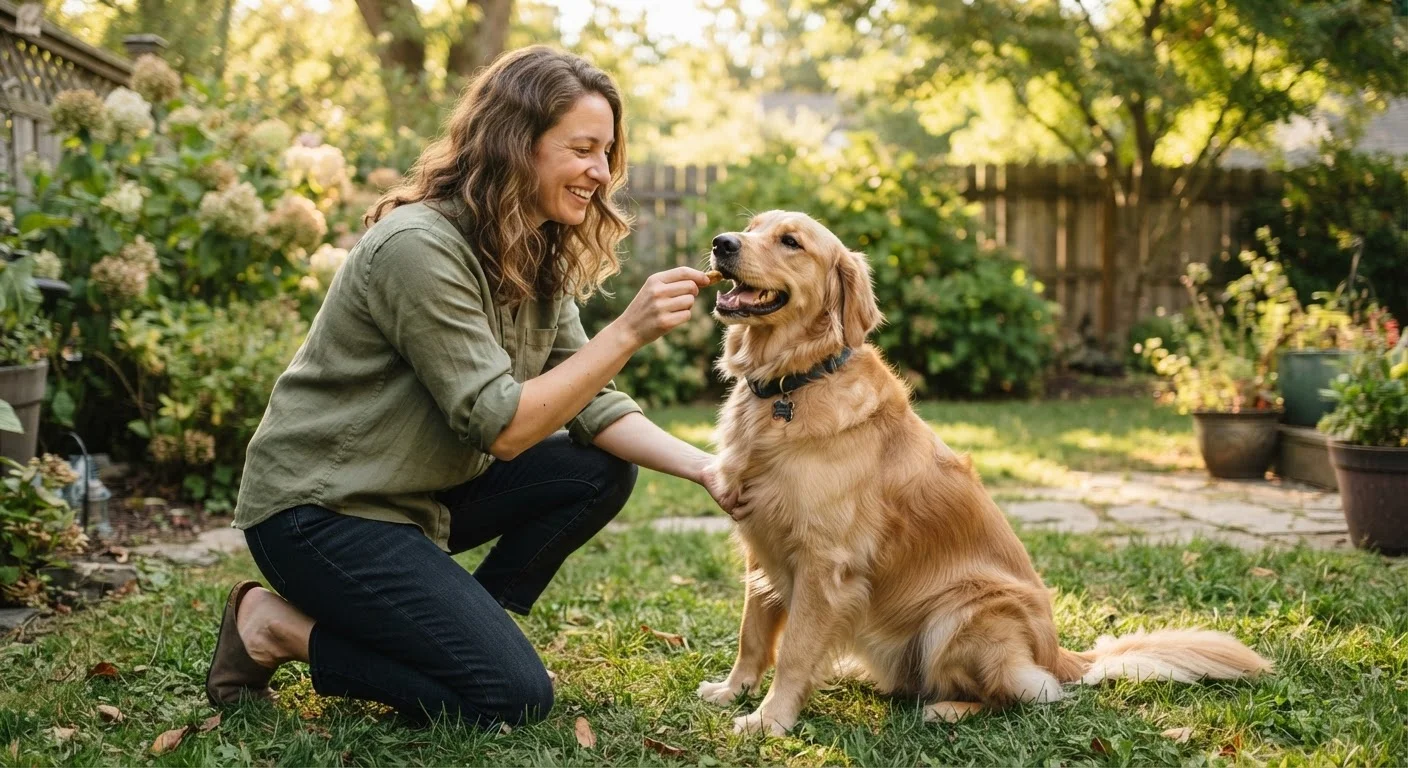
What Happens in the Brain During Reward-Based Training
When an animal performs a behavior and immediately receives a reward, the brain releases dopamine - a neurotransmitter associated with anticipation and pleasure. This dopamine signal strengthens the neural pathway connected to that behavior, making the animal more likely to repeat it. Over repeated trials, the pathway becomes more efficient, and the behavior begins to feel automatic.
This is the same mechanism that underlies habit formation in humans - the brain is essentially building a shortcut. For pet owners, understanding this means recognizing that training is not about obedience through dominance; it is about shaping neural pathways through experience.
~1-2 sec
Optimal reward delivery window after behavior
Behavioral scientists generally identify this narrow window as critical for accurate learning; delays beyond this risk reinforcing unintended actions.
5-10 min
Recommended session length for dogs
Professional trainers and veterinary behaviorists widely recommend short, frequent sessions to prevent mental fatigue and maintain high motivation.
Timing is the critical variable. If the reward arrives too late, the animal's brain associates the treat with whatever behavior occurred most recently - which may not be the one you intended to reinforce. This is why many trainers use a marker signal, such as a short click from a clicker or a specific word like "yes," to pinpoint the exact moment the correct behavior occurs before the treat is delivered.
The Four Principles That Make It Work
Positive reinforcement training is most effective when four core principles are applied consistently:
- Immediacy: The reward follows the behavior within one to two seconds. Delayed rewards teach the wrong lesson.
- Relevance: The reward must be something the animal actually wants in that moment. A treat a dog barely tolerates will produce slow, inconsistent learning compared to a high-value reward the dog finds genuinely exciting.
- Consistency: Every member of the household should use the same cues and criteria. Mixed signals - one person allowing a behavior while another corrects it - create confusion that prolongs training significantly.
- Rate of reinforcement: During the early stages of learning a new behavior, rewards should come frequently. As the behavior becomes reliable, rewards can be phased to an intermittent schedule, which research in behavioral science shows actually increases behavioral persistence.
Start Every New Behavior in a Quiet Environment
Distractions compete for your pet's attention and make it harder for them to focus on learning. Begin each new skill in the least stimulating environment possible - typically indoors with no other pets or people nearby. Once the behavior is reliable there, gradually introduce distractions one at a time. Rushing this step is one of the most common reasons training plateaus.
These principles connect closely to the idea of building a reliable daily routine for your pet - predictability and structure reinforce learning both inside and outside formal training sessions.
Common Mistakes That Undermine Reward-Based Training
Even owners committed to positive reinforcement often encounter frustrating plateaus. Most can be traced to a few recurring errors.
Rewarding the wrong moment: Praising a jumping dog the instant it lands - even to say "no" - can reinforce the jump itself. The rule is simple: if the pet gets attention or a treat when performing an unwanted behavior, that behavior is being reinforced regardless of intent.
Moving too fast: Many owners try to add verbal cues, distractions, and distance simultaneously before the pet understands the base behavior in a calm environment. Trainers generally advise building the behavior in one context first, then gradually adding complexity - a process called proofing.
Skipping the marker: Without a consistent marker signal, animals have a harder time identifying exactly which action earned the reward. A clear, consistent marker makes feedback precise and dramatically speeds up learning.
Positive Reinforcement Is Not Permissiveness
A common misconception is that reward-based training means allowing any behavior the pet chooses. In practice, it involves clear criteria for which behaviors earn rewards and which do not. Unwanted behaviors are addressed by consistently withholding reinforcement and redirecting the animal toward a behavior that can be rewarded - a structured, deliberate process rather than an absence of expectations.
Understanding what not to do is as important as knowing the correct steps. For readers interested in the underlying vocabulary of behavior change, reviewing key terms in habit and behavior science can sharpen your understanding of how reinforcement concepts translate across species.
Applying These Principles in Everyday Life
Formal training sessions matter, but so does what happens between them. Every interaction with your pet is an opportunity to reinforce or inadvertently undermine the behaviors you want. Asking for a simple known behavior - a "sit" before placing a food bowl - keeps trained cues sharp without requiring a dedicated session.
Progress in training, much like building any routine, benefits from small, sustainable steps rather than ambitious overhauls. The principle of "stacking" new behaviors onto established ones is something behavioral researchers recognize across species - similar to how humans use existing routines to anchor new habits. If your dog already sits reliably for meals, building a "wait" cue onto that existing behavior is far easier than teaching it from scratch in an unrelated context.
This article provides general educational information about animal training principles and does not constitute professional veterinary or behavioral advice. For significant behavioral concerns, consult a certified professional trainer or veterinary behaviorist.