Why Habit Science Has Its Own Vocabulary
Reading about behavior change can feel like learning a second language. Words like cue, reinforcement, and automaticity appear constantly - but without clear definitions, the most useful insights can blur into noise. This reference breaks down the core terms in habit science so you can read research-informed content with real comprehension and put ideas to work in your own life.
For a deeper look at how the brain physically encodes routines, see the science behind habit formation. And if you're brand-new to building routines intentionally, a practical introduction to building healthy habits from scratch is a strong starting point.
| Average time for a habit to become automatic | 18 to 254 days (Lally et al., European Journal of Social Psychology, 2010) |
| Core components of the habit loop | Cue, Routine, Reward |
| Most researched habit-building technique | Implementation intentions (Gollwitzer & Sheeran, Advances in Experimental Social Psychology, 2006) |
| Field of study | Behavioral psychology and neuroscience |
| Key brain region involved in habit storage | Basal ganglia (Ann Graybiel, MIT neuroscience research) |
The Core Glossary: Habit Science Terms Defined
The terms below appear most frequently in habit science literature and popular wellness writing. Familiarizing yourself with them gives you a working framework for understanding - and evaluating - the advice you encounter.
Habit Loop
The three-part neurological pattern - cue, routine, reward - that underlies nearly every automatic behavior. Popularized by researcher Charles Duhigg, the loop describes how habits are triggered, executed, and reinforced in the brain.
Cue (Trigger)
A signal that initiates a habitual behavior. Cues can be a time of day, a location, an emotion, another person, or an immediately preceding action.
Routine
The behavior itself - the action performed in response to a cue. This is the part of a habit that is most visible and most directly changeable.
Reward
The positive outcome or feeling that follows a routine and reinforces the habit loop. Rewards signal to the brain that the sequence is worth remembering and repeating.
Automaticity
The degree to which a behavior occurs with minimal conscious effort or deliberate decision-making. High automaticity is the hallmark of a well-established habit.
Keystone Habit
A single habit whose adoption tends to trigger positive changes in other, unrelated areas of life. Regular exercise, for example, often improves sleep, diet, and stress management as secondary effects.
Habit Stacking
A strategy in which a new behavior is anchored to an existing habit, using the established cue as the trigger for both. This technique leverages pre-existing neural pathways to reduce the effort required to start new routines.
Implementation Intention
A specific when-where-how plan for performing a behavior, framed as an 'if-then' statement (e.g., 'When I pour my morning coffee, I will take a five-minute walk'). Research consistently links these plans to higher follow-through rates.
Craving
The motivational force connecting a cue to the routine - essentially, the anticipation of the reward. Without craving, the habit loop does not activate reliably.
Behavioral Reinforcement
The process by which a consequence (reward or avoidance of something unpleasant) increases the likelihood that a behavior will be repeated. Positive reinforcement is especially relevant to sustainable habit formation.
Habit Plateau
The point at which a behavior has become sufficiently automatic that progress feels invisible or motivational momentum drops. Understanding this phase helps people persist rather than abandon a habit mid-formation.
Environmental Design
The intentional arrangement of your physical or digital surroundings to make desired behaviors easier and undesired behaviors harder. Placing a water bottle on your desk is a simple example of environmental design in action.
Once you know these terms, you can apply them practically. For example, habit stacking - deliberately pairing a new behavior with an existing cue - is one of the most accessible entry points for real-world change. Explore how it works in detail through stacking habits using existing routines.
These Terms Describe Patterns, Not Prescriptions
Habit science describes how behaviors tend to work at a population level - individual experiences vary considerably based on stress, environment, health, and life circumstances. Use these concepts as a thinking framework, not a rigid formula. If you're working through significant behavior change related to a health condition, consider involving a qualified healthcare or mental health professional.
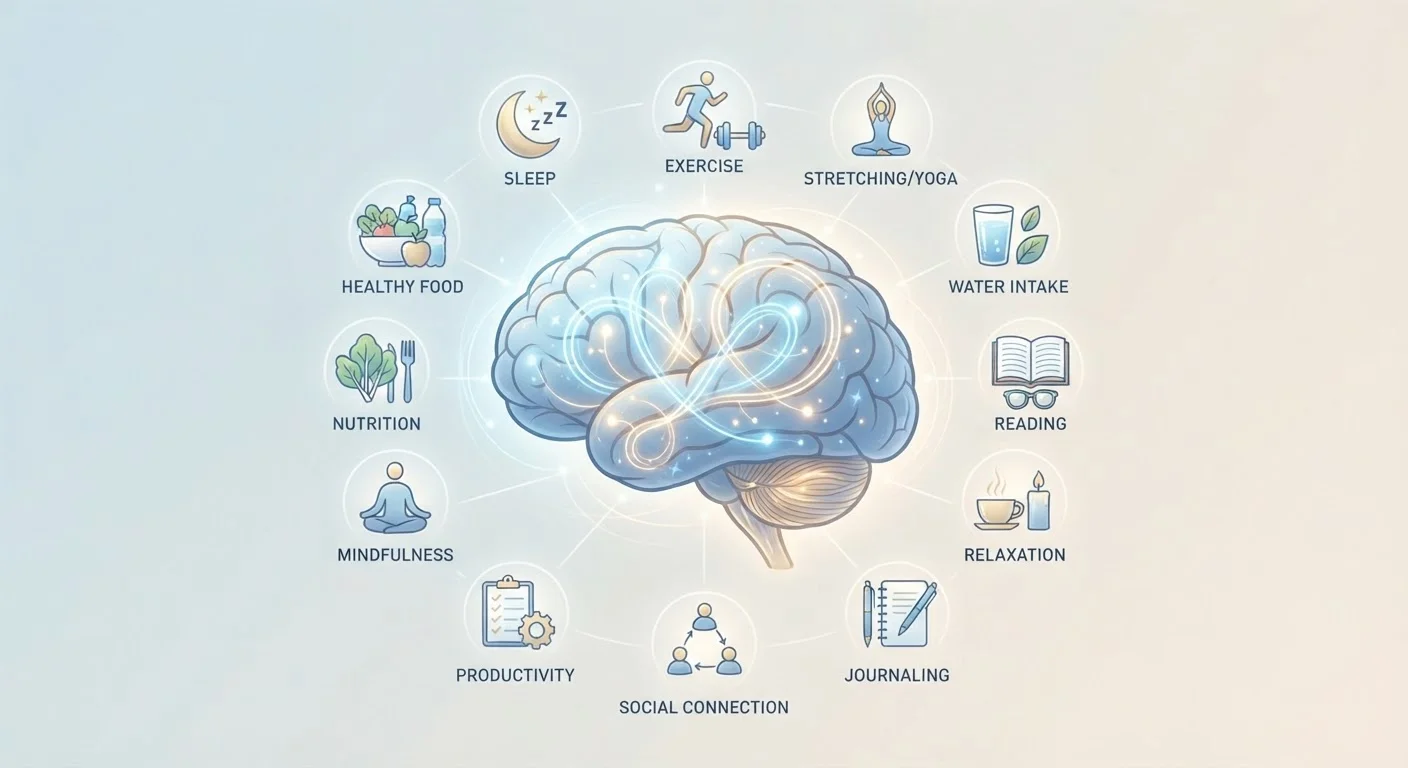
These concepts apply across the full wellness spectrum - from physical health fundamentals like exercise and nutrition to mental wellness areas like sleep and stress management. Habits don't operate in silos; the same loop structure governs a morning walk and a bedtime wind-down routine alike.
Putting the Vocabulary to Use
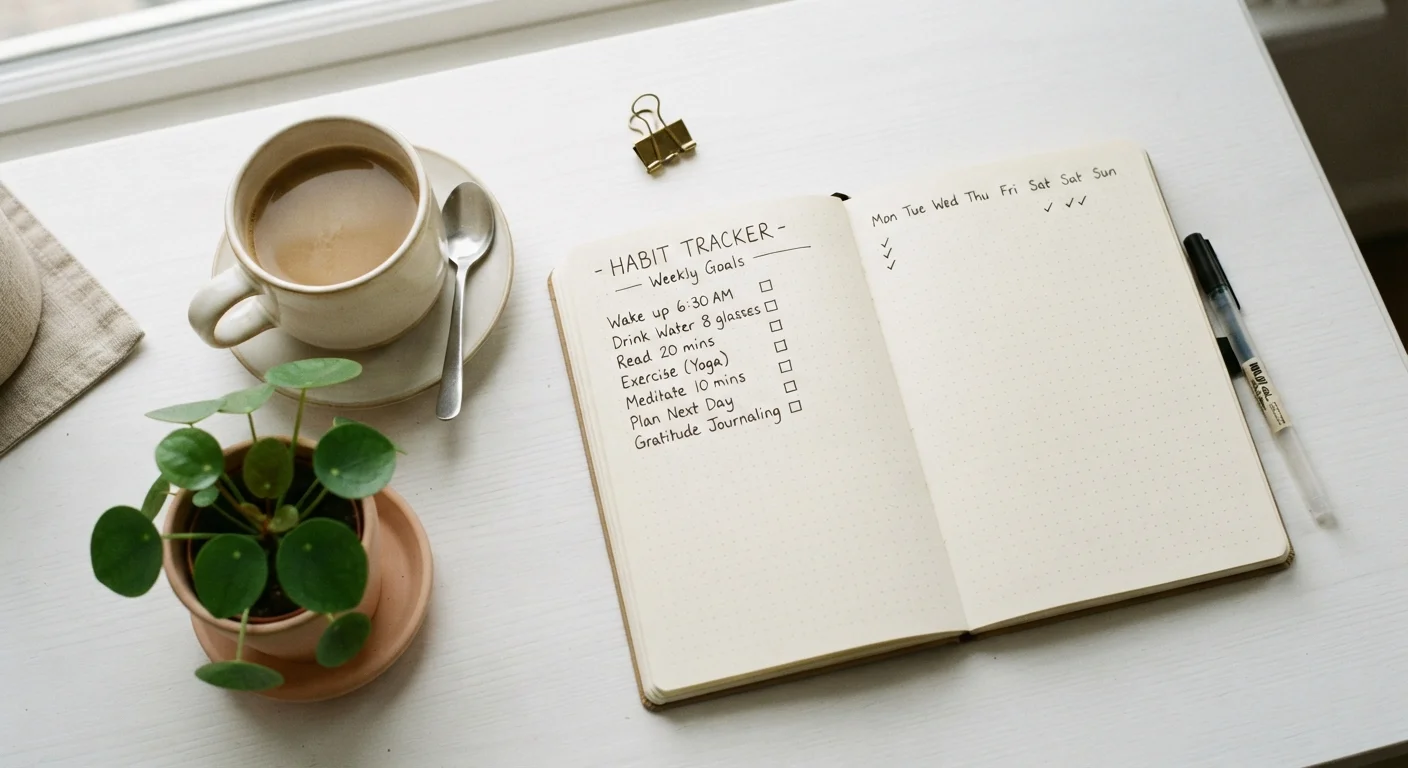
Knowing these terms transforms vague intentions into structured plans. When you identify your cue, design a simple routine, and attach a clear reward, you're working with the grain of how your brain learns - not against it. Tracking your implementation intentions (the specific when-and-where plans you make) has been shown in research to significantly increase follow-through.
40%
Daily actions performed out of habit
Research published in Psychological Science estimates roughly 40% of everyday behaviors are habitual rather than consciously decided.
2-3x
Higher follow-through with implementation intentions
A meta-analysis by Gollwitzer and Sheeran found that forming specific when-where-how plans significantly increased the likelihood of following through on intended behaviors.
A good next step after learning the vocabulary is a personal audit. Use the daily wellness audit to evaluate whether your current habits are actually serving your health goals. You can also explore how the habits worth building shift across decades in healthy habits across every stage of adult life.
This article is for general informational and educational purposes only and is not a substitute for professional medical advice. Always consult a qualified healthcare provider with questions about your health or wellness.