The Brain's Habit Loop: Cue, Routine, Reward
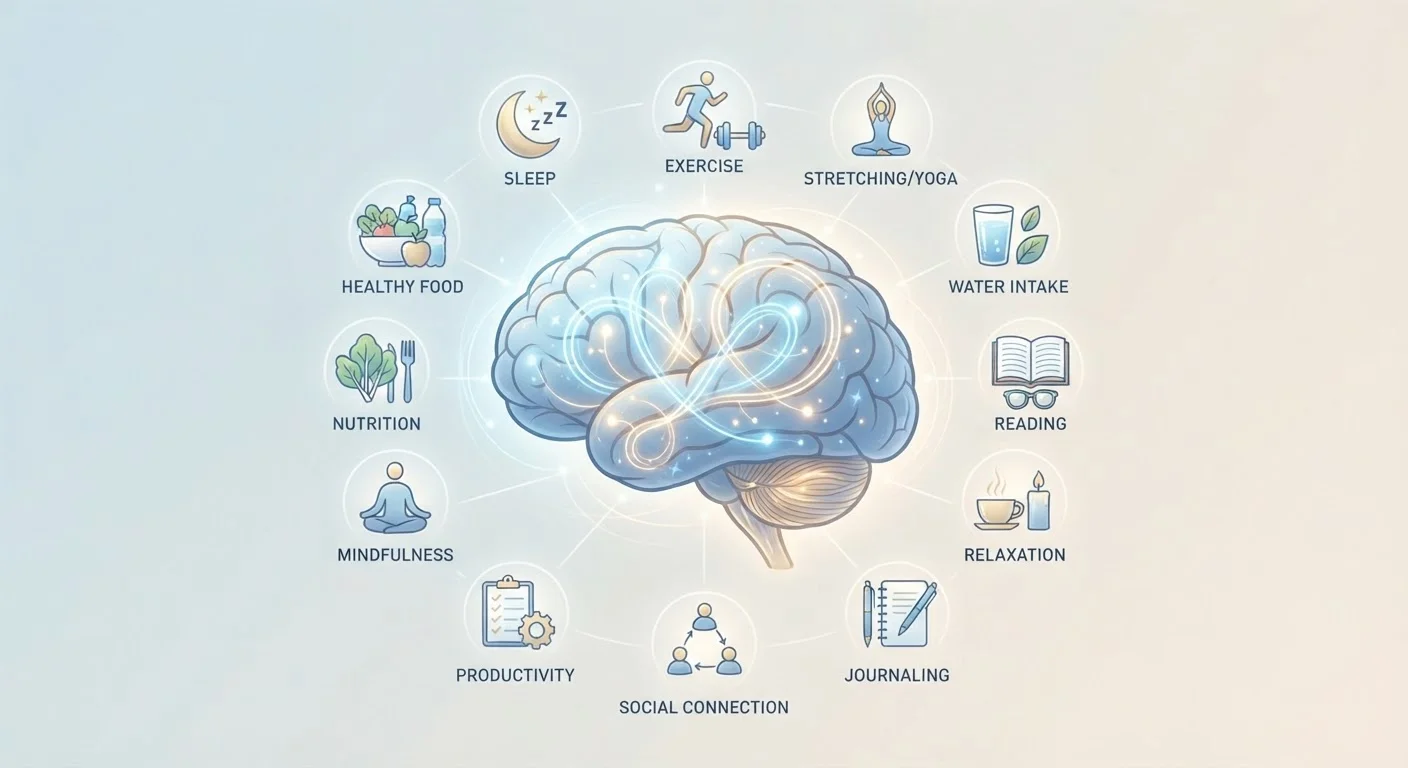
Every habit your brain stores follows the same basic architecture: a cue triggers a routine, which produces a reward. Neuroscientists refer to this as the habit loop, and it operates largely below conscious awareness. Over time, the brain chunks the entire sequence together, so the cue alone begins to generate anticipation of the reward - motivating the behavior almost automatically.
This loop is powered by dopamine, a neurotransmitter involved in motivation and reward learning. When a behavior produces a positive outcome, dopamine signals reinforce the connection between the cue and the action, making the sequence more likely to repeat. Critically, as the habit solidifies, dopamine release begins to occur at the cue itself - before the reward arrives - which explains why habitual urges can feel so compelling.
For a deeper look at the vocabulary behind this science, see our guide to key terms in habit science.
“Habits are not a finish line to be crossed; they are a lifestyle to be lived. The goal is not to run a marathon; the goal is to become a runner.”
— James Clear, Author and researcher specializing in habits and behavior change
Why Context Is Everything
One of the most consistent findings in habit research is that environmental context strongly shapes automatic behavior. Habits don't live in a vacuum - they're tightly linked to the physical and temporal settings in which they're performed. Exercising at the same time each morning, or making coffee immediately after turning on your laptop, creates stable cue-behavior pairings that the brain can encode efficiently.
This is why habits often break when life circumstances change - a new job, a move, travel, or illness disrupts the environmental cues the behavior was anchored to. It's also why building habits around existing stable routines tends to work better than trying to create entirely new time slots. The technique of habit stacking - pairing new behaviors with existing ones exploits exactly this mechanism.
Design Your Environment First
Before relying on willpower, look at your physical space. Place visual cues for desired habits where you'll naturally see them at the right moment - a water bottle on your desk, running shoes by the door. Reducing the effort required to start a behavior is one of the highest-leverage moves you can make early in habit formation.
Why Habits Break: The Early Drop-Off Problem
The first two weeks of any new behavior are statistically the riskiest period. Motivation is high at the start but hasn't yet been replaced by automaticity - the behavior still requires conscious effort and willpower, both of which are finite resources. When life gets busy or uncomfortable, the new behavior is usually the first thing dropped.
Common reasons habits collapse early include: setting overly ambitious targets, relying solely on motivation rather than structure, and failing to plan for obstacles. Habits that are too complex, too vague, or too disconnected from existing routines are particularly vulnerable. Understanding this pattern in advance is a meaningful advantage - explore the specific reasons in our article on why healthy habits fall apart after two weeks.
66 days
Average time for a habit to become automatic
A 2010 study by Phillippa Lally and colleagues at University College London found automaticity developed on average in 66 days, ranging from 18 to 254 days.
40%
Share of daily actions driven by habit
Research by Wendy Wood and colleagues estimated that roughly 40% of people's daily behaviors are habitual rather than deliberate decisions.
~2 weeks
When most new exercise habits collapse
Studies on exercise adherence consistently show the highest dropout rates occur within the first two weeks of starting a new program.
Practical Conditions That Help Habits Last
Behavioral research points to several conditions that meaningfully improve habit durability. First, specificity matters: "I will walk for 20 minutes after lunch on weekdays" outperforms "I'll exercise more" because it includes a clear cue (lunchtime), defined action, and bounded commitment. Second, lowering friction - laying out workout clothes the night before, keeping healthy snacks at eye level - reduces the effort required at the moment of action.
Third, immediate rewards close the feedback loop. Because long-term health outcomes are abstract and delayed, attaching a small, immediate positive experience to the behavior (listening to a favorite podcast only during walks, for example) gives the brain a reward signal to learn from now. Finally, social accountability can reinforce habit formation for many people, though the dynamics differ - our piece on social vs. solo habits examines how both approaches compare.
This article is for general informational and educational purposes only and is not a substitute for advice from a qualified healthcare professional. Individual health needs vary - consult your doctor or a licensed health provider before making significant changes to your routine.