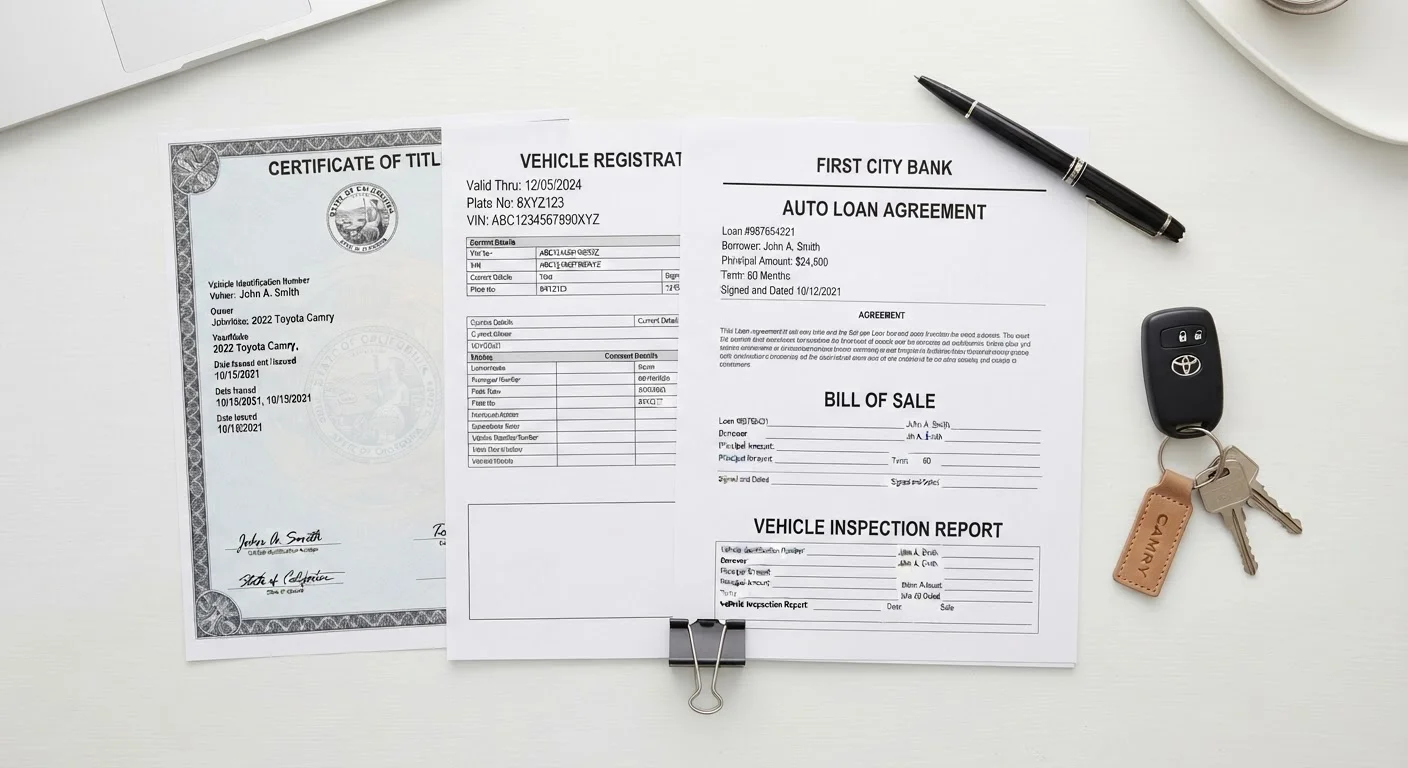
The Purchase: Financing and Closing the Deal
Buying a car involves more than agreeing on a price. Whether you're financing through a bank, credit union, or dealership, the Annual Percentage Rate (APR) - the yearly cost of borrowing expressed as a percentage - determines how much you'll actually pay over the life of the loan. A lower APR on a shorter loan term almost always costs less overall, even if monthly payments are higher.
Before signing, review the full loan breakdown: total financed amount, interest paid, and any add-ons like GAP coverage (which pays the difference between what you owe and what your car is worth if it's totaled). For a plain-language explanation of these terms, see the Car Ownership Glossary.
If you're a first-time buyer, our first-car roadmap walks through the paperwork and negotiation process step by step.
Get pre-approved for a loan from your bank or credit union before visiting a dealership - it gives you a concrete rate to compare against any financing offer on the lot.
Dealership financing can be competitive, but walking in with a pre-approval shifts negotiating leverage and helps you evaluate offers objectively rather than reactively.
Keep every service receipt in a dedicated folder - even routine oil changes. A documented history is one of the most persuasive tools when negotiating a private sale price.
Buyers factor risk into their offers; proof of consistent maintenance directly reduces perceived risk and supports your asking price.
Registration, Title, and Insurance
Once you've signed, three immediate obligations follow: titling the vehicle in your name, registering it with your state, and securing auto insurance before driving it off the lot. Each state sets its own fees, timelines, and requirements - some charge a flat registration fee, others base it on vehicle weight or value.
Auto insurance is not one-size-fits-all. Coverage types - liability, collision, comprehensive, and uninsured motorist - each protect against different scenarios. Lenders typically require full coverage (collision and comprehensive) until a loan is paid off. Coverage needs, terms, and premiums vary by provider and individual circumstance; consult a licensed insurance agent to understand what's appropriate for your situation.
Insurance Requirements Vary by State
Every U.S. state sets its own minimum insurance requirements, and some require additional coverage types like personal injury protection (PIP). What's legally sufficient in one state may not be adequate in another - or for your lender's requirements. Always verify the requirements in your state and read your full policy document before assuming you're covered.
Ongoing Maintenance and Operating Costs
This is where many owners get caught off guard. Beyond the monthly loan payment, a car demands fuel, oil changes, tire rotations, brake inspections, and periodic repairs. These costs are predictable in category if not always in timing.
A general rule among mechanics: follow the manufacturer's recommended maintenance schedule - typically found in the owner's manual - rather than waiting for something to break. Skipping oil changes or ignoring minor issues compounds into major, expensive repairs. See our Car Maintenance hub for upkeep guidance by system.
New owners consistently underestimate these recurring expenses. Here's what gets overlooked most, including registration renewals and rising insurance premiums.
$12,000+
Average annual cost of car ownership
According to AAA's annual 'Your Driving Costs' study, the average American driver spends over $12,000 per year when accounting for depreciation, fuel, insurance, and maintenance.
15-20%
Typical first-year depreciation rate
Many vehicles lose a significant portion of their value in the first year; exact rates vary by vehicle type, brand, and market conditions.
Protecting Your Investment Over Time
Depreciation - the loss of value over time - is the largest cost most car owners never pay as a bill but absolutely feel when they go to sell. New vehicles can lose 15-20% of their value in the first year alone, though rates vary by make, model, and market conditions.
Protecting resale value means keeping up with scheduled maintenance, retaining service records, avoiding excessive modifications, and addressing cosmetic damage early. A well-documented service history is concrete proof to future buyers that the car was cared for.
The true annual cost of ownership - including depreciation, fuel, insurance, and maintenance - often surprises owners who only focused on the monthly payment.
Don't Skip Maintenance to Save Money Short-Term
Deferring routine maintenance - especially oil changes, coolant flushes, and brake inspections - may seem like a cost-saving move, but minor neglect frequently leads to major repairs. A $75 oil change skipped can contribute to an engine problem costing thousands. Follow the manufacturer schedule as a baseline minimum.
Selling or Trading In Your Vehicle
When it's time to move on, you have three main options: private sale, dealer trade-in, or selling to a third-party buyer service. Each has tradeoffs. Private sales generally yield the highest return but require handling listings, negotiations, and paperwork yourself. Trade-ins are convenient but typically offer less than market value. Third-party services fall somewhere in between.
Before listing, gather your title (free and clear if the loan is paid off), maintenance records, and complete an odometer disclosure as required by federal law. If you still owe on the vehicle, coordinate with your lender - the sale proceeds must satisfy the remaining loan balance first.
Pricing your vehicle accurately using market data (not sentiment) and being transparent about its condition leads to faster, smoother transactions. Understanding what buyers look for can help you present the vehicle honestly and effectively.
This article is for general informational purposes only and does not constitute financial, legal, or insurance advice. Consult qualified professionals for guidance tailored to your individual situation.