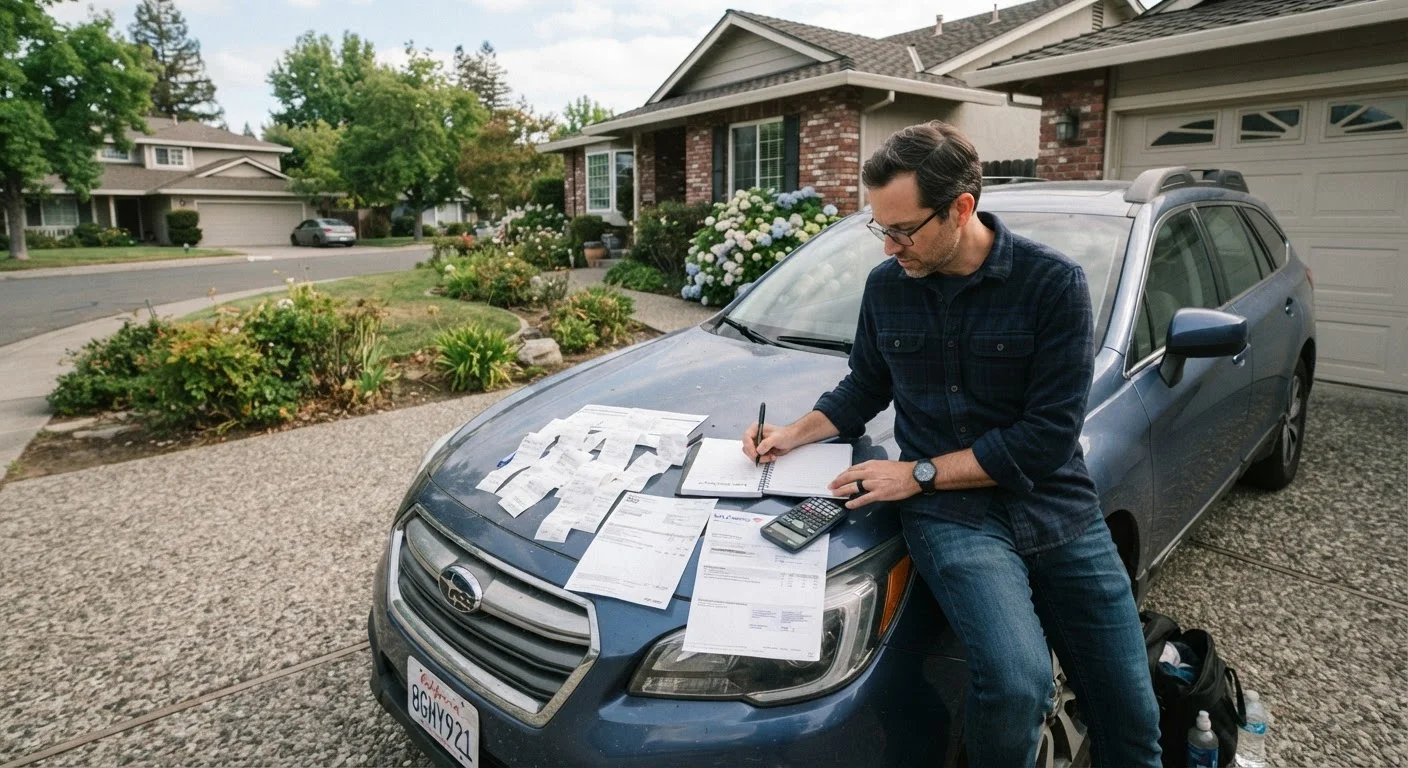

The Gap Between What You Expected and What You Owe
Most people approach car buying focused on one number: the monthly payment. It's understandable - that figure is front and center in every dealership conversation. But the monthly payment covers only the loan. Everything else that keeps the car legal, insured, and running adds a separate layer of cost that catches many new owners flat-footed.
For a fuller picture of what ownership actually involves, what car ownership costs beyond the sticker price is worth reviewing before you sign anything. And if you want an end-to-end breakdown, everything involved in owning a car from purchase to resale covers the full lifecycle. The mistakes below are the most common reasons new owners find themselves short.
Budgeting only for the loan payment and ignoring insurance premium increases after the first policy period.
Why it happens: Initial insurance quotes feel like a fixed cost, and new owners don't anticipate that rates can increase at renewal based on claims history, location changes, or broader market shifts.
Overlooking routine maintenance as a significant annual expense.
Why it happens: Oil changes and tire rotations seem minor individually, but new owners often don't add them up. When brakes, tires, filters, and fluid services are included, the annual total is considerably higher than most people initially estimate.
Forgetting annual registration fees, state vehicle taxes, and required safety or emissions inspections.
Why it happens: These costs don't appear on a monthly statement, so they fall off the mental checklist. Many new owners remember registration exists in theory but forget it when building a month-to-month budget.
Having no emergency repair fund and treating unexpected breakdowns as credit events.
Why it happens: Repairs feel unpredictable, so many owners avoid planning for them at all. When something breaks - a water pump, an alternator, a set of tires after a road hazard - the bill lands with no buffer to absorb it.
Ignoring depreciation as a real financial cost of ownership.
Why it happens: Depreciation is invisible - no invoice arrives, no payment is due. New owners tend to think of it as something to worry about only at trade-in time, not as an ongoing cost that affects the total money spent on the vehicle.
Building a Budget That Actually Holds Up
The fix for most of these mistakes is the same: build a realistic annual budget before you buy, not after the bills arrive. Start by listing every fixed recurring cost - insurance, registration, inspections - and add a monthly contribution to a dedicated repair fund. Industry guidance from organizations like AAA consistently puts the average annual cost of owning and operating a vehicle in the thousands of dollars beyond the loan payment itself, though figures vary by vehicle type and region.
$12,000+
Average annual cost to own and operate a vehicle
AAA's annual Your Driving Costs study has consistently found total vehicle ownership costs - including depreciation, fuel, maintenance, insurance, and fees - exceed $10,000-$12,000 per year for many drivers, varying by vehicle type.
~$1,200
Estimated annual routine maintenance spending
Consumer financial research sources commonly estimate that routine maintenance - oil, tires, brakes, filters - runs several hundred to over a thousand dollars annually, depending on vehicle age and mileage.
Irregular expenses trip up even experienced budgeters. Spending categories that budgets most often overlook - including car registration and annual fees - are the same ones that create the biggest surprises. Treat maintenance and repairs the same way you'd treat any predictable irregular expense: set money aside monthly so the cost is never a shock.
For ongoing maintenance guidance, the car maintenance hub is a useful reference. And if you've picked up assumptions about how often certain services are actually needed, car maintenance myths that cost drivers real money can help separate fact from habit. Small adjustments to how you plan for vehicle costs can prevent them from derailing your broader finances.