How the Cooling System Works
Your engine generates an enormous amount of heat - enough to destroy itself within minutes without a functioning cooling system. The system's job is to absorb that heat and release it before temperatures climb into the danger zone. It does this through a continuous loop of liquid coolant circulating between the engine and the radiator.
Here's the basic cycle: coolant flows through passages inside the engine block and cylinder head, absorbing heat as it goes. It then travels to the radiator - a large heat exchanger at the front of the car - where airflow (both from driving and from the radiator fan) pulls that heat out of the liquid. The cooled fluid then returns to the engine and the loop repeats.
This might sound simple, but precise temperature regulation matters. An engine that runs too cold operates inefficiently; one that runs too hot risks warped cylinder heads, a blown head gasket, or complete seizure. The system is designed to keep your engine within a relatively narrow optimal temperature window at all times. For a broader look at what goes into maintaining a vehicle, see our complete car ownership guide.
Key Components and What They Do
Each part in the cooling circuit has a specific role. Understanding them helps you diagnose problems faster.
- Coolant (antifreeze): A mixture of ethylene glycol and water - typically 50/50 - that resists freezing in winter and boiling in summer while transferring heat efficiently. Learn more about how coolant fits among your other fluids in our guide to car fluids.
- Radiator: The main heat exchanger. Coolant passes through a series of narrow tubes surrounded by thin metal fins; airflow strips heat away through those fins.
- Water pump: The mechanical heart of the system. It keeps coolant moving through the loop whenever the engine is running. Usually belt-driven.
- Thermostat: A small valve that stays closed when the engine is cold (so it warms up quickly) and opens once operating temperature is reached, allowing coolant to flow to the radiator.
- Radiator cap: Seals the system under pressure, which raises the boiling point of coolant and prevents vapor lock. A weak cap can cause overheating even when fluid levels look fine.
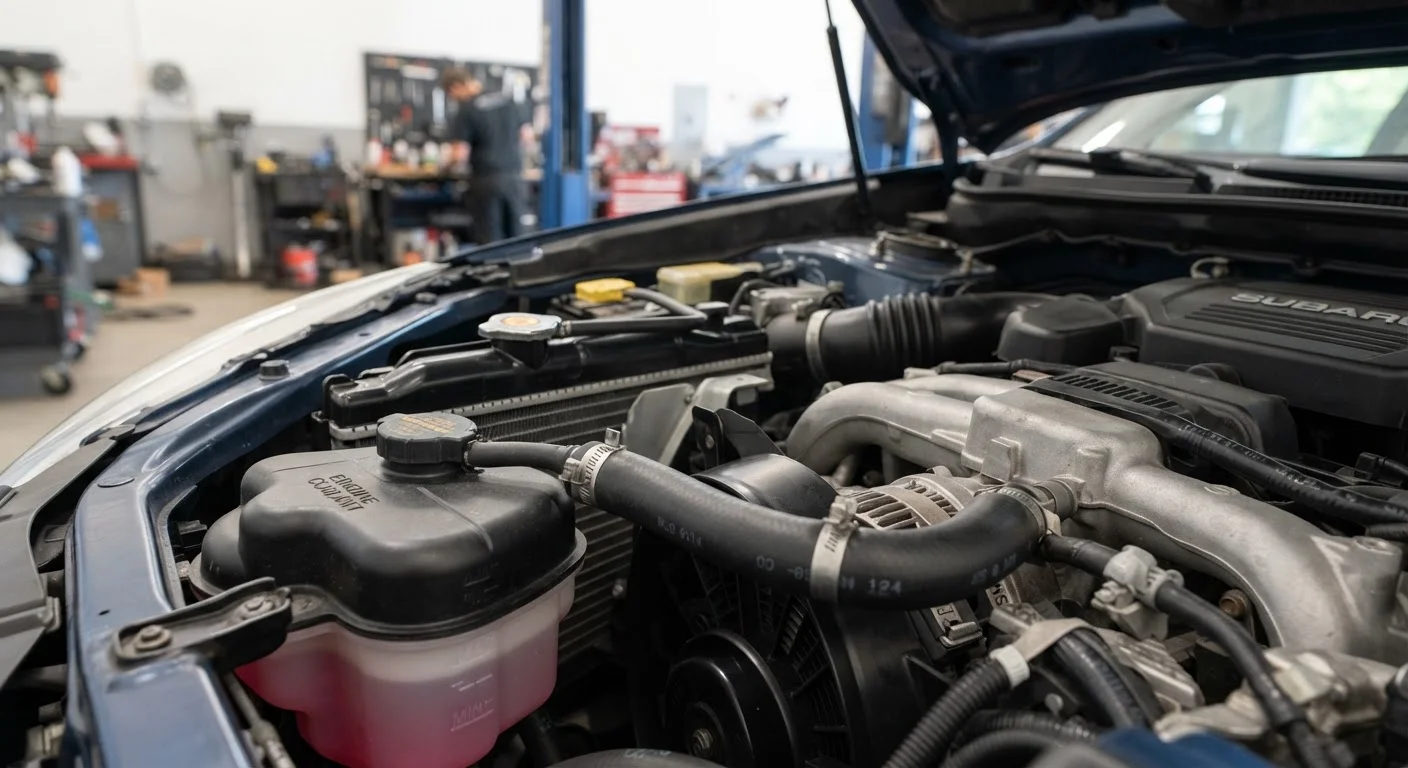
- Coolant reservoir: An overflow tank that accommodates coolant expansion as it heats up and returns it to the system when it cools.
- Cooling fan: Pulls air through the radiator when the vehicle is moving slowly or stationary. Electric fans are thermostat-controlled; older vehicles use a belt-driven mechanical fan.
- Hoses: Carry coolant between the engine, radiator, and heater core. The heater core is a small radiator inside the dashboard that uses engine heat to warm the cabin.
Always mix coolant with distilled water, not tap water. Tap water introduces minerals that accelerate corrosion inside the system over time.
Mineral deposits can clog narrow radiator tubes and degrade the coolant's ability to transfer heat, shortening the life of the entire system.
If you notice your heater blowing cold air on a warm engine, suspect low coolant or a failing thermostat before anything else - the heater core is the first casualty of either problem.
The heater core draws from the same coolant loop; restricted flow there is often an early, easy-to-notice signal of a broader cooling issue.
Common Cooling System Problems
Most cooling failures don't happen without warning. Here are the issues mechanics see most often and the signs that point to them.
~33%
Engine failures linked to overheating
Industry estimates suggest roughly one in three engine failures involves overheating as a contributing factor, making cooling system neglect one of the costliest maintenance oversights.
30K-50K mi
Typical coolant flush interval
Most vehicle manufacturers specify a coolant flush every 30,000 to 50,000 miles, though some modern long-life coolants can extend this interval - always verify in your owner's manual.
Coolant Leaks
The most frequent problem. Leaks can occur at hose connections, the radiator itself, the water pump seal, or the head gasket. Signs include a puddle of brightly colored fluid under your car (often green, orange, or pink depending on coolant type), a sweet smell from the engine bay, or a steadily dropping coolant level in the reservoir.
Thermostat Failure
A stuck-closed thermostat traps heat in the engine and causes rapid overheating. A stuck-open thermostat lets the engine run perpetually cold, hurting fuel economy and cabin heat output. Either way, the fix is typically inexpensive - replacement thermostats are cheap, though labor varies.
Water Pump Failure
Without coolant circulation, heat builds instantly. Symptoms include whining or grinding near the pump, coolant leaking from the front of the engine, or unexplained overheating. This is a job for a mechanic.
Radiator Blockage or Damage
Corrosion, mineral buildup, or physical damage to fins can restrict airflow or coolant flow. A clogged radiator may not fail dramatically - the temperature gauge may just creep higher than usual on hot days or in traffic.
Never Open a Hot Radiator Cap
The cooling system operates under pressure. Opening the radiator cap while the engine is hot can spray scalding coolant. Always wait until the engine has fully cooled - at least an hour after shutdown - before removing the cap or adding fluid.
Maintenance You Can Do Yourself
You don't need to be a mechanic to keep your cooling system in good shape. Several checks are straightforward and take only a few minutes.
- Check the coolant level: When the engine is cold, look at the plastic reservoir (usually labeled) and verify the fluid sits between the MIN and MAX marks. Never open a hot radiator cap - pressurized coolant can cause serious burns.
- Inspect hoses: Squeeze them. They should feel firm but slightly pliable. Hard, cracked, or mushy hoses are candidates for replacement.
- Look for leaks: A quick scan under the car and around hose connections after parking can catch problems early.
- Follow the flush schedule: Coolant degrades over time and becomes acidic, corroding metal components. Most manufacturers recommend flushing and replacing coolant every 30,000-50,000 miles or every two to five years - check your owner's manual for your specific vehicle.
Cooling system checks fit naturally into seasonal vehicle prep. Our seasonal maintenance calendar covers what to inspect before summer heat and winter cold arrive.
Top Off, Don't Overfill
When adding coolant, fill only to the MAX line on the reservoir - overfilling can cause the excess to purge through the overflow and create a mess that looks like a leak. Always add coolant to the reservoir, not directly to the radiator, unless the system has been drained for a flush.
When to Call a Mechanic
Some cooling system issues are simple checks; others require hands-on repair by someone with the right tools and training. Don't attempt a repair yourself if you're not comfortable - mistakes with the cooling system can lead to engine damage that's far more expensive than a mechanic's bill.
Get a mechanic involved for:
- Any active overheating - pull over safely, turn off the engine, and do not drive further until the cause is found
- Water pump replacement
- Radiator replacement or repair
- Head gasket diagnosis (symptoms include white exhaust smoke, milky oil, or coolant loss with no visible leak)
- Coolant system pressure testing to locate hidden leaks
If your temperature warning light comes on, treat it as an emergency, not an inconvenience. Continuing to drive an overheating engine risks catastrophic damage. For a full breakdown of what dashboard lights mean and how urgently each demands attention, see our dashboard warning lights guide.
First-time car owners may also benefit from our fundamentals of car ownership, which puts cooling system care in context alongside other essential habits.
This article is for general informational purposes only. For repairs beyond basic visual checks and fluid top-offs, consult a qualified mechanic. Never perform repairs you are not trained and equipped to carry out safely.