Why Your Tracker Speaks a Different Language
Fitness trackers have evolved from simple step counters into sophisticated health monitors that surface readings once reserved for clinical settings. The problem: the labels rarely come with explanations. Terms like VO2 max, HRV, and sleep latency appear on screen with no context, leaving many users unsure whether a number is good, bad, or even meaningful for them.
This glossary cuts through that confusion. Each definition below explains what the metric actually measures, how the device estimates it (since wrist-based sensors have real limitations), and why it might matter to your everyday physical health picture. Think of it as the manual your tracker never included.
Heart Rate (HR)
The number of times your heart beats per minute. Trackers measure this continuously using optical sensors that detect blood flow changes beneath the skin. Resting heart rate - measured when you're still and calm - is the baseline most relevant to general cardiovascular health.
Heart Rate Variability (HRV)
The variation in time between consecutive heartbeats, measured in milliseconds. Higher HRV generally indicates that your autonomic nervous system is adapting well to stress and recovery. Lower HRV on a given morning can suggest accumulated fatigue, illness, or poor sleep quality, though individual baselines vary widely.
VO2 Max
An estimate of the maximum rate at which your body can consume oxygen during intense exercise. It's a widely used marker of aerobic fitness. Trackers calculate an estimate using heart rate data and movement patterns - it's directionally useful but less precise than a laboratory test.
Resting Heart Rate (RHR)
Your heart rate measured during complete rest, typically recorded overnight or first thing in the morning. A consistently lower resting heart rate often reflects improved cardiovascular efficiency, while a sudden unexplained rise can signal stress, dehydration, or early illness.
Sleep Stages
Most trackers categorize sleep into light, deep, and REM (rapid eye movement) stages. Deep sleep is associated with physical recovery; REM sleep is linked to memory consolidation and mood regulation. Trackers estimate stages using movement and heart rate data, not brain wave readings, so results are approximate.
Sleep Latency
The amount of time it takes you to fall asleep after going to bed. Consistently long sleep latency (typically over 20-30 minutes) can be a signal worth discussing with a healthcare provider, as it may be associated with stress or sleep disorders.
SpO2 (Blood Oxygen Saturation)
An estimate of the percentage of hemoglobin in your blood that is carrying oxygen. Measured using red and infrared light sensors, wrist-based SpO2 readings are less reliable than clinical pulse oximeters but can flag unusual nighttime dips worth following up on with a doctor.
Steps
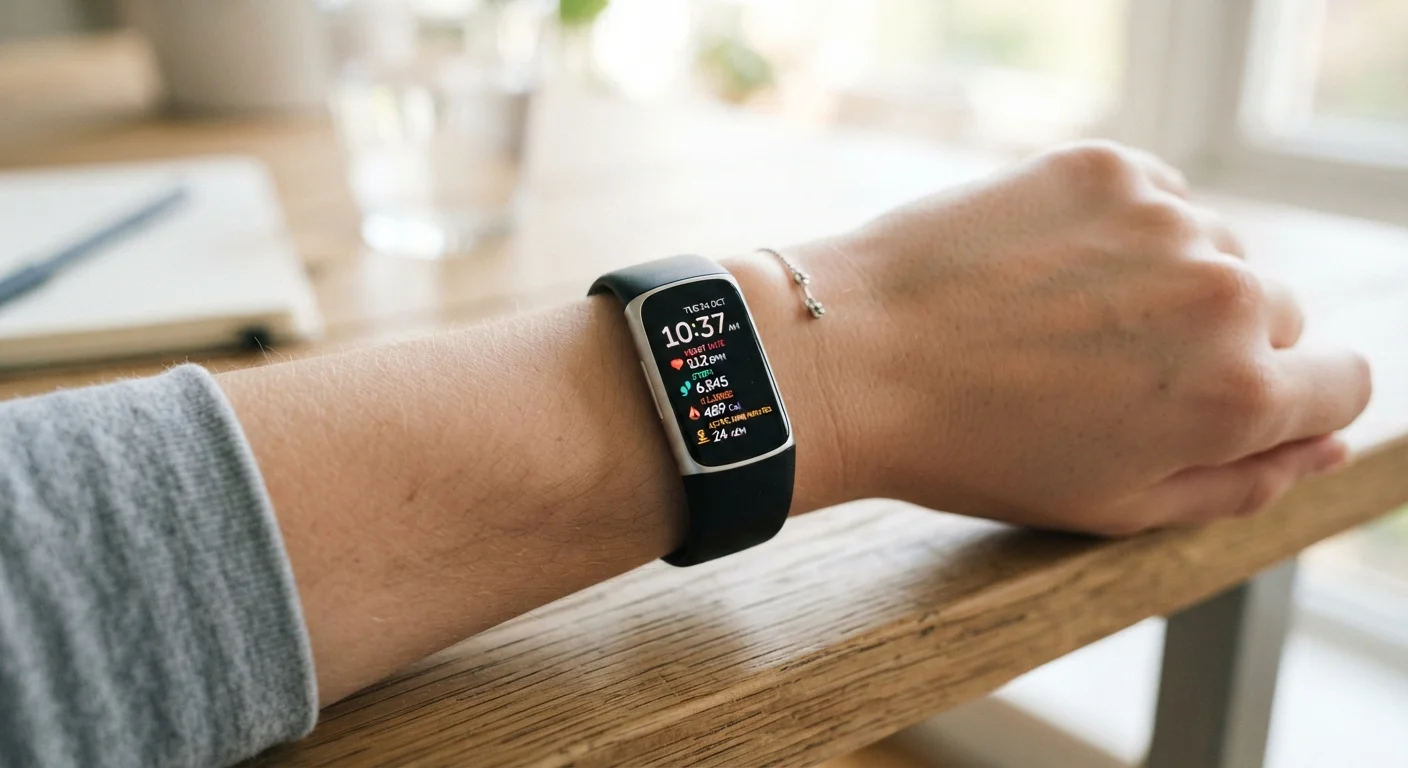
A count of walking strides detected by the tracker's accelerometer. Step counts are a useful proxy for daily movement but are not perfectly accurate - arm movements can generate false positives, and some activities (cycling, swimming) may be undercounted.
Active Minutes / Zone Minutes
Time spent with your heart rate elevated into a target zone above your resting baseline. Different devices use different zone definitions. This metric is designed to capture intensity, not just duration, so a brisk 20-minute walk can count differently than a slow 20-minute stroll.
Calories Burned
An estimate combining your basal metabolic rate (calories your body burns at rest) with the additional energy cost of detected movement. These figures carry meaningful margin of error and should be treated as rough estimates rather than precise measurements.
Stress Score / Body Battery
A composite score - labeled differently by different platforms - that attempts to reflect recovery and energy reserves using HRV, sleep, and activity data. These proprietary algorithms vary by manufacturer and are best used to track personal trends rather than as absolute measures.
Skin Temperature Variation
Some trackers measure changes in wrist skin temperature relative to your personal baseline. Deviations can signal illness, menstrual cycle changes, or environmental factors. Like most tracker metrics, the trend over time is more informative than any single reading.
This article is for general informational and educational purposes only. It is not a substitute for professional medical advice, diagnosis, or treatment. Always consult a qualified healthcare provider with questions about your health or how to interpret health data.
Understanding the Numbers in Context
A single metric rarely tells a complete story. Trackers are most useful when you treat their readings as patterns over time rather than precise clinical measurements. Wrist-based optical sensors estimate many of these values - they don't measure them directly - so day-to-day variation is normal and expected.
| Metric type: heart rate | Measured continuously via optical (PPG) sensor |
| VO2 max source | Estimated from HR + movement data, not direct oxygen measurement |
| Sleep stage detection method | Accelerometer + heart rate (not EEG brain wave data) |
| SpO2 accuracy | Less precise than clinical pulse oximeters; useful for trend tracking |
| HRV baseline | Highly individual - compare your own trend, not population averages |
| Calorie estimates | Carry a meaningful margin of error; treat as directional, not exact |
If you want to understand how movement throughout your day feeds into these numbers, the concept of incidental activity is worth exploring. Our piece on small-movement habits explains how walking, stretching, and standing all register in your activity data in ways that complement structured workouts.
For a broader look at whether your daily routines are supporting your health goals, a daily wellness audit can help you see where tracker data fits alongside sleep, nutrition, and stress habits. And if you're weighing whether to rely on a device at all, it's worth understanding the tradeoffs of health-habit tracking before committing to a system.
When a Reading Looks Unusual
A single out-of-range number - a low SpO2, an unusually high resting heart rate - is not cause for alarm on its own. Sensor placement, movement artifacts, and skin tone can all affect readings. If you notice a persistent pattern that concerns you, bring the data to a qualified healthcare provider rather than drawing conclusions from a single data point.