
Why People Turn to Habit-Tracking Apps
Building new health habits is genuinely hard. The gap between intending to exercise, sleep better, or drink more water and actually doing those things consistently is where most efforts stall. Habit-tracking apps promise to close that gap by turning invisible intentions into visible data.
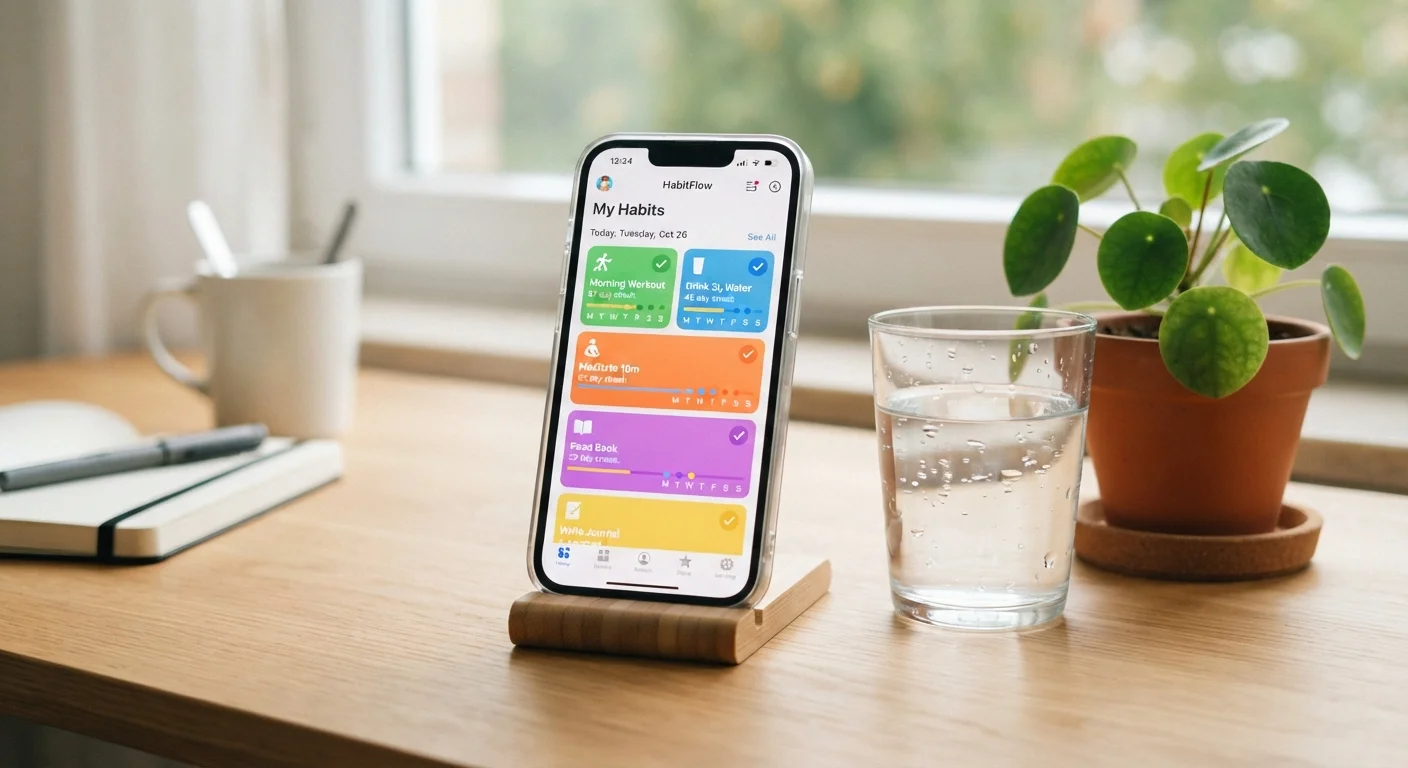
These apps typically let users log daily behaviors - movement, hydration, meditation, sleep - and display progress through streaks, charts, or completion rings. The appeal is understandable: seeing a 14-day streak of morning walks creates a concrete record of effort that a vague mental intention never could. Research on behavior change consistently shows that self-monitoring is one of the more reliable tools for increasing follow-through on health goals, which helps explain why these apps have become a fixture of the wellness space.
But visibility is a double-edged feature. What works as motivation for one person becomes a source of stress for another. Before committing to a digital accountability system, it's worth examining both sides honestly. See also our daily wellness audit for a practical way to assess which habits are actually worth tracking.
The Real Advantages of Tracking Your Habits Digitally
When used thoughtfully, habit-tracking apps offer several genuine benefits that are hard to replicate with mental notes alone.
Makes invisible habits visible and measurable
Logging behaviors creates an objective record that memory alone can't reliably provide. Seeing consistent progress in a chart reinforces that effort is accumulating, even on days when it doesn't feel that way.
Provides a low-stakes accountability structure
An app check-in can serve as a daily micro-commitment that keeps a habit on your radar without requiring another person to be involved. This suits people who prefer private accountability over social pressure.
Reveals behavioral patterns over time
Weeks of logged data can surface connections between habits - such as how sleep quality relates to exercise frequency - that would be invisible without a consistent record.
Reduces the mental load of remembering goals
Rather than relying on willpower and memory, an app notification or dashboard can serve as a structured external prompt that reduces the cognitive effort of staying on track.
Supports gradual habit stacking
Many apps allow users to build layered routines incrementally, which aligns with evidence-based approaches to sustainable behavior change that emphasize small, additive steps over dramatic overhauls.
One often-overlooked benefit is pattern recognition. Because apps log data over weeks and months, they can surface connections you might never notice otherwise - for example, that your sleep quality tends to dip on days you skip a workout, or that your mood ratings improve consistently after you log three glasses of water before noon. This kind of longitudinal self-knowledge is difficult to build without some form of record-keeping.
The Disadvantages You Should Know Before You Download
The same features that make habit-tracking apps motivating can also become sources of friction, anxiety, or misaligned priorities.
Streak anxiety can undermine intrinsic motivation
When maintaining a streak becomes the primary goal, the original reason for the habit can fade. Research in motivation theory suggests that excessive external rewards can erode intrinsic interest in an activity.
Logging fatigue leads to abandonment
The novelty of a new app tends to wear off within weeks. When the effort of daily logging starts to feel like a chore, many users stop tracking entirely - sometimes abandoning the habits alongside the app.
Health data privacy protections are limited
Most consumer habit and wellness apps are not covered by HIPAA, meaning your personal health data may be shared with advertisers or third parties in ways that aren't always transparent in standard sign-up flows.
Apps measure outputs, not quality or context
Checking a box for a 20-minute walk captures that it happened, not whether it was effortful, enjoyable, or appropriate. Over-reliance on metrics can gradually shift focus from how you feel to whether you logged.
Rigid systems don't accommodate real-life variability
Illness, travel, family demands, and stress are normal parts of life. Apps that don't account for this variability can make ordinary disruptions feel like failures, potentially increasing stress rather than reducing it.
Risk of over-tracking and self-surveillance fatigue
Tracking many habits simultaneously can shift attention inward in ways that become exhausting. Some individuals find that constant self-monitoring increases health anxiety rather than improving wellbeing.
There is also a subtler problem: apps tend to measure what is easy to measure. Logging that you completed a 20-minute walk is straightforward; capturing whether you were fully present, pushed appropriately hard, or actually enjoyed it is not. Over time, optimizing for the metric - the check mark - can crowd out the intrinsic value of the habit itself. This dynamic is sometimes called metric fixation, and it's worth watching for in your own tracking behavior.
For a different angle on accountability, the social vs. solo habits comparison explores how human accountability stacks up against digital tracking.
Data Privacy: What Your App Knows About You
Health data is among the most sensitive personal information you can share, and habit-tracking apps collect a great deal of it. Sleep patterns, menstrual cycles, mood fluctuations, medication logs, and exercise frequency are all categories that various apps ask users to record.
Health Apps and HIPAA: What's Not Protected
Most consumer wellness and habit-tracking apps are not covered by the Health Insurance Portability and Accountability Act (HIPAA), which means the health data you enter is generally not subject to the same legal protections as data held by a doctor's office or hospital. The Federal Trade Commission (FTC) has authority over some data practices in this space, but coverage is not uniform. If you are tracking sensitive health information - medications, mental health, reproductive health - review the app's privacy policy carefully before logging personal details.
Before downloading any health app, it is worth reading the privacy policy - particularly the sections on data sharing with third parties and data retention after account deletion. The regulatory landscape for health app data in the United States is still developing, and protections vary significantly depending on whether an app is covered by HIPAA (most consumer apps are not). If data privacy is a concern, look for apps that offer local storage rather than cloud sync, or consider analog alternatives like a paper habit journal.
The broader tension between digital convenience and personal privacy is explored in our piece on everyday tech tradeoffs.
How to Use a Habit-Tracking App Without Letting It Use You
The most productive frame for any habit-tracking app is as a temporary scaffold rather than a permanent infrastructure. Here are a few practical principles to keep that balance.
- Start with one or two habits. Tracking too many behaviors simultaneously creates logging fatigue and dilutes focus. Pick the one or two habits with the highest potential impact and start there.
- Set a review date. Decide in advance - say, after 60 days - whether the app is helping you build genuine habits or just helping you maintain a streak. Streaks and habits are not the same thing.
- Treat missed days as data, not failure. A break in a streak is information about your life, not a verdict on your character. Apps that shame or penalize missed entries may not serve you well.
- Know when to step back. If opening the app creates dread rather than motivation, that is a signal worth taking seriously. Logging anxiety is a sign the tool has stopped serving its purpose.
~80%
App users who quit within first 3 months
Industry data on mobile app retention consistently shows the majority of health and wellness apps lose most of their active users within 90 days of download.
Top self-monitoring technique
Self-monitoring ranked for behavior change
Reviews of behavior-change interventions, including work published in health psychology literature, consistently identify self-monitoring as among the most effective techniques for improving health habits.
This article is for general informational purposes only and is not medical or psychological advice. If you have concerns about stress, anxiety, or disordered health behaviors, please consult a qualified healthcare professional.