The Supplement Surge in Pet Care
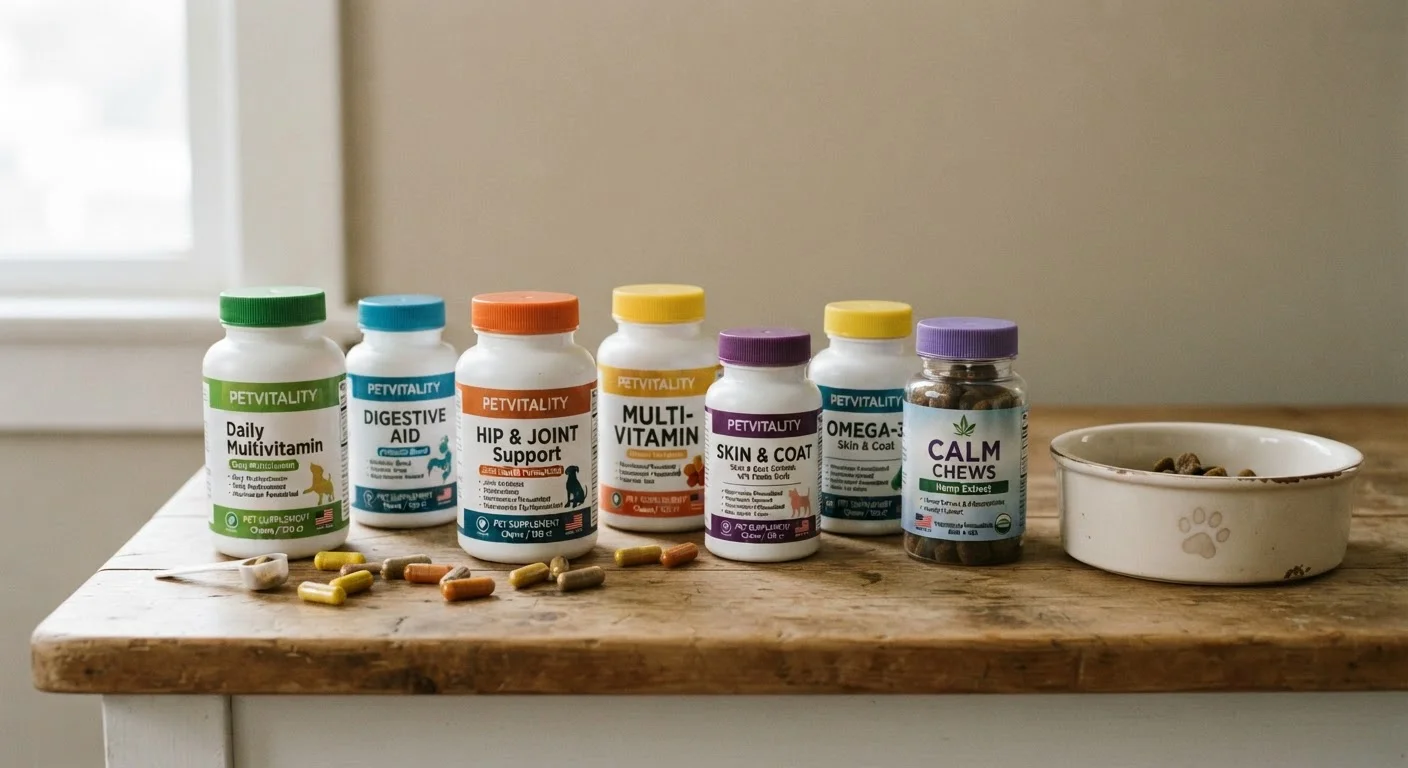
Walk through any pet store or scroll through an online retailer and you'll encounter hundreds of supplements promising shinier coats, stronger joints, calmer behavior, and longer lives. The pet supplement industry has grown substantially over the past decade, and while some products have genuine, evidence-backed applications, many are being purchased and administered without veterinary input - and sometimes without any real need.
The underlying problem is a mismatch between what supplement marketing suggests and what the veterinary and nutritional science actually supports. Pet owners want the best for their animals, and that impulse is completely understandable. But well-intentioned supplementation can backfire in ways that are costly, unnecessary, or in some cases, medically harmful. Understanding where the common errors occur is the first step toward making better decisions for your pet's health.
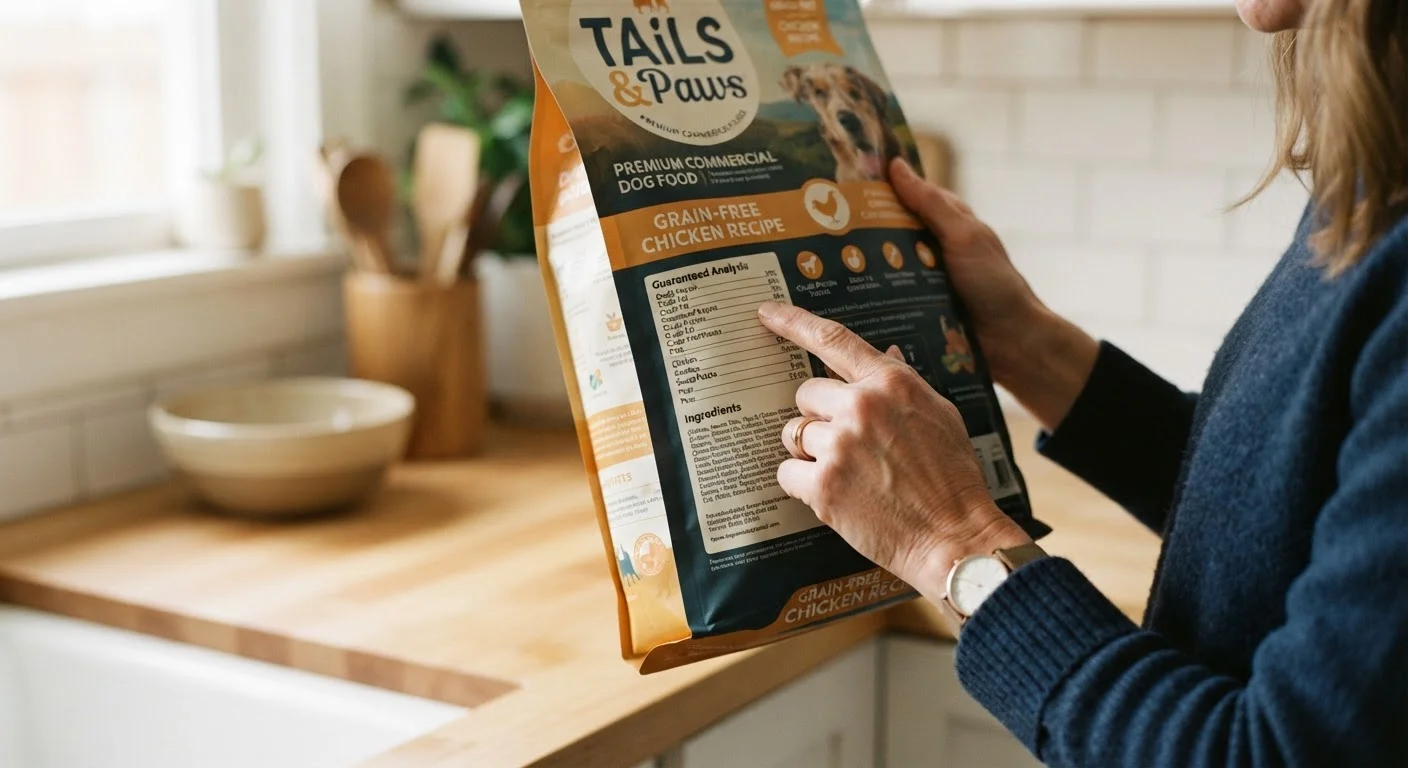
For context on how nutrition is already built into your pet's daily meals, see our guide on understanding nutritional labels on commercial pet food.
Common Mistakes Pet Owners Make With Supplements
The errors below are among the most frequently observed by veterinary professionals. Each one reflects a genuine knowledge gap - not carelessness - but the consequences can range from wasted money to genuine health risk.
Assuming a supplement is safe simply because it is "natural" or widely available without a prescription.
Why it happens: The word "natural" carries strong positive associations for many consumers, and over-the-counter availability feels like an implicit safety endorsement.
Doubling up on nutrients already present at adequate levels in a complete commercial diet.
Why it happens: Owners often don't realize that AAFCO-formulated pet foods are already calibrated to meet a pet's full nutritional requirements, so adding supplements feels like an upgrade rather than a redundancy.
Over-supplementing fat-soluble vitamins such as Vitamin A or Vitamin D, which accumulate in body tissue rather than being excreted.
Why it happens: Many owners treat all vitamins as interchangeable and assume that more of a good thing is better. Water-soluble vitamins are excreted in excess, but fat-soluble ones are not.
Choosing supplements based on social media recommendations or anecdotal testimonials rather than veterinary evidence.
Why it happens: Pet owner communities online are active and well-meaning, and success stories spread quickly. It can be difficult to distinguish evidence-based guidance from popular trends.
Giving pets human-grade supplements at unadjusted doses, assuming weight-based scaling is sufficient.
Why it happens: Human supplements are often cheaper and easier to find, and owners assume that scaling the dose by body weight makes them equivalent to animal-specific products.
Supplement Labels Are Not FDA-Regulated Like Drugs
Pet supplements in the United States are not subject to the same pre-market approval process as veterinary pharmaceuticals. Manufacturers are not required to prove efficacy or consistent dosing before selling a product. This means the ingredient amounts on a label may not always reflect what is actually in the product. Third-party quality testing exists, but is voluntary. When in doubt, ask your veterinarian to recommend products with independent quality verification.
What Veterinary Guidance Actually Says
Veterinary nutritionists generally agree that pets consuming a diet labeled as "complete and balanced" - a designation governed by the Association of American Feed Control Officials (AAFCO) standards - are already receiving the nutrients they need at appropriate levels. Supplementation on top of a complete diet adds more of what is already sufficient, which is not inherently beneficial and in some cases creates imbalance.
$1B+
Annual U.S. pet supplement market value
Industry estimates consistently place the U.S. pet supplement market above one billion dollars annually, reflecting rapid consumer adoption that outpaces the available clinical evidence.
~10%
Pets with a diagnosed deficiency warranting supplementation
Veterinary nutritionists estimate that only a small minority of pets eating complete, balanced commercial diets have a clinically documented nutritional deficiency requiring supplementation.
There are legitimate clinical uses for supplements. Omega-3 fatty acids, for example, have meaningful supporting evidence for inflammatory conditions in certain pets when dosed and sourced appropriately. Joint supplements containing glucosamine and chondroitin are commonly recommended alongside veterinary treatment for osteoarthritis, though the evidence on their standalone effectiveness is still evolving. The key distinction is that these uses are typically directed by a veterinarian based on a specific diagnosis - not chosen off a shelf based on a marketing claim.
If you're concerned about the cost implications of veterinary consultations or follow-up care, our article on why vet bills surprise pet owners can help you plan ahead financially.
This article provides general educational information about pet nutrition and is not a substitute for personalized veterinary advice. Consult a licensed veterinarian before making changes to your pet's diet or supplement routine.