Why Grooming Matters Beyond Appearances
Regular grooming is a cornerstone of responsible pet care-not simply a cosmetic routine. Brushing removes dead hair and distributes skin oils; nail trims prevent painful overgrowth and joint stress; ear cleaning reduces infection risk; and bathing keeps skin conditions from escalating. Pet health and wellness experts consistently note that owners who groom frequently are more likely to catch lumps, skin irritation, parasites, or ear discharge early, when intervention is simpler.
The central question for most pet owners isn't whether to groom, but how-and how often professional help is truly necessary versus manageable at home. The honest answer depends on your pet's breed, coat type, temperament, and your own skill level and schedule.
What Professional Grooming Brings to the Table
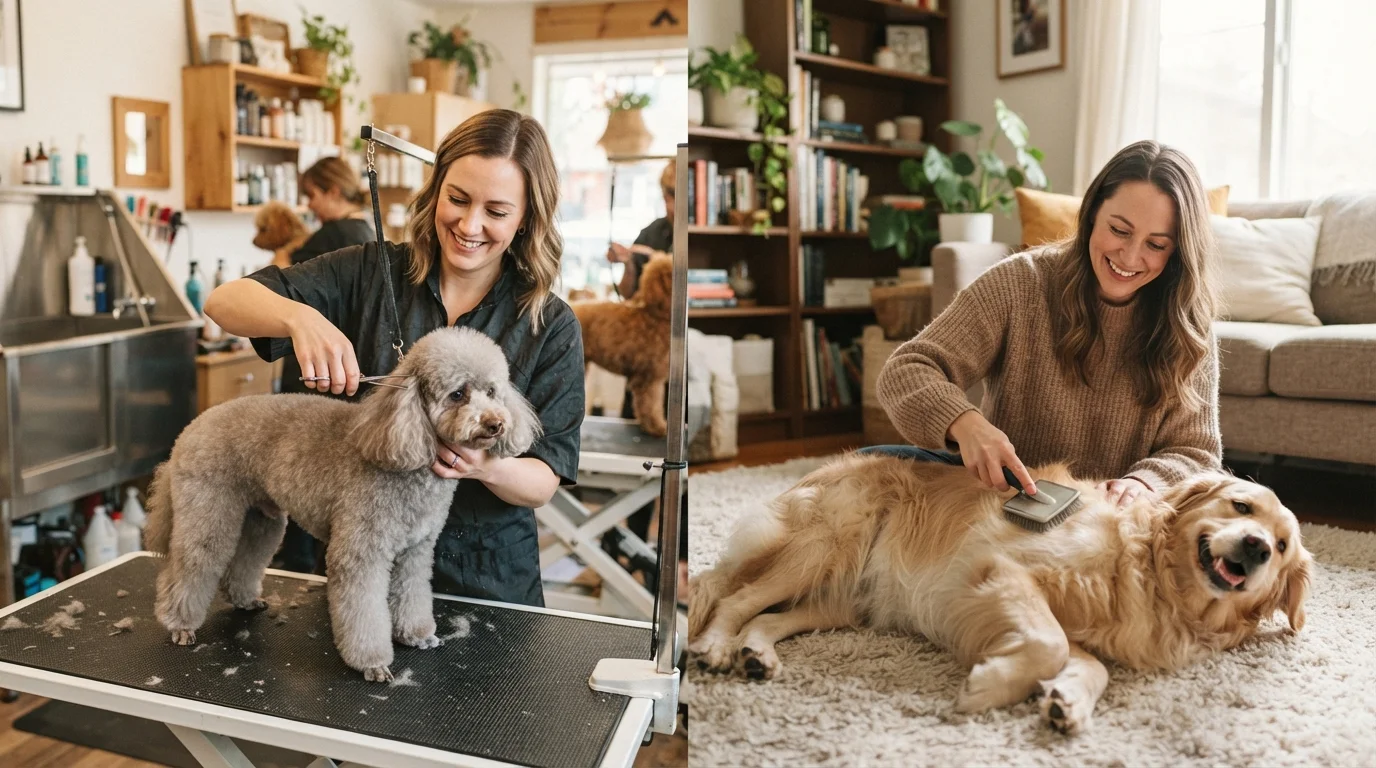
Professional groomers bring specialized tools, breed-specific training, and a controlled environment designed for animal safety. A full-service appointment typically includes bathing with professional-grade shampoo, blow-drying, haircut or trim, nail grinding or clipping, ear cleaning, and sometimes anal gland expression-tasks that intimidate many owners.
For breeds with continuously growing coats-such as poodles, doodles, shih tzus, and bichon frises-professional trims are practically essential to prevent matting, which can trap moisture and cause painful skin infections. Groomers also recognize early warning signs of skin, coat, or ear problems and may flag them for veterinary follow-up.
Ask Your Groomer to Teach You
Many professional groomers are willing to demonstrate basic brushing techniques, show owners how to check ears, or explain coat-specific tools during or after an appointment. Taking even a few minutes to learn from a professional can substantially improve your at-home routine and reduce the frequency of costly full-service visits.
The main trade-offs are cost and logistics. Professional grooming sessions can range widely depending on breed, coat condition, and location. Appointments require scheduling, transportation, and time away from home for your pet-factors that can add stress for some animals. For a fuller picture of how these expenses accumulate, see what pet owners mean when they talk about hidden costs.
What At-Home Grooming Offers
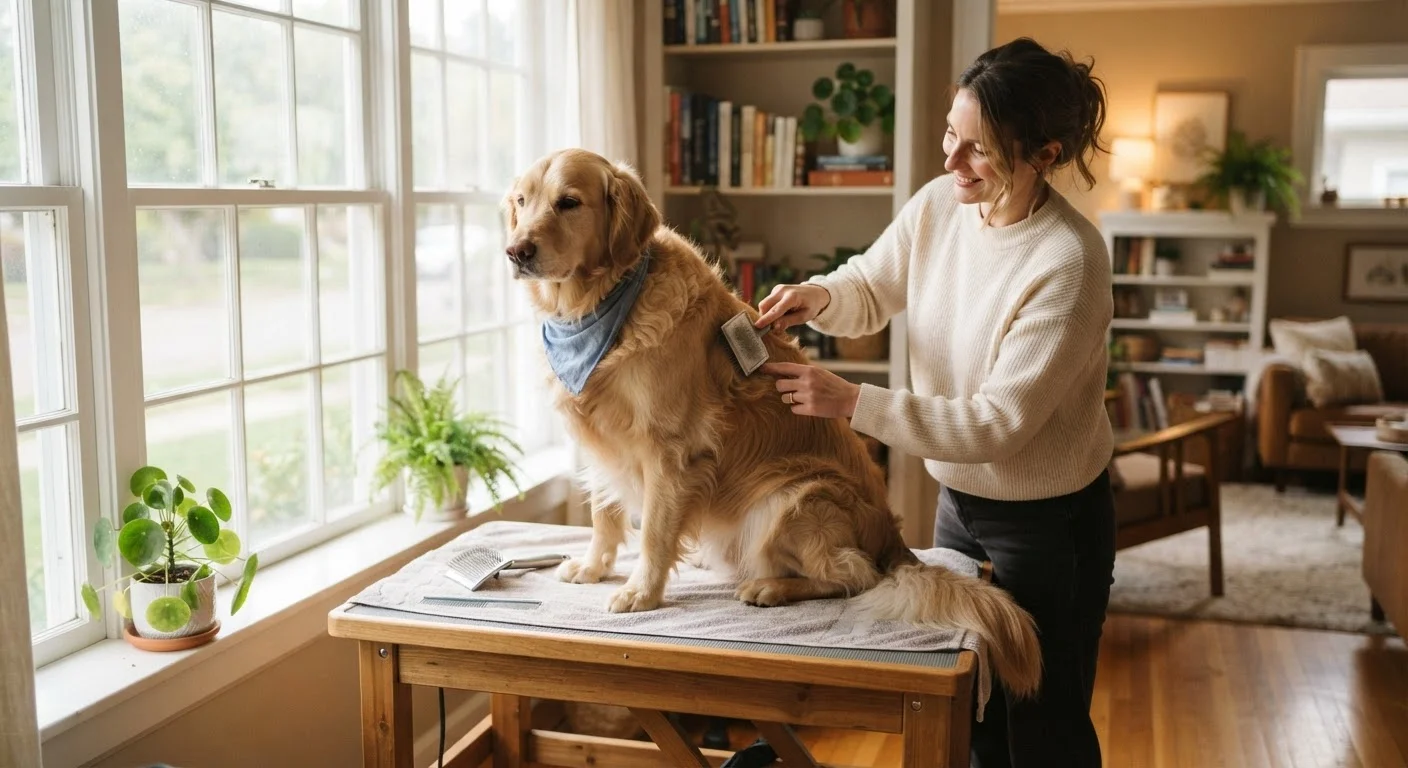
At-home grooming gives owners direct control over timing, tools, and pace-an advantage especially for pets who find salons overwhelming. Brushing and combing between appointments maintains coat health and dramatically reduces shedding indoors. For short-coated breeds like beagles, boxers, or labs, at-home maintenance may be sufficient for the vast majority of their grooming needs.
The learning curve is real. Nail trims done incorrectly can cause pain or injury; bathing without thorough drying can promote skin infections; and improper brushing of double coats can worsen rather than reduce matting. Investment in quality brushes, nail clippers, and a handheld dryer improves results considerably. Grooming at home without stressing out your pet offers a practical walkthrough of each core task.
Financially, a consistent at-home routine can meaningfully offset professional grooming frequency. Smart ways pet owners keep routine care costs under control outlines how strategic at-home care reduces long-term expenses without compromising quality.
| Professional Grooming | At-Home Grooming | |
|---|---|---|
| Thoroughness | Full-service; breed-specific cuts and finishing | Varies by owner skill; best for maintenance tasks |
| Cost per session | Higher; varies by breed, coat, and location | Lower after initial tool investment |
| Frequency needed | Every 4-10 weeks depending on breed | Weekly to daily for brushing; as needed for baths |
| Pet stress level | Can be stressful; unfamiliar environment and handling | Often calmer; familiar surroundings and owner present |
| Skill requirement | Handled by trained professional | Requires learning correct techniques |
| Early health detection | Groomers may flag skin, ear, or coat issues | Owner familiarity helps spot changes over time |
| Best coat types | Long, curly, double, or continuously growing coats | Short, smooth, or low-maintenance coats |
Building a Balanced Grooming Routine
Many veterinarians and certified groomers recommend a hybrid model: frequent at-home brushing and basic maintenance, supplemented by professional appointments at intervals appropriate to the breed. A doodle may need professional grooming every six to eight weeks, while a short-coated mixed breed might only need a professional bath and nail trim twice a year.
Building a home care routine that keeps vet bills predictable provides a practical framework for integrating grooming into broader preventive care habits. The goal is consistency: regular at-home sessions keep the coat manageable and reduce the time-and cost-of professional appointments when they do occur.
~65%
U.S. households owning a pet
According to the American Pet Products Association's National Pet Owners Survey, nearly two-thirds of American households include at least one pet.
1 in 3
Pet owners reporting unexpected grooming costs
Industry surveys consistently find that a significant share of owners underestimate ongoing grooming expenses when first acquiring a pet.
This article is for general informational purposes only and is not a substitute for advice from a licensed veterinarian or certified professional groomer. Individual pet needs vary; consult a professional for guidance specific to your animal.