Why At-Home Grooming Matters Beyond Appearance
Regular grooming isn't cosmetic - it's a health practice. Brushing distributes skin oils and removes debris that can harbor parasites. Nail trims prevent painful overgrowth that alters a pet's gait and stresses joints. Ear cleaning reduces the risk of infections that, left undetected, can become serious. Routine handling at home also lets you notice changes early: a new lump, a developing hot spot, or unusual tenderness that warrants a veterinary call.
Grooming at home also carries a meaningful financial upside. Pets whose owners maintain consistent home care between professional appointments often need fewer emergency grooming interventions and develop fewer conditions that escalate into costly treatments. See our guide to building a home care routine for a broader picture of how these habits pay off over time.
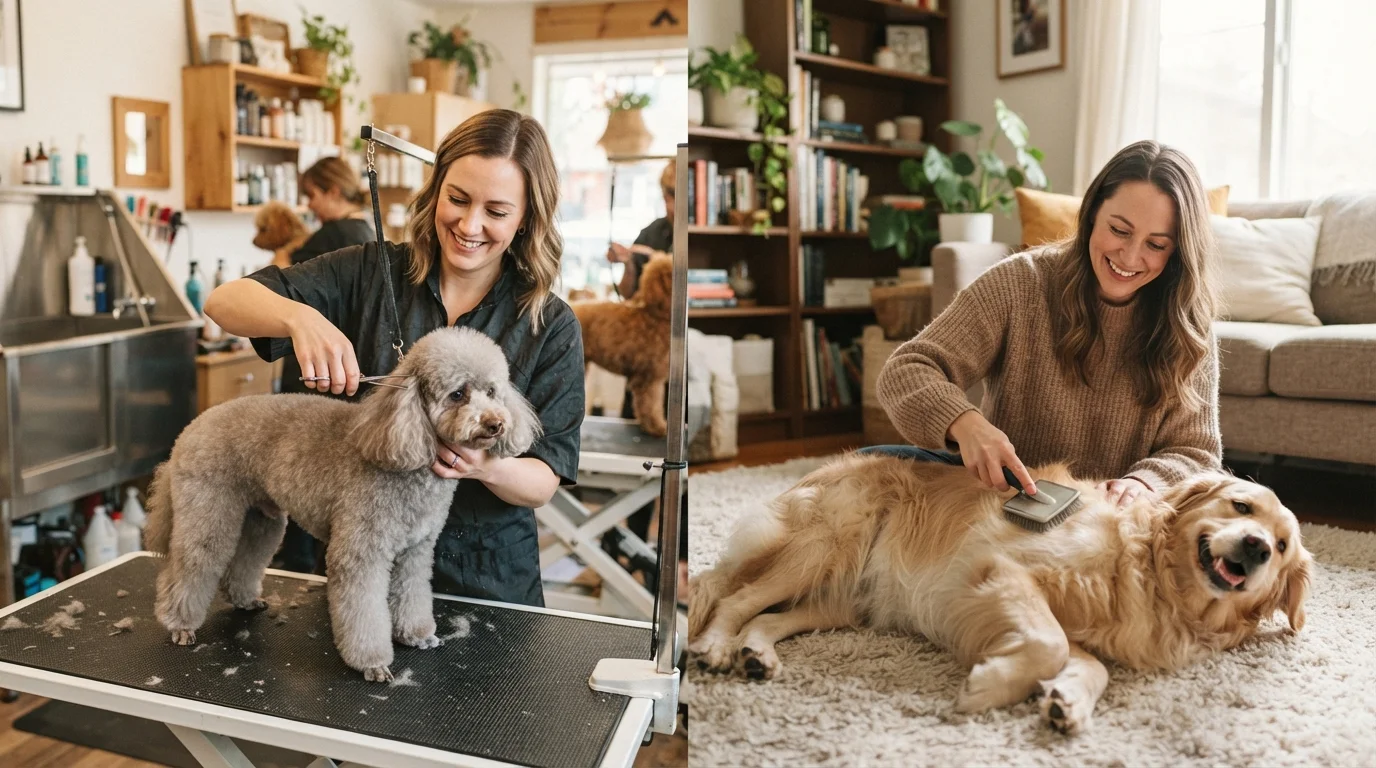
For a complete view of what home grooming can and can't replace, our comparison of professional and at-home grooming covers breed-specific considerations and when professional expertise is worth the cost.
What you will need
Tools You'll Need
Using the right tools makes grooming safer and faster. A brush that's wrong for your pet's coat type can break fur, miss tangles, or scratch skin. Nail clippers designed for humans crush rather than cut a dog's or cat's thicker nail structure. Investing in quality, species-appropriate tools from the start reduces frustration for both you and your pet.
Slicker brush or de-shedding comb
Removes loose fur, debris, and tangles depending on coat length and texture.
Pet nail clippers
Trims nails to a safe, comfortable length without splitting or crushing.
Styptic powder
Stops minor bleeding quickly if a nail is accidentally cut too short.
Pet-safe shampoo
Cleanses skin and coat without disrupting your pet's natural pH balance.
Handheld shower attachment or pitcher
Gives controlled water flow during bathing to rinse thoroughly without startling your pet.
Veterinarian-approved ear cleaner
Loosens wax and debris inside the ear canal safely before wiping.
Avoid Human Products on Pets
Human shampoos, conditioners, and cleaning solutions are formulated for a skin pH that differs significantly from a dog's or cat's. Using them regularly can strip protective oils, cause irritation, or introduce toxic ingredients. Always use species-appropriate products recommended by your veterinarian.
Step-by-Step Grooming Process
Follow these steps in order for the most comfortable experience. You don't need to complete every task in a single session - especially if your pet is new to grooming or has shown anxiety before. Splitting bathing, nail trims, and ear cleaning across different days is a completely valid approach.
Set the scene before you begin
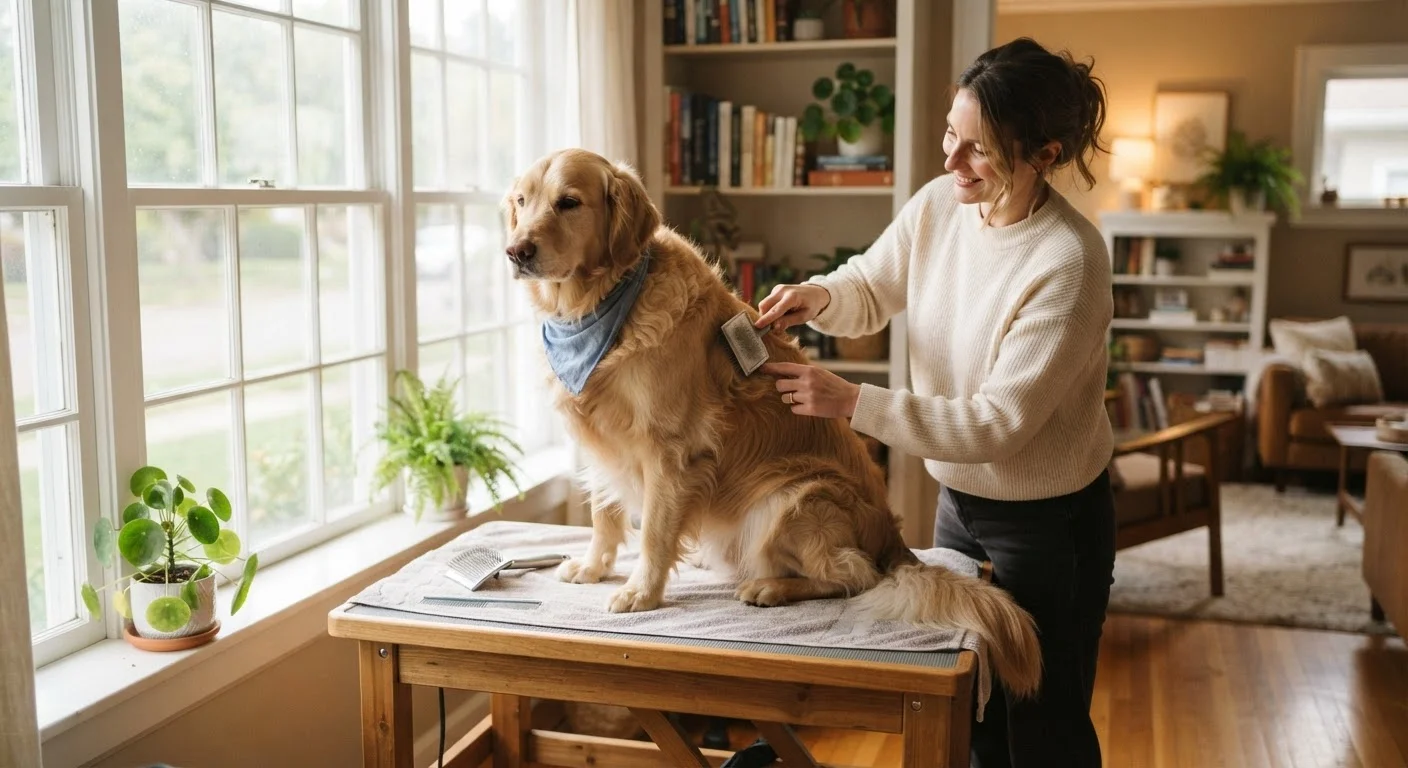
Choose a quiet time when both you and your pet are calm - not right after exercise or during a thunderstorm. Lay out all your tools in advance so you're not rummaging around mid-session. Place a non-slip mat on the grooming surface to give your pet secure footing. Keep sessions short at first: five to ten minutes is enough for a pet new to grooming.
Brush the coat thoroughly
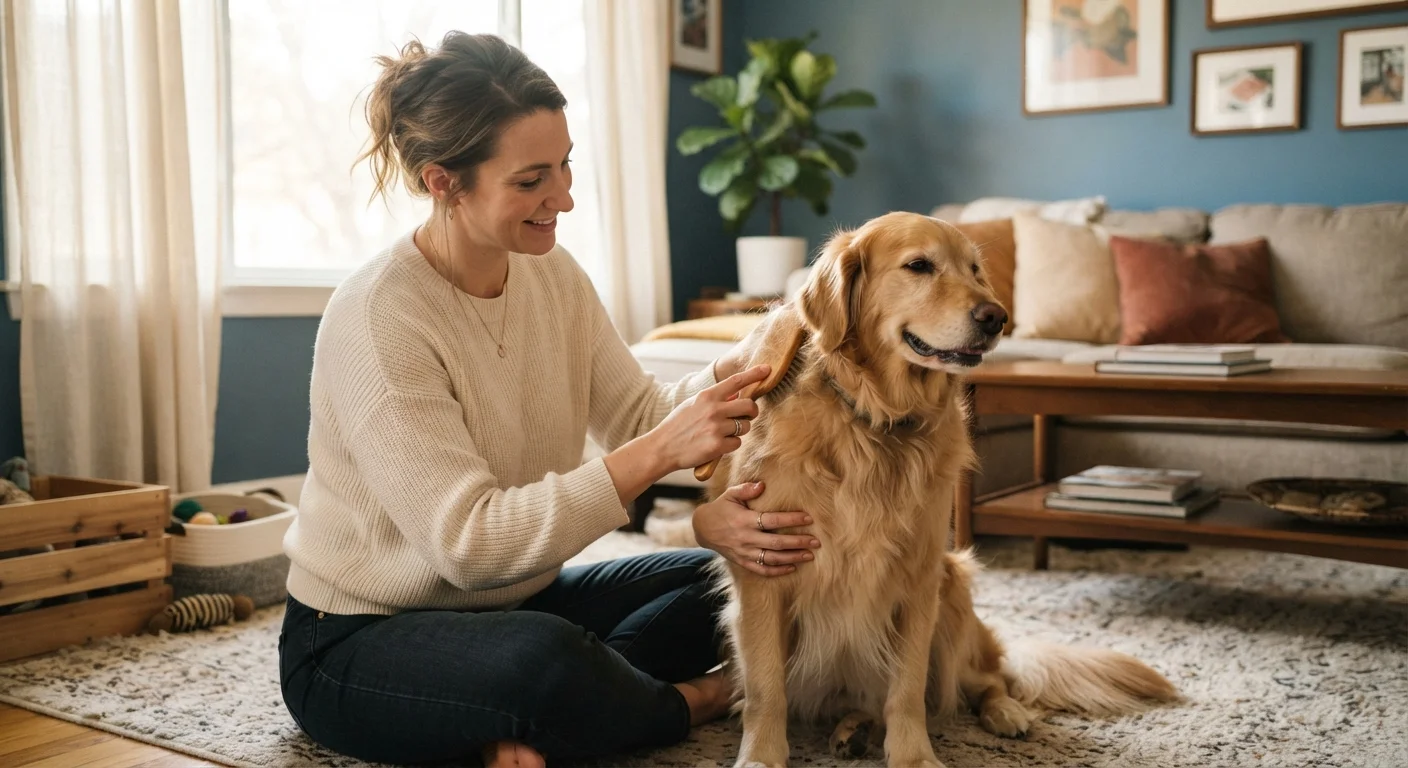
Start at the head and work toward the tail, following the direction of hair growth. Part the fur in sections to check for mats, skin irritation, lumps, or parasites. Work through small tangles gently with your fingers before applying a comb. For dogs with double coats or cats prone to matting, brush in short strokes rather than long drags to minimize pulling.
Bathe your pet with warm water
Wet the coat thoroughly with lukewarm water, working from the neck back and keeping water out of the ears and eyes. Apply a small amount of pet-safe shampoo, lather gently, and rinse until the water runs completely clear - residue left in the coat can cause skin irritation. Towel-dry or use a low-heat dryer held at least 12 inches from the coat.
Trim nails carefully
Hold your pet's paw firmly but gently. Clip only the translucent tip of the nail, well away from the pink quick (the blood vessel visible in light-colored nails). For dark nails, take off tiny slices until you see a small dark dot appear at the center of the cut surface - that's the edge of the quick. Clip one or two nails per session if your pet is anxious; you don't need to do all four paws at once.
Clean the ears
Squeeze a small amount of veterinarian-approved ear cleaner into the ear canal, then gently massage the base of the ear for about 20-30 seconds. Allow your pet to shake their head, then wipe the visible outer canal and ear flap with a cotton ball or gauze. Never insert cotton swabs into the ear canal.
End every session on a positive note
Finish with calm praise, a high-value treat, and a few minutes of relaxed contact - gentle stroking or play, whatever your pet prefers. Even if the session was imperfect, ending positively is what your pet remembers. Log what went well and what spooked them so you can adjust next time.
Use High-Value Treats Strategically
Reserve your pet's absolute favorite treat - something they don't get any other time - exclusively for grooming sessions. The novelty of the reward creates a strong positive association with handling. Offer treats throughout, not just at the end, so your pet links each individual touch to something good.
Reading Your Pet and Building Long-Term Comfort
Stress signals vary by species and individual, but common signs include yawning outside of tiredness, lip licking, whale eye (whites of eyes visible), flattened ears, trembling, or attempts to escape. If you see these, pause immediately - even if you're only halfway through. Continuing over protest erodes trust and makes every future session harder.
Desensitization works best when started gradually. Begin by simply touching the areas your pet dislikes - paws, ears, muzzle - during relaxed moments with no tools in hand, pairing each touch with a treat. Over days and weeks, introduce the tools themselves before using them. This low-stakes exposure rewires your pet's expectation from threat to routine.
Know When to Call a Professional
Some grooming tasks carry real risk if done incorrectly. Cutting into the quick of a nail, cleaning too deep inside an ear canal, or clipping a matted coat without the right tools can cause pain or injury. If your pet has severe mats, an ear infection, or becomes genuinely distressed, consult a veterinarian or professional groomer before continuing at home.
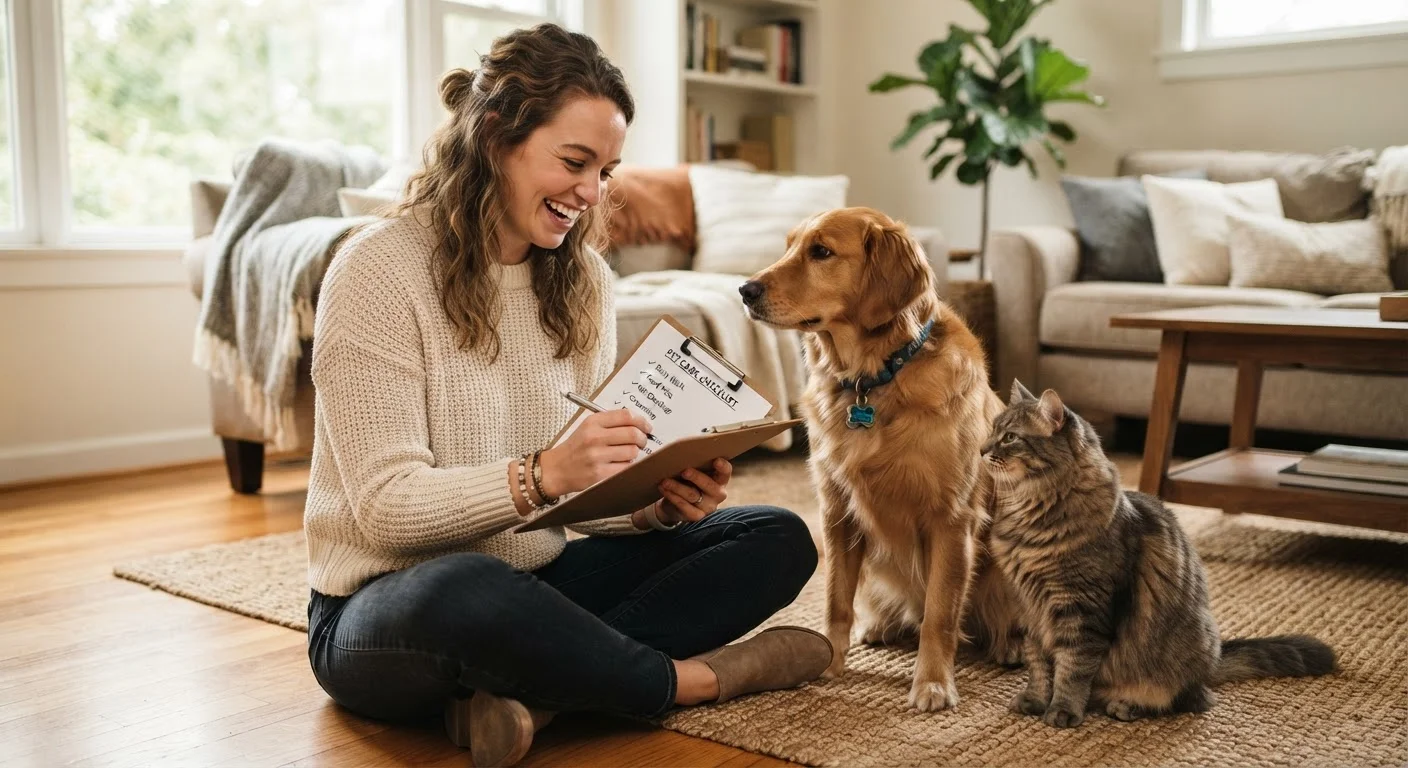
Grooming fits naturally into a broader responsible ownership rhythm. Our monthly pet care checklist helps you track brushing, ear checks, and nail trims alongside feeding, parasite prevention, and vet reminders so nothing gets missed.