More Than a Ticker Tape
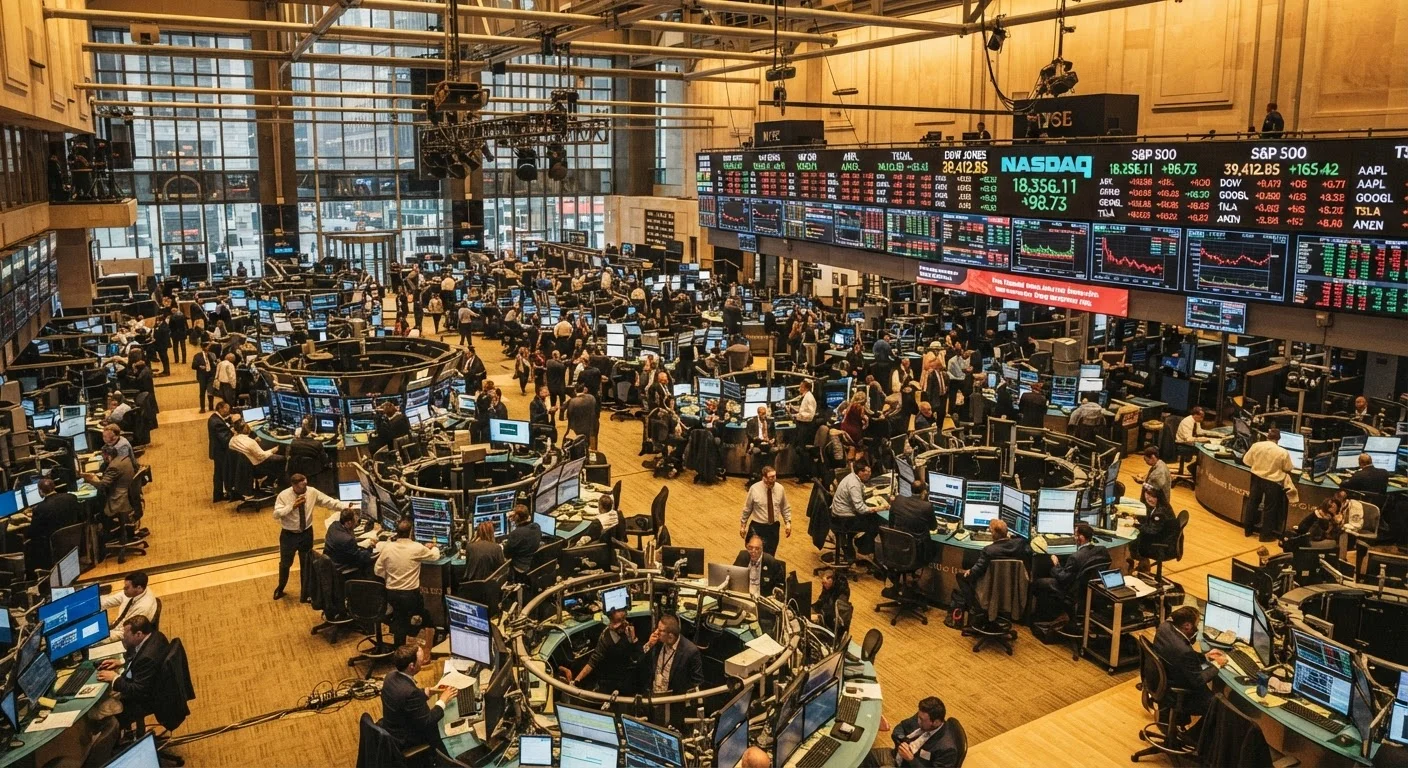
When most people picture the stock market, they imagine a wall of flashing numbers, frantic traders, and fortunes made or lost in seconds. That image captures the drama but misses the mechanics. At its core, the stock market is a regulated marketplace - a system that lets companies raise money by selling ownership stakes to the public, and lets investors buy or sell those stakes whenever they choose.
Think of it like a farmers' market, but instead of vegetables, the goods being exchanged are small pieces of businesses. The price of each piece changes based on how many people want to buy or sell at any given moment, and why. The market itself doesn't determine whether a company succeeds - it reflects what investors collectively believe about a company's future.
This distinction matters. A rising stock price doesn't necessarily mean a company is thriving right now; it often means investors expect it to thrive. Conversely, a falling price doesn't always signal a failing business. Understanding this gap between perception and reality is one of the first steps toward thinking clearly about investing. If you're also working to understand how budgeting fits into your financial picture, our piece on what a budget actually is offers a similar myth-busting foundation.
How It Actually Works
Companies list their shares on a public exchange - such as the NYSE or Nasdaq - through a process called an initial public offering (IPO). After that, investors trade those shares among themselves on the open market. The company itself doesn't receive money from these secondary trades; the IPO is where it raised its capital. What changes hands afterward is simply ownership.
Most individual investors don't trade directly on the exchange floor. Instead, they access markets through brokerage accounts, employer-sponsored retirement plans like 401(k)s, or IRAs. Many also invest indirectly through mutual funds or exchange-traded funds (ETFs) - pooled vehicles that hold dozens or hundreds of stocks, spreading risk across many companies rather than concentrating it in one.
58%
Americans who own stock
According to Gallup polling, roughly 58% of U.S. adults report owning stock, either directly or through funds and retirement accounts.
500+
Companies in the S&P 500 index
The S&P 500 tracks approximately 500 large U.S. companies across all major sectors, making it one of the most widely cited benchmarks for U.S. market performance.
$40T+
Approximate U.S. stock market capitalization
The combined market value of all U.S.-listed public companies has at various points exceeded $40 trillion, illustrating the scale of publicly traded economic activity.
Market indexes - like the S&P 500 or the Dow Jones Industrial Average - track the combined performance of a selected group of stocks. When you hear "the market went up today," it usually refers to one of these indexes, not every stock simultaneously. Some stocks rise while others fall on any given day.
What the Stock Market Is Not
Perhaps the most persistent misconception is that the stock market is simply legalized gambling. The analogy is understandable but inaccurate. When you buy a share, you own a fractional piece of a real business - one that employs people, generates revenue, and holds actual assets. The value of that ownership is tied, over the long run, to the real economic activity of that business. Gambling, by contrast, creates risk artificially with no underlying productive asset.
“In the short run, the market is a voting machine. In the long run, it is a weighing machine.”
— Benjamin Graham, Economist and author, widely regarded as the father of value investing
The stock market is also not the same as the economy. During periods of economic hardship, stock prices have sometimes risen because investors expected a future recovery. During boom times, markets have declined on fears that growth would slow. The two are related but distinct - and conflating them leads to poor financial decisions.
Finally, the stock market is not a guaranteed path to wealth, nor is it an impenetrable wall only accessible to the wealthy. Risk is real and ever-present - individual companies fail, markets decline, and poorly timed decisions can cause significant losses. Approaching it with clear expectations rather than fear or euphoria is far more productive. For more on clearing up common misconceptions, see our article on investing myths that keep people on the sidelines.
Building a Foundation Before You Invest
Understanding what the stock market is - a regulated ownership marketplace - removes much of the mystique. It's neither a slot machine nor a guaranteed escalator to wealth. It's a system with rules, participants, and incentives that, once understood, becomes far less intimidating.
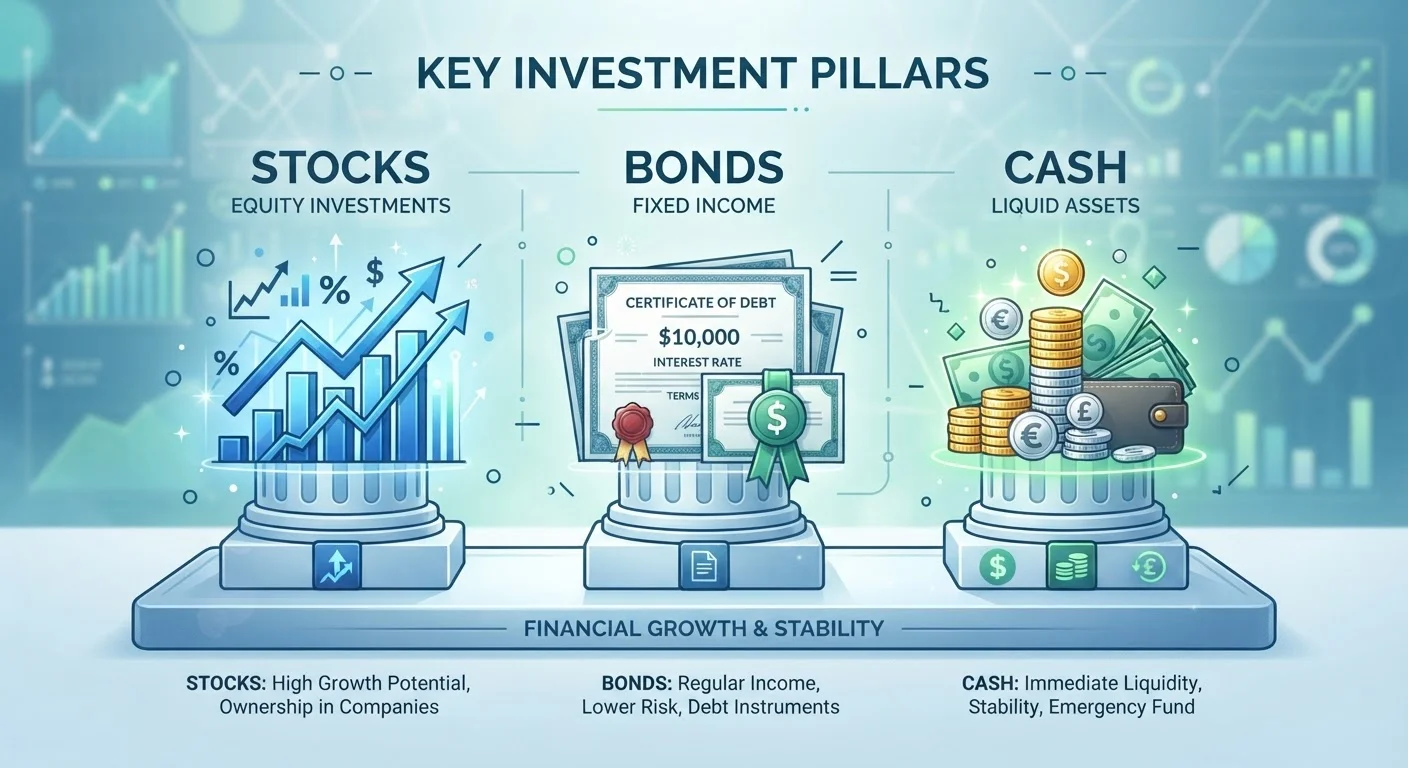
If you're considering investing for the first time, the next logical step is understanding the basic categories of investments available to you. Our guide to stocks, bonds, and cash as building blocks walks through how each asset class behaves and why most portfolios use a mix of all three.
Start With What You Understand
Before investing in any individual stock or fund, take time to understand what you're buying and why. Many financial educators recommend beginning with broad, low-cost index funds that track the overall market rather than trying to pick individual winners. This approach spreads risk across many companies and avoids the need to predict which specific stocks will outperform.
This article is for general informational and educational purposes only and does not constitute personalized financial or investment advice. All investing involves risk, including the potential loss of principal. Please consult a qualified financial adviser before making decisions specific to your situation.