The Core Distinction: Lists vs. Exclusions
Every property insurance policy - whether for a home, rental unit, or commercial building - uses one of two fundamental coverage structures. Understanding which one governs your policy determines how much protection you actually have and who carries the burden of proving a loss is covered.
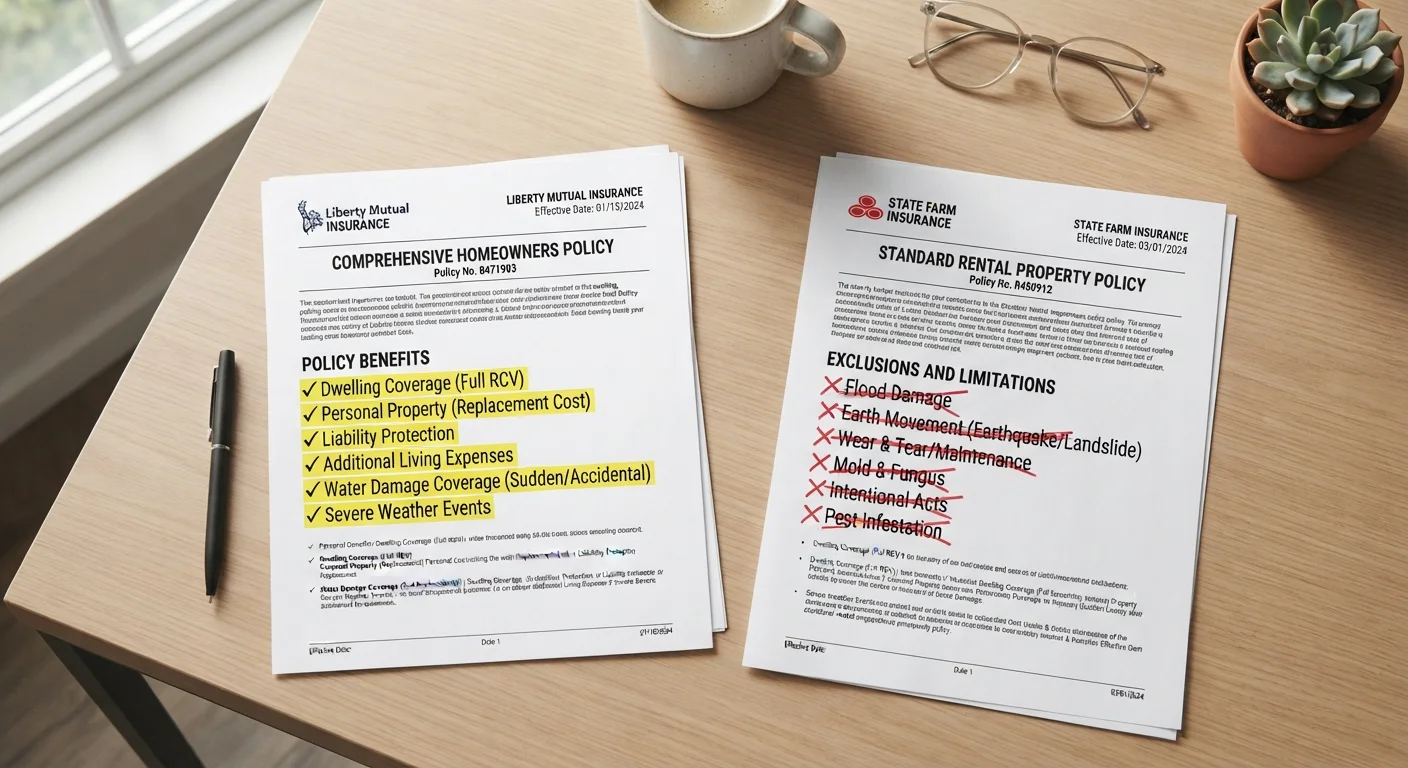
Named perils coverage means the policy will only pay if the specific cause of loss is listed by name in the policy. Common named perils include fire, lightning, windstorm, hail, theft, and vandalism. If your loss results from something not on that list, the claim can be denied regardless of the extent of the damage.
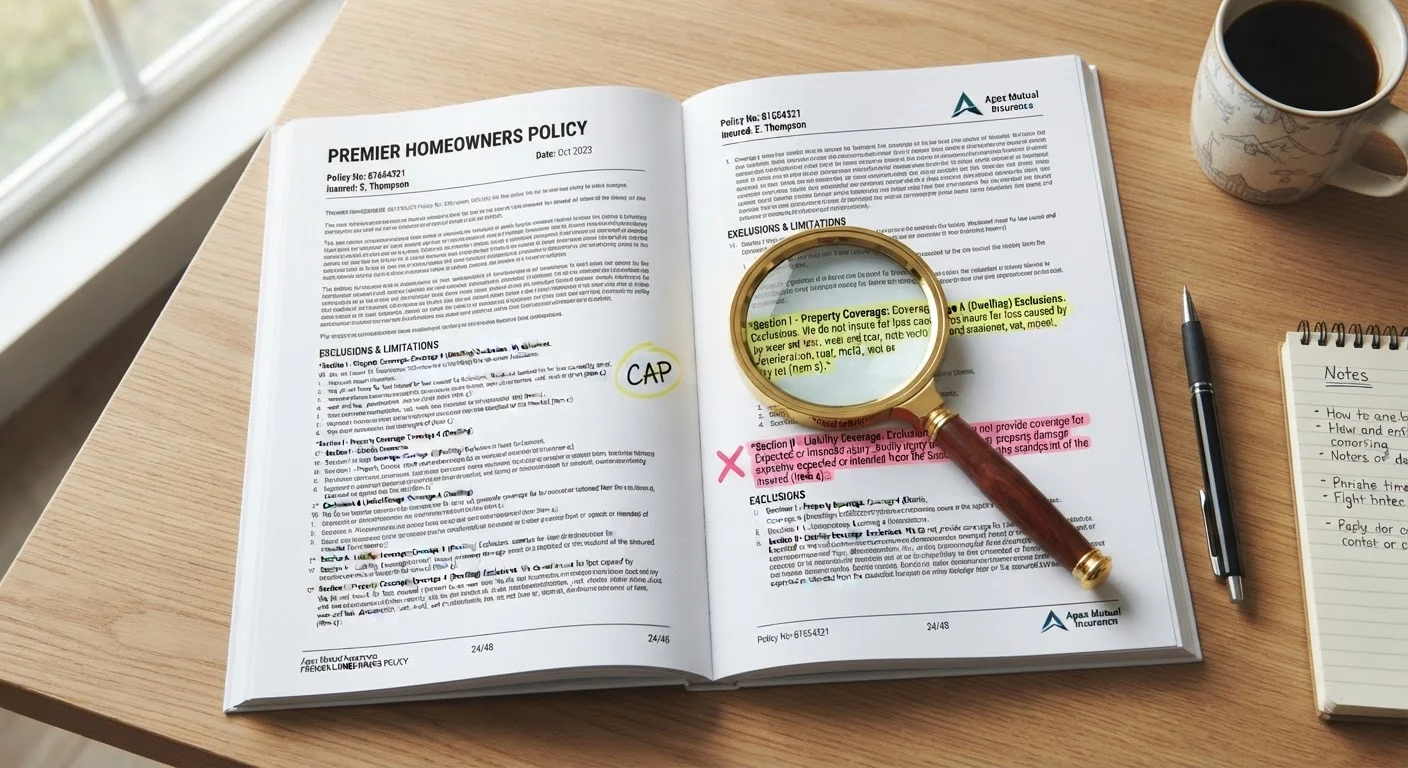
Open perils coverage (sometimes called all-risk or special form coverage) works in reverse: it covers any cause of loss unless that cause is specifically excluded in the policy document. Typical exclusions include flood, earthquake, intentional acts, and normal wear and tear.
This structural difference is not just semantic. It directly shapes what happens at claim time. See our guide on how coverage type affects your claim for a closer look at the claims process under each form.
| Criterion | Named Perils | Open Perils |
|---|---|---|
| Coverage trigger | Cause must appear on policy list | Any cause not specifically excluded |
| Burden of proof | Policyholder proves cause is listed | Insurer proves cause is excluded |
| Typical premium | Generally lower | Generally higher |
| Breadth of protection | Narrower, defined scope | Broader, catch-all scope |
| Claim denial risk | Higher if cause isn't listed | Lower; insurer must cite exclusion |
| Common policy examples | HO-1, HO-2, renters personal property | HO-3 dwelling, HO-5, many commercial forms |
| Exclusions still apply? | Yes | Yes |
Burden of Proof: A Practical Difference That Matters
One of the most consequential - and least discussed - differences between these two coverage forms involves who must prove what when a claim is disputed.
Under a named perils policy, the burden typically rests with the policyholder. You must demonstrate that the cause of the loss is one of the covered perils listed in your policy. If the cause is unclear or disputed, and you cannot show it falls within the listed perils, the insurer may deny the claim.
Under an open perils policy, the burden generally shifts. The insurer must show that the cause of the loss falls within a written exclusion to justify a denial. If the cause is ambiguous or hard to categorize, this structure tends to favor the policyholder.
This distinction matters in real scenarios - a sudden, mysterious collapse of a structure, for instance, might be coverable under open perils but uncovered under a named perils form if "collapse" isn't listed. Understanding the difference between exclusions and limitations can help you read the fine print more accurately.
"All-Risk" Does Not Mean All Losses Are Covered
The term "all-risk" is a marketing shorthand, not a legal guarantee of unlimited coverage. Open perils policies still contain written exclusions - flood and earthquake are excluded from most standard homeowners policies regardless of coverage form. Before assuming broad coverage, review the exclusions section of any open perils policy in full. A licensed agent can walk you through what is and isn't covered under your specific form.
Where Each Coverage Form Typically Appears
Named perils and open perils coverage don't always appear as an either/or choice - many policies combine both forms depending on what is being insured.
In a standard homeowners policy, for example, the dwelling structure is often covered on an open perils basis (HO-3 special form), while personal property inside the home is covered on a named perils basis. This layered approach means the same policy can treat two types of property very differently.
Renters insurance policies frequently use named perils coverage for personal belongings, listing specific events like fire, theft, or water damage from a burst pipe. Business property policies vary widely - some commercial lines offer open perils forms, others default to named perils unless upgraded.
Before assuming your coverage is broad, check which form applies to each category of property in your policy. Reviewing key policy terms before signing can help you catch these distinctions early. Also be aware that coverage gaps often go unnoticed until a claim is already underway.
~60%
Homeowners with HO-3 special form policies
The HO-3 is the most common homeowners policy form in the U.S., using open perils for the dwelling structure and named perils for personal property, according to the Insurance Information Institute.
Top 5
Most common named perils in basic policies
Fire, lightning, windstorm, hail, and theft are among the most commonly listed perils in basic named perils forms, per standard industry policy language.
Reading Your Policy: What to Look For
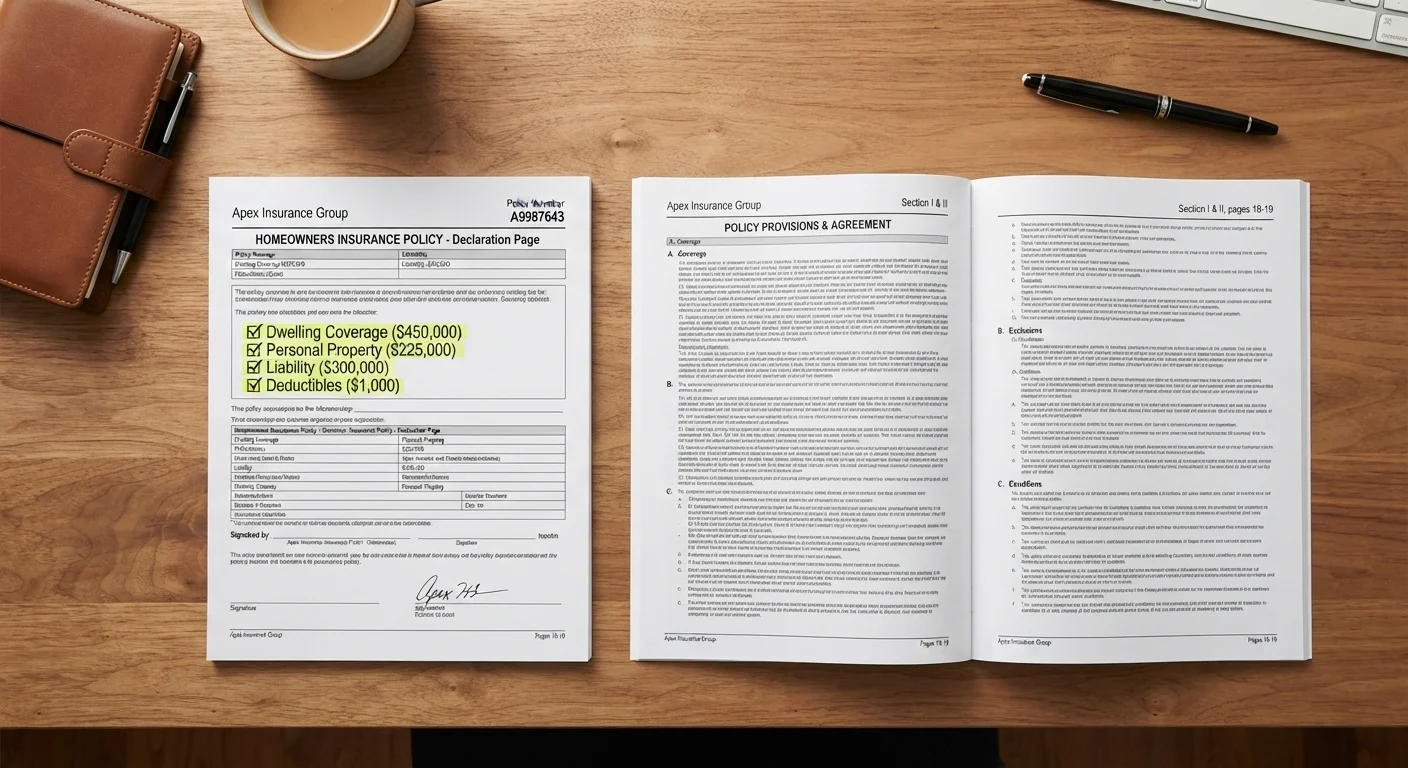
The coverage form your policy uses is usually identified in the declarations page or in a section titled "Perils Insured Against." Look for language such as:
- "We cover direct physical loss caused by the following perils..." - This is named perils language. A list follows.
- "We cover direct physical loss unless caused by..." - This is open perils language. Exclusions follow.
If the wording is ambiguous, ask your agent or insurer to clarify which form applies - and get the answer in writing. Terms that look similar can mean very different things, and misreading coverage language is a common source of claim disputes.
Also confirm how your policy handles specific high-value items. The valuation method used alongside named or open perils coverage can further affect your payout. Our article on agreed value vs. stated value explains how payout amounts are determined for valuables.
This article is for general informational and educational purposes only and does not constitute personalized insurance, legal, or financial advice. Coverage terms, exclusions, and regulations vary by provider and by state. Always read your actual policy documents carefully and consult a licensed insurance agent or adviser for guidance specific to your situation.