What the Terms Actually Mean
Every property insurance policy - whether for a home, rental unit, or commercial building - is built around a core question: which events trigger coverage? The answer depends entirely on whether the policy uses a named perils or open perils structure. Understanding this distinction is foundational to reading any policy document with confidence. For a broader look at how coverage types are classified, the Coverage Explained hub is a useful starting point.
A peril is an insurance term for a specific cause of loss - fire, theft, wind, vandalism, and so on. The two structures define how the policy relates to those causes:
- Named perils (also called a specified perils or basic/broad form): Coverage applies only if the cause of the loss is explicitly named in the policy. If a peril is not on the list, the claim is denied, regardless of how severe the damage is.
- Open perils (also called all-risk or special form): Coverage applies to any cause of loss unless the policy specifically excludes it. The list that matters here is the exclusions list, not a covered-perils list.
This structural difference shapes everything from how claims are evaluated to how disputes are resolved. Insurance terms that look similar but mean very different things explores other pairs of concepts that are easy to confuse but carry distinct policy consequences.
How Each Structure Handles a Claim
The practical impact of the named perils vs. open perils distinction becomes clearest during a claim. The two structures assign the burden of proof differently - and that matters when a loss is ambiguous or unusual.
| Criterion | Named Perils | Open Perils |
|---|---|---|
| Coverage trigger | Cause of loss must match a listed peril | All causes covered unless excluded |
| Burden of proof in a claim | Policyholder must prove peril is listed | Insurer must prove an exclusion applies |
| Typical premium cost | Generally lower | Generally higher |
| Common policy forms | HO-1, HO-2, personal property on HO-3 | HO-3 dwelling, HO-5 full policy |
| Claim denial basis | Peril not found on the covered list | Specific exclusion cited in policy |
| Risk of unexpected gaps | Higher - unlisted perils are not covered | Lower - but exclusions can still be broad |
Under a named perils policy, the policyholder carries the burden of demonstrating that the cause of the loss is one of the listed perils. If a pipe bursts and the policy lists "sudden and accidental discharge of water" as a covered peril, you need to show the damage matches that description. If the cause is unclear or doesn't map to a listed peril, the insurer can decline the claim without needing to cite an exclusion.
Under an open perils policy, the default position is coverage. The insurer must identify a specific exclusion in the policy language to deny the claim. This shifts the evidentiary burden - instead of proving your loss qualifies, the insurer must prove it doesn't. That said, exclusions in open perils policies can be extensive. Flood, earthquake, intentional acts, normal wear and tear, and certain mold scenarios are commonly excluded even under broad special-form policies.
Flood and Earthquake: Excluded Almost Everywhere
Even under open perils (special form) policies, flood and earthquake damage are almost universally excluded. These perils require separate, standalone policies - the National Flood Insurance Program (NFIP) for flood coverage, and a separate earthquake endorsement or policy for seismic risk. Do not assume open perils coverage means all-inclusive coverage; the exclusions section of any policy deserves careful reading.
For context on how a related policy concept - the definition of an "occurrence" - can affect coverage limits in a claim, see how insurers define "occurrence" and why it changes everything in a claim.
Where These Structures Appear in Real Policies
Named perils and open perils coverage often appear within the same policy, applied to different categories of property. This layered approach is common in standard homeowners policies.
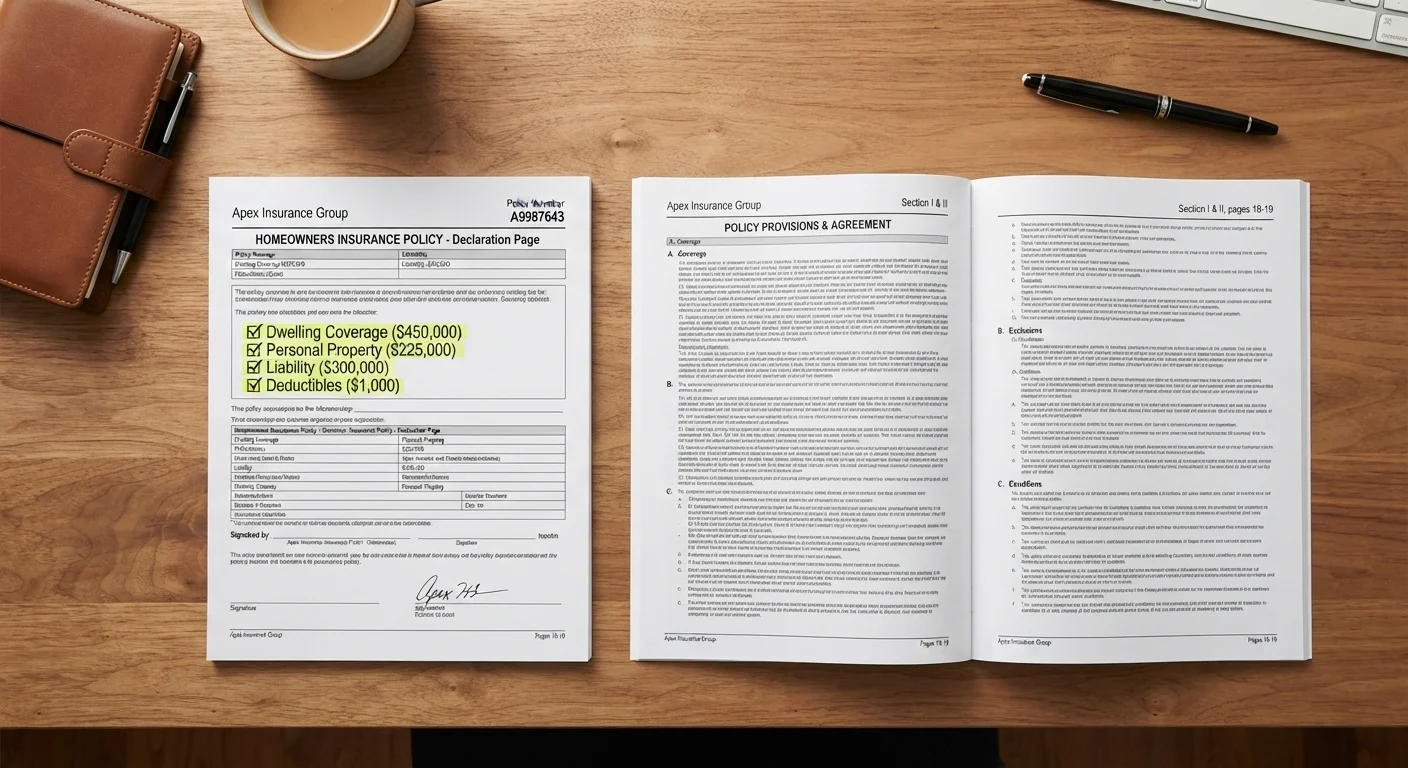
A typical homeowners policy written on an HO-3 form, for example, covers the dwelling (the building structure) on an open perils basis, but covers personal property (furniture, electronics, clothing) on a named perils basis. An HO-5 form extends open perils coverage to personal property as well, offering broader protection at a higher premium. An HO-1 or HO-2 form covers everything on a named perils basis.
Renters insurance policies commonly use named perils for personal property, which is worth reviewing carefully. If a pipe slowly leaks over months and damages your belongings, a named perils policy may deny the claim because "gradual leakage" isn't a listed peril - even if "sudden water discharge" is.
Auto insurance follows its own framework. Comprehensive coverage - which protects against non-collision events like theft, hail, or fire - functions similarly to open perils, while collision coverage is more event-specific. The auto insurance coverage types guide explains how those distinctions work in vehicle policies.
Understanding which structure applies to which part of your policy is essential to identifying potential coverage gaps most policyholders don't know they have.
This article is for general informational and educational purposes only. It does not constitute personalized insurance, legal, or financial advice. Coverage terms, exclusions, and availability vary by insurer, policy form, and state. Always read your actual policy documents carefully and consult a licensed insurance agent or adviser for guidance specific to your situation.