
Two Words That Determine What You Actually Get Paid
When a claim is denied or pays out less than expected, the cause almost always traces back to one of two provisions buried in the policy: an exclusion or a limitation. These terms sound similar, but they work very differently - and confusing them leads to serious gaps in financial planning.
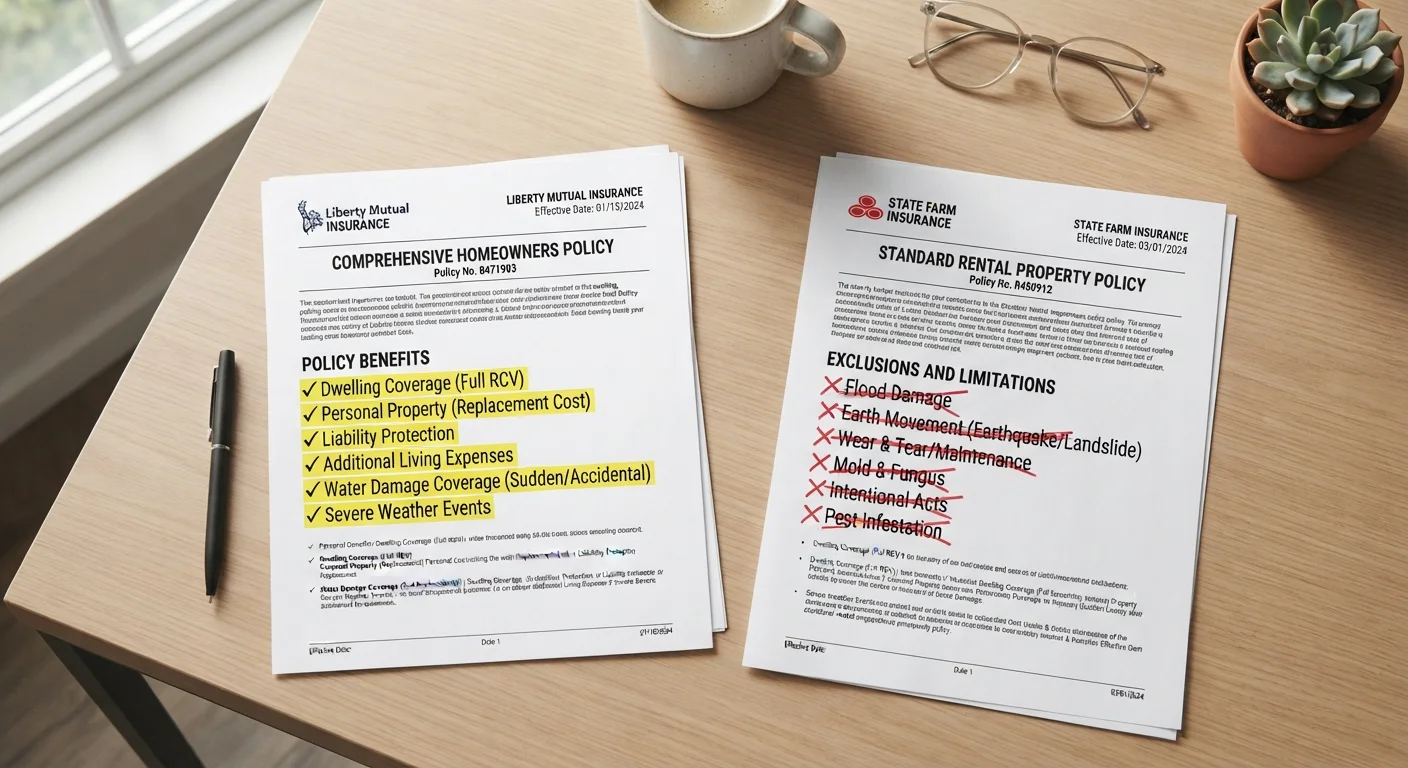
In plain terms: an exclusion eliminates coverage for a specific risk, event, or category of loss entirely. A limitation allows coverage but restricts how much, how long, or under what conditions the insurer will pay. One closes the door; the other props it open but puts a ceiling on what can come through.
For a broader look at how insurers customize policy terms using related tools, see how riders and endorsements interact with exclusions.
What an Exclusion Actually Means
An exclusion is a contractual provision that removes a specific peril, circumstance, or type of loss from the policy's scope of coverage. If something is excluded, the insurer has no obligation to pay - full stop. Common examples include:
- Flood damage excluded from standard homeowners policies (requiring a separate flood policy)
- Intentional acts excluded from liability coverage
- Pre-existing conditions historically excluded from some health plans before the ACA's rules took effect
- Wear and tear excluded from most property and auto policies
Exclusions are typically grouped in their own named section of a policy. Reading the exclusions section carefully before you need to file a claim is one of the most practical steps a policyholder can take.
It is also worth understanding whether your policy covers named perils only or everything except exclusions. That structure changes which losses are covered by default. Named perils vs. open perils policies work very differently in this regard.
| Criterion | Exclusion | Limitation |
|---|---|---|
| Effect on coverage | Eliminates coverage entirely | Allows coverage within a cap |
| Insurer's obligation | Owes nothing for that loss | Owes up to the defined maximum |
| Where it appears | Usually a dedicated exclusions section | Scattered through coverage definitions |
| Common examples | Flood, intentional acts, wear and tear | Jewelry sub-limits, benefit time caps |
| Can be removed or raised? | Sometimes, via rider or endorsement | Often, via higher-limit endorsement |
| Reader's action | Seek separate policy if risk matters | Assess gap and budget accordingly |
What a Limitation Actually Means
A limitation does not eliminate coverage - it qualifies it. The insurer agrees to pay but only up to a defined ceiling, for a defined period, or under defined conditions. Limitations appear in many forms:
- Sub-limits: A homeowners policy may cover personal property up to $150,000 overall but cap jewelry coverage at $2,500. The jewelry claim is covered - just not beyond that sub-limit.
- Time limits: A disability policy may pay benefits for a maximum of 24 months for certain diagnoses.
- Frequency limits: A vision plan may cover one eye exam per calendar year.
- Percentage-of-value limits: Some policies pay actual cash value rather than replacement cost, effectively limiting the payout by the item's depreciated worth.
Limitations are often less obvious than exclusions because they appear scattered through the policy rather than in a single section. Reviewing the difference between policy limits and coverage limits helps clarify how these caps are structured on paper.
1 in 3
Homeowners unaware of flood exclusion
Industry surveys consistently find a significant share of homeowners incorrectly believe standard policies cover flood damage, which is typically excluded.
$2,500
Typical jewelry sub-limit in homeowners policies
Many standard homeowners policies cap scheduled jewelry coverage well below the value of a single engagement ring without an added floater.
How to Use This Knowledge When Reviewing a Policy
The practical goal is not just knowing what these terms mean but knowing where to look and what to do when you find them.
- Start with the declarations page. It summarizes your coverages and limits. Any number shown there is a limitation, not a guarantee of full coverage in every scenario.
- Read the exclusions section in full. If a risk matters to you - a home business, a trampoline, a chronic health condition - confirm it is not excluded before assuming coverage exists.
- Look for sub-limits inside covered categories. A coverage that appears generous may carry narrow sub-limits for the specific items you care most about.
- Ask about riders and endorsements. In many cases, an excluded risk can be added back or a limitation raised for an additional premium. Coverage is often more customizable than the base policy suggests.
If you receive coverage through an employer, note that group and individual policies apply exclusions and limitations differently, and the terms you can negotiate - or even review - may vary.
Out-of-Pocket Costs and Limitations Interact
In health insurance, limitations on specific service categories - such as a 30-visit cap on physical therapy - work alongside your deductible and out-of-pocket maximum. Even after you hit your out-of-pocket maximum, a visit limit may still apply. Understanding how these layers interact is key to estimating your true exposure. See how out-of-pocket maximums work for more context.
This article is for general informational and educational purposes only and does not constitute insurance, legal, or financial advice. Coverage terms, exclusions, and limitations vary by insurer, policy type, and state. Always read your actual policy documents and consult a licensed insurance agent or adviser for guidance specific to your situation.