
Why Walking Is a Legitimate Health Tool
Walking often gets dismissed as 'not real exercise,' but a substantial body of research suggests otherwise. Regular brisk walking is associated with reduced risk of cardiovascular disease, improved blood sugar regulation, better mood, and lower all-cause mortality risk across a range of age groups. It is low-impact, meaning it places less stress on joints than running, making it particularly accessible for people returning to activity after a break or managing weight-related joint strain.
What walking has in its favor above almost any other physical activity is its near-zero barrier to entry. No gym membership, no equipment purchase, no special skill. It fits into ordinary life - a lunch break, a commute, an errand. For people just beginning to build movement habits, that accessibility is not a trivial advantage. To understand how everyday movement accumulates into real health benefits, learn what counts as physical activity throughout the day.
Check In With Your Doctor First
If you have a chronic condition such as heart disease, diabetes, joint problems, or a recent injury, speak with a qualified healthcare professional before increasing your activity level. This article provides general health information, not personal medical advice. Your provider can help you identify a starting point that is safe and appropriate for your specific situation.
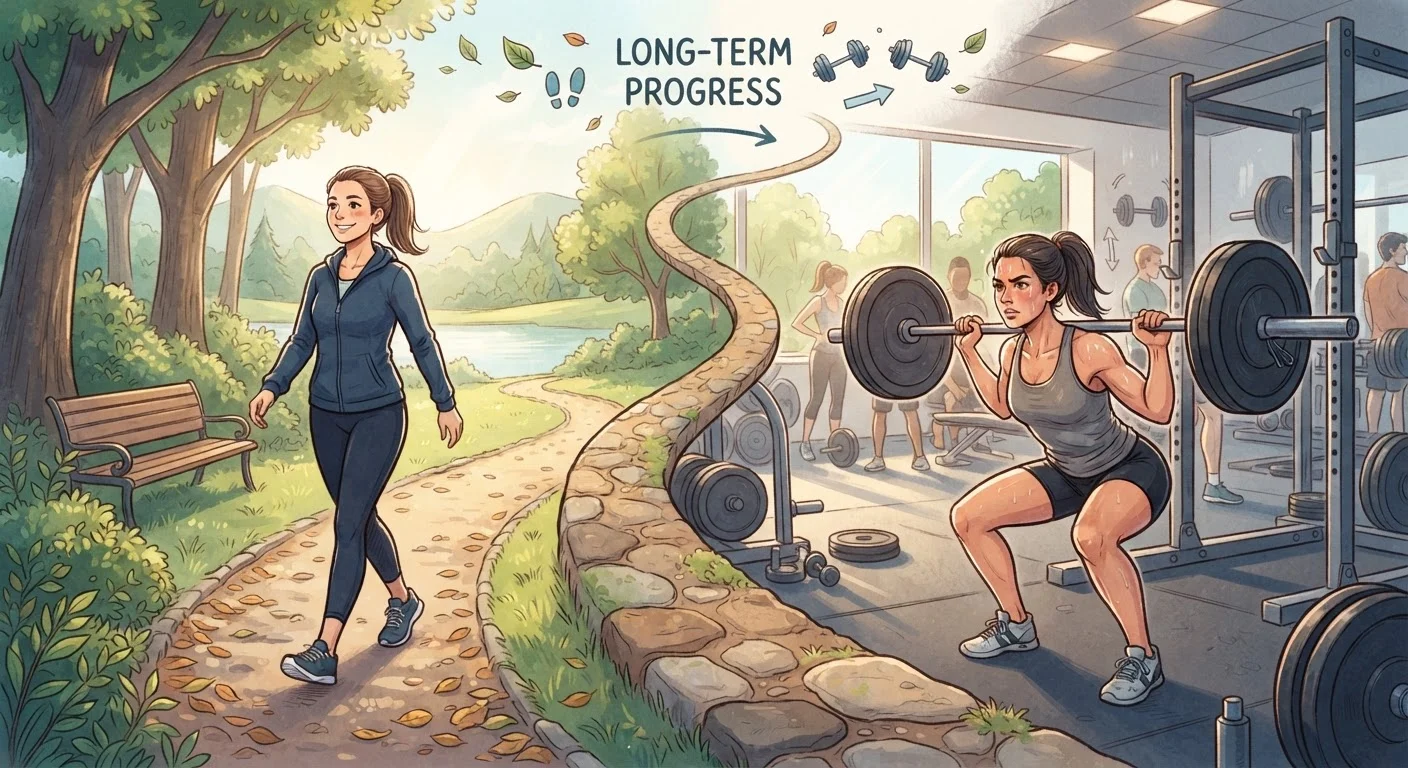
Walking is also an effective on-ramp to more structured fitness. Once a daily walk becomes second nature, it builds the consistency mindset that translates well to building a weekly exercise routine over time.
What You Need Before You Start
The physical requirements for beginning a daily walking habit are minimal, but setting yourself up thoughtfully makes a real difference in long-term adherence.
What you will need
Supportive walking shoes
Proper footwear reduces impact on joints and lowers the risk of blisters or foot pain during walks.
Smartphone or pedometer
Tracks steps or distance to help you monitor progress and stay motivated - most smartphones have a built-in health app.
Weather-appropriate clothing
Layered, breathable clothing helps you walk comfortably year-round, removing weather as an excuse to skip.
Water bottle
Staying hydrated on longer walks, especially in warm weather, prevents fatigue and supports performance.
If you work a desk job and spend most of your day seated, you may find that even a 10-minute walk initially feels more tiring than expected. That's normal. Research consistently shows that sedentary work patterns reduce baseline fitness, but they reverse relatively quickly with consistent low-intensity movement.
How to Build Your Walking Routine Step by Step
The steps below are designed for someone starting from a low or inconsistent baseline. If you already walk regularly, use them as a framework for intentional progression rather than a beginner reset.
Establish your honest starting point
Before adding anything new, get a realistic picture of how much you currently walk each day. Most smartphones automatically track steps in a built-in health app - check your average over the past week. If you average fewer than 4,000 steps, consider yourself at a low baseline. If you're already hitting 6,000-7,000, you have a solid foundation to build from.
Avoid comparing yourself to popular benchmarks like 10,000 steps. Research suggests meaningful health benefits appear well below that number for many people. What matters is your current level and a direction of improvement.
Set a modest, specific daily walking goal
Choose a target that feels almost too easy for your current fitness level. If you average 3,000 steps, aim for 4,000-4,500 to start. If you walk very little, commit to one 10-minute walk per day. Specificity matters: 'I will walk for 10 minutes after dinner each weekday' is far more actionable than 'I'll try to walk more.'
A modest goal builds the habit infrastructure first. You can always walk longer - but you can't undo the discouragement of failing an unrealistic target in week one.
Choose a consistent time and trigger
Pick a time of day that fits naturally into your existing schedule and anchor your walk to something you already do reliably. Morning, lunch, or after work are the most common windows, each with trade-offs around energy and weather. The best time is the one you will actually keep.
Build up gradually over four to six weeks
Once your initial habit feels automatic - typically after two to three consistent weeks - increase your walking time or distance by roughly 10-15% per week. For example, if you've been walking 15 minutes daily, move to 17-18 minutes the following week. This pacing gives your joints, muscles, and cardiovascular system time to adapt without overloading them.
Gradual progression is a core principle behind sustainable fitness gains. For a broader look at how consistent moderate effort compounds over time, see our guide on consistency vs. intensity.
Track your walks and celebrate small wins
Log each completed walk - even informally in a notes app or on paper. Visible progress is a strong motivator. After the first week of consistency, acknowledge that: habit formation is genuinely hard, and showing up daily is the hardest part. Tracking also helps you spot patterns, such as which days you skip most often and why.
Troubleshoot and adapt when life interrupts
Missed days are inevitable. The key is not to let one missed day become a two-day gap or a week-long break. If your scheduled walk becomes impossible, substitute a shorter version - even five minutes counts toward maintaining the habit signal. Reframe flexibility as strategy, not failure.
If boredom becomes a barrier, vary your route, listen to a podcast, or invite someone to walk with you. Social walking has its own motivational benefits and can help you stay accountable. For more on building the broader habit system around this kind of movement, see our introduction to building healthy habits.
Stack Walking Onto Something You Already Do
Habit researchers call this 'habit stacking' - linking a new behavior to an established one. Walking after your morning coffee, during a lunch break, or right after dropping kids at school gives the habit a reliable trigger and reduces the mental effort of remembering to do it.
Don't Ignore Pain or Discomfort
Mild muscle soreness when starting a new walking routine is common and usually resolves within a day or two. However, sharp joint pain, chest discomfort, shortness of breath, or dizziness during or after walking are signals to stop and consult a healthcare professional before continuing.
For context on what your body is adapting to during these early weeks, see what happens physiologically when you start exercising regularly. Understanding the process can make temporary discomfort feel purposeful rather than alarming.
This article is for general informational purposes only and does not constitute medical advice. Always consult a qualified healthcare professional before making changes to your physical activity, especially if you have an existing health condition.