
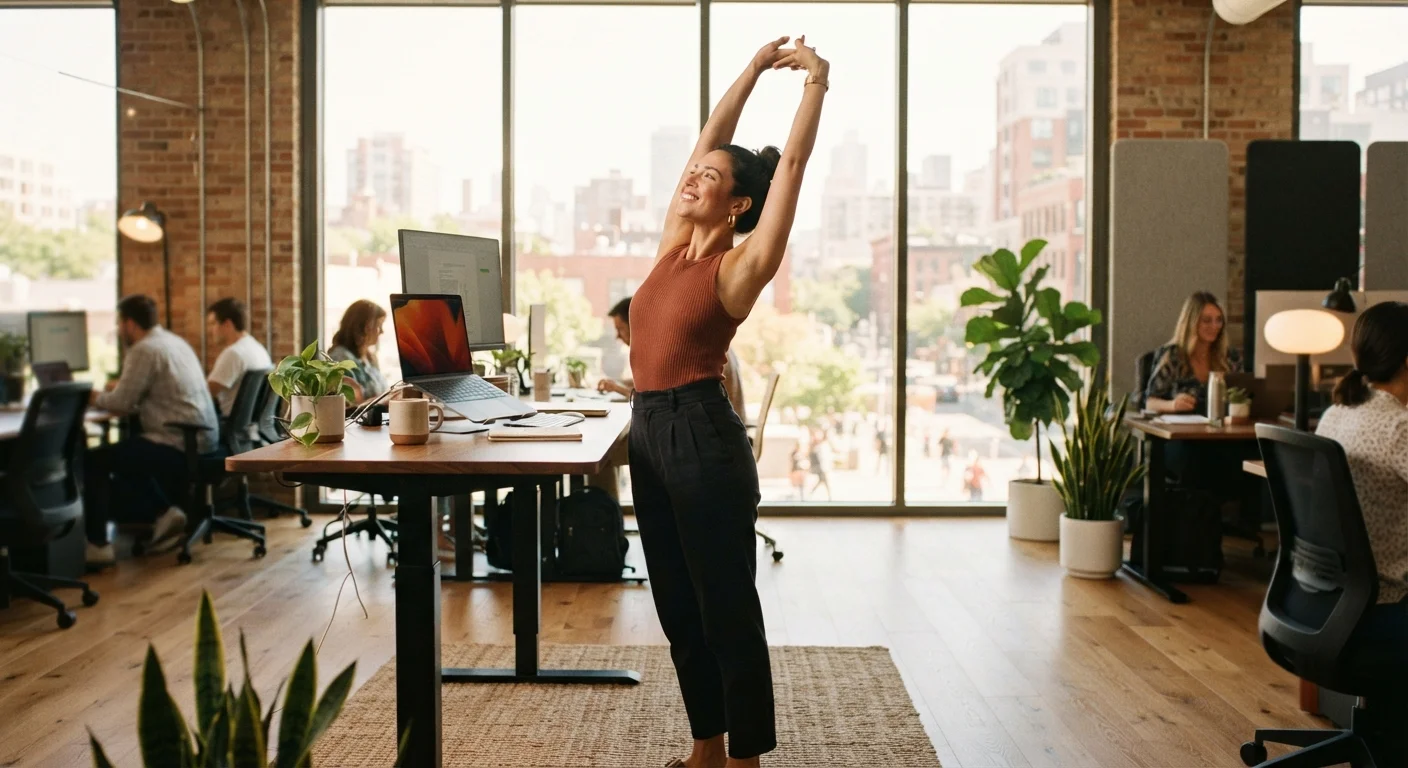
Why Sitting All Day Is Worth Taking Seriously
For millions of Americans, a workday means eight or more hours in a chair. Email, calls, spreadsheets, video meetings - desk work keeps us anchored to our seats in ways that feel completely normal. And that's part of the problem.
Research consistently shows that prolonged, unbroken sitting is associated with increased risk for cardiovascular issues, metabolic changes, and musculoskeletal discomfort - even among people who exercise regularly outside of work. In other words, a morning run doesn't fully cancel out six hours of continuous sitting. The body responds to how long it stays still, not just whether it moves at some point in the day.
The good news is that the threshold for benefit is low. Interrupting sitting with short bouts of light movement - standing, walking, stretching - appears to help regulate blood sugar, improve circulation, and reduce physical tension. You don't need to overhaul your workday; you need to punctuate it. The strategies below are practical, low-friction, and grounded in what the evidence actually supports. If you're thinking about a broader look at your daily routines, our daily wellness audit is a useful starting point.
Set a movement reminder every 45 to 60 minutes
Most people don't realize how long they've been sitting until discomfort signals it. A simple phone alarm or computer notification set to go off every 45 to 60 minutes acts as an external cue to stand up and move briefly. Even 90 seconds of walking in place, stretching, or walking to a water fountain is enough to break the sedentary pattern. Once this becomes routine, many people find they no longer need the reminder - the urge to get up develops naturally.
A 90-second movement break every hour can interrupt the body's prolonged sedentary response.
Take phone and video calls standing or walking
Audio-only calls - and even some video calls from a phone - don't require you to be seated. Standing during a call is low-effort and adds meaningful movement over the course of a week. For walking meetings or outdoor calls, the combination of light movement and fresh air can also support focus and reduce afternoon mental fatigue. Check whether your workplace culture supports this; many do, especially for informal check-ins.
Standing or walking during calls is one of the easiest ways to reduce sitting without losing work time.
Rethink where you refill water and take breaks
Placing your water bottle out of arm's reach - or deliberately using a restroom on a different floor - builds in short walks without any scheduling. These micro-distances accumulate. Researchers studying daily step counts have found that incidental movement woven into daily routines often contributes as much as structured exercise bouts for people with sedentary jobs. Small friction, applied thoughtfully, creates automatic movement.
Intentional inconvenience - like a distant water source - quietly builds daily movement into your routine.
Incorporate desk-friendly stretches and mobility moves
Prolonged sitting tightens hip flexors, compresses the lower back, and strains the neck and shoulders. A few targeted stretches done at or near your desk - a seated hip flexor stretch, shoulder rolls, a chest opener against a doorframe - can relieve tension and maintain range of motion over time. These don't need to be formal exercise; even rolling your ankles and shifting weight during a standing break makes a difference. For more structured guidance, mobility and flexibility resources can help you build a brief daily practice.
Desk-friendly stretches take under three minutes and can meaningfully reduce sitting-related tension.
Use your lunch break as a genuine movement window
A 10- to 15-minute walk after lunch serves multiple purposes: it contributes to your daily step count, supports post-meal blood sugar regulation according to current nutritional science, and provides a mental break that can improve afternoon concentration. You don't need to walk fast or far. Consistency matters more than intensity here - a modest, regular post-lunch walk done five days a week adds up to meaningful activity over months. See our overview of walking as a daily health habit for more on this.
A short walk after lunch combines movement benefits with genuine cognitive recovery for the afternoon ahead.
Anchor movement to existing work rituals
Every workday already contains predictable moments: the start of a meeting, the end of a task, the second coffee. These are reliable triggers for brief movement if you pair them intentionally. Stand up every time you open a new document. Do five shoulder rolls every time you send an email report. Walk to a colleague's desk instead of messaging them. This behavioral pairing - sometimes called habit-stacking - is one of the most evidence-supported methods for building durable new behaviors without relying on willpower. Our article on habit stacking explores the technique in depth.
Pairing movement with existing work triggers removes the need for willpower and builds habits automatically.
Making Movement a Lasting Part of Your Workday
The strategies above work best when they stop feeling like extra effort. One reliable way to get there is habit-stacking - anchoring new movement behaviors to things you already do automatically. Brewing coffee, starting a meeting, or opening your inbox can each become a reliable trigger for standing or stretching. Our guide on stacking habits explains the research behind this approach in more detail.
Start with one change, not six
It's tempting to adopt every strategy at once, but behavior change research consistently shows that picking a single, specific new behavior dramatically increases the odds of it sticking. Choose the one strategy on this list that fits most naturally into your current workday and practice it for two to three weeks before adding another. Small, consistent wins build the foundation for lasting change.
If walking appeals to you as a broader health goal, it's worth reading about building a daily walking habit - small increases in daily steps have well-documented benefits and cost nothing. And if desk work has left your hips or back feeling tight, flexibility and mobility work can help restore comfortable movement range over time. These changes layer well together, and starting with just one or two makes them far more likely to stick.
This article provides general health information for educational purposes only and is not a substitute for personalized medical advice. If you have specific health concerns or conditions, please consult a qualified healthcare professional before making changes to your routine.