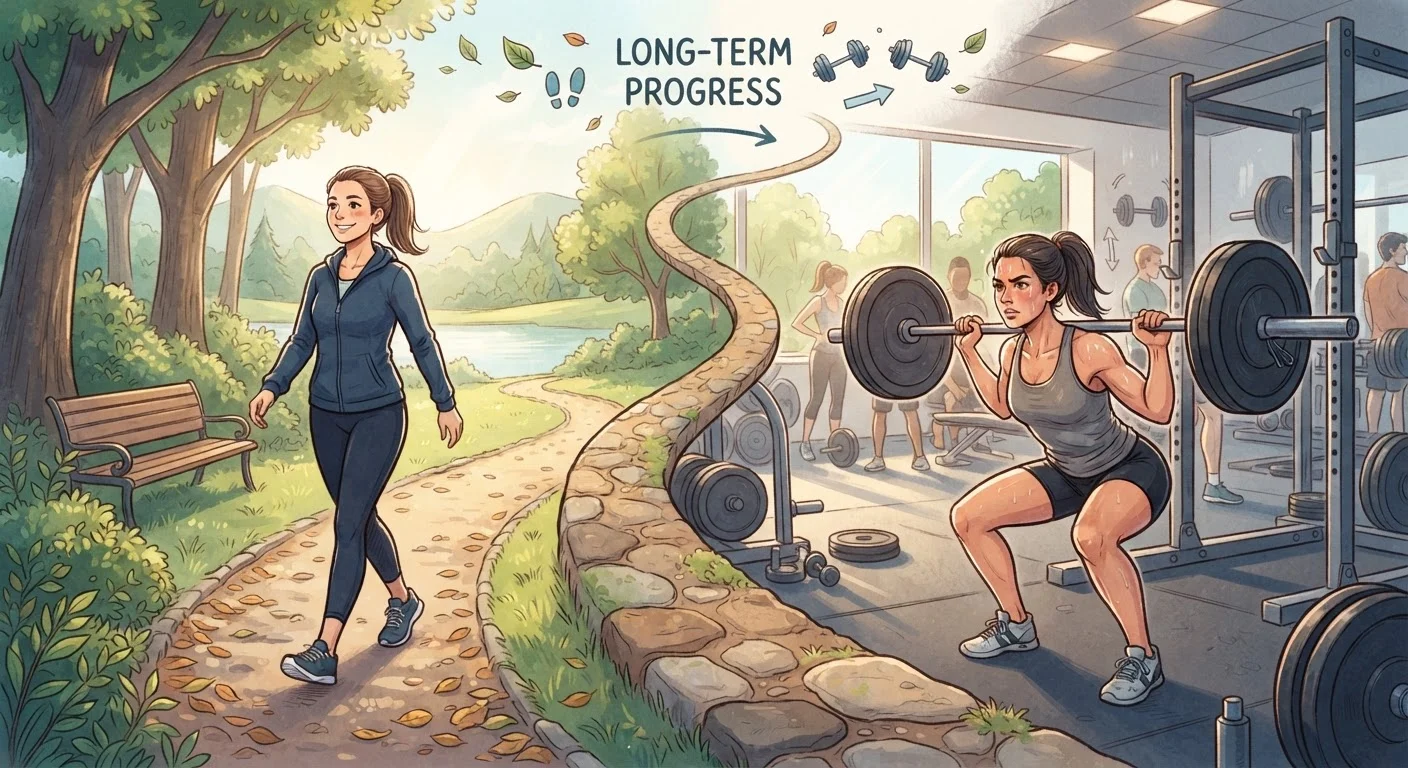

Why Your Body Responds Differently After 40
Starting around your late thirties, the body undergoes gradual but measurable shifts in how it builds and maintains muscle. The most significant is sarcopenia - the age-related loss of muscle mass and strength. Research suggests adults can lose between 3-8% of muscle mass per decade after 30 if they're sedentary, with the rate accelerating after 60. Hormonal changes also play a role: testosterone and estrogen levels decline, both of which contribute to muscle synthesis and bone density.
Equally important is recovery. Inflammation from exercise takes longer to resolve, connective tissue becomes less elastic, and sleep - which is when muscle repair actually happens - often becomes shorter or less restorative. These aren't reasons to avoid the gym. They're reasons to train smarter.
To understand how your body adapts to consistent movement over time, see what happens to your body when you start exercising regularly.
What Stays the Same: The Non-Negotiables
Despite the changes above, the core principles of effective strength training are age-agnostic. Progressive overload - gradually increasing the challenge placed on muscles over time - remains the primary driver of strength gains at any age. Compound movements like squats, deadlifts, rows, and presses still deliver the highest return on effort by engaging multiple muscle groups simultaneously.
Consistency also matters just as much - arguably more - than intensity after 40. Two to three well-structured sessions per week outperform sporadic high-intensity efforts in the long run. For a deeper look at this principle, consistency vs. intensity and what actually drives long-term health gains is worth reading.
Prioritize compound movements that train multiple joints simultaneously.
Exercises like squats, rows, and presses build functional strength that supports everyday movement and burns more energy than isolation exercises. They also improve coordination and balance, which become more important with age.
Build in at least 48 hours of recovery between training the same muscle groups.
After 40, inflammatory responses to muscle stress take longer to resolve. Training the same muscles too soon increases injury risk and reduces the quality of adaptations. Recovery is when strength is actually built.
Extend your warm-up to include joint mobility work before every session.
Connective tissue becomes less pliable with age, meaning cold joints under load are significantly more prone to strain. A structured warm-up improves range of motion and signals the nervous system to prepare for effort.
Use progressive overload gradually rather than chasing personal records every session.
Consistent, modest increases in weight or reps over weeks and months produce more durable gains than sporadic maximum efforts. After 40, tendons and ligaments adapt more slowly than muscles, so patience protects against overuse injuries.
Track protein intake and aim to distribute it across meals throughout the day.
Muscle protein synthesis becomes less efficient with age, meaning older adults generally need adequate protein spread across the day to trigger optimal muscle repair. Concentrating all protein in one meal is less effective.
Adapting Your Training Without Backing Down
Adjusting for age doesn't mean lifting lighter forever - it means being deliberate about how you progress. Warm-ups deserve more time and attention; spending 10 minutes mobilizing hips, shoulders, and thoracic spine before loading them reduces injury risk significantly. Managing training volume - the total amount of work per session - is equally critical.
“The evidence is clear that resistance training is one of the most powerful tools available to older adults - not just for muscle, but for metabolic health, bone density, and cognitive function.”
— Dr. Miriam Nelson, Exercise researcher and author of studies on aging and strength training
Many people over 40 also benefit from rotating between heavier and lighter training weeks (a concept called periodization), which allows for adaptation without prolonged breakdown. If you're questioning whether your fatigue is normal or a warning sign, signs your body may need more recovery time offers useful guidance.
Common Myths That Hold People Back
One of the most persistent barriers to strength training after 40 is misinformation. The idea that lifting weights is inherently dangerous for older joints isn't supported by evidence - in fact, resistance training is widely recommended by major health organizations to support joint health and reduce osteoporosis risk. The notion that you've missed your window for building muscle is also false; meaningful strength gains are possible well into your sixties, seventies, and beyond.
For more on fitness beliefs that don't hold up under scrutiny, fitness myths that keep people from making progress addresses this directly. And if you're weighing how to balance resistance work with aerobic exercise, cardio and strength training: do you have to choose breaks it down clearly.
3-8%
Muscle mass lost per decade without training
According to research published in the Journal of Cachexia, Sarcopenia and Muscle, sedentary adults can lose this much muscle per decade after age 30.
2-3x
Improved fall-risk reduction with regular strength training
The CDC notes that strength and balance exercises can significantly reduce fall risk in older adults, a leading cause of injury-related hospitalization.
This article is for general informational purposes only and does not constitute medical advice. Consult a qualified healthcare professional before beginning any new exercise program, particularly if you have existing health conditions, joint concerns, or are managing chronic illness.