What Drowsy Driving Actually Does to Your Brain
Sleep deprivation doesn't just make you feel tired - it degrades the very cognitive functions driving demands most. Reaction time slows, peripheral awareness narrows, and the ability to anticipate hazards drops significantly. These aren't subtle effects. According to research from the AAA Foundation for Traffic Safety, drivers who sleep only 6 to 7 hours a night - one hour less than the recommended 7 to 8 - nearly double their crash risk compared to drivers who get adequate rest.
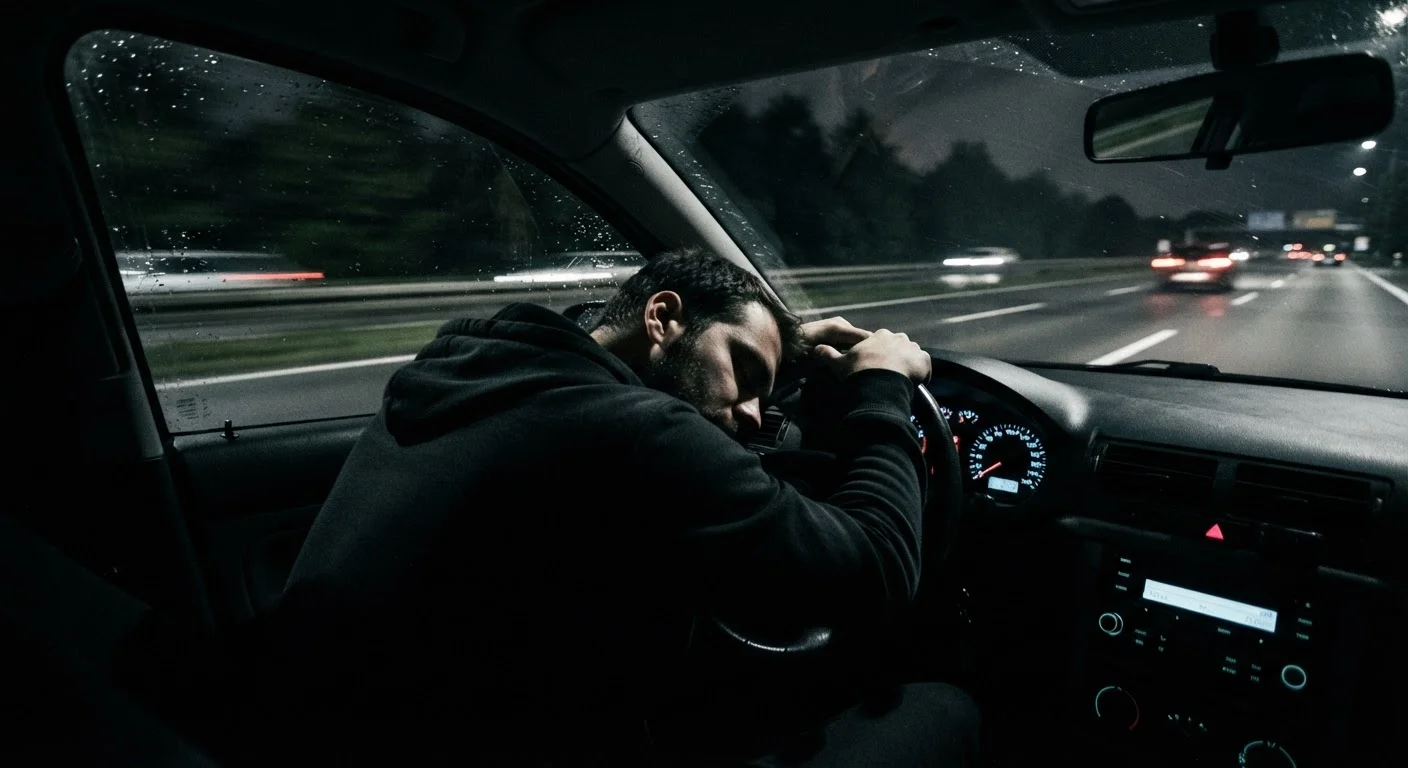
What makes this especially treacherous is microsleep: involuntary episodes of sleep lasting roughly 4 to 5 seconds. At 65 mph, that's nearly the length of a football field traveled with no driver input at all - no steering correction, no braking, no awareness. The driver often doesn't realize it happened.
Fatigue also corrupts your ability to accurately judge your own impairment. The same systems that would normally raise an internal alarm are themselves degraded, which is why drowsy drivers routinely report feeling fine moments before a crash.
2x
Crash risk increase with 6-7 hours of sleep
According to the AAA Foundation for Traffic Safety, drivers getting one hour less than recommended nearly double their crash risk.
100 yards
Distance covered during a 4-second microsleep at highway speed
At 65 mph, a 4-5 second microsleep episode covers roughly the length of a football field with no driver input.
0.08% BAC
Equivalent impairment after 20-25 hours awake
Research cited by NHTSA and the AAA Foundation links this level of sleep deprivation to the legal drunk driving threshold.
~6,000
Annual U.S. drowsy driving crash deaths (estimated)
NHTSA estimates drowsy driving contributes to thousands of fatal crashes annually, though underreporting is widely acknowledged by researchers.
The Alcohol Comparison Isn't Just a Metaphor
Transportation researchers have long drawn a direct parallel between sleep deprivation and alcohol impairment - and the data supports it. Studies consistently show that staying awake for 18 consecutive hours produces impairment similar to a blood-alcohol concentration (BAC) of approximately 0.05%. Push that to 20-25 hours awake, and the impairment tracks closer to a 0.08% BAC - the legal limit across all U.S. states.
The mechanisms overlap more than most drivers expect. Both alcohol and severe fatigue slow reaction time, reduce coordination, impair lane-keeping, and compromise hazard recognition. The critical difference: alcohol is detectable and illegal above a threshold. Fatigue is invisible, largely unregulated, and socially normalized. A driver would never admit to driving drunk, but routinely brags about powering through a long drive on four hours of sleep.
This normalization is itself a safety problem. Understanding the parallel is part of what's covered in the full picture on road safety in America, where drowsy driving is identified as one of several underappreciated crash contributors.
“Drowsy driving is a serious problem in the U.S. Driving after going more than 20 hours without sleep is the equivalent of driving with a blood-alcohol concentration of 0.08% - the legal limit in all states.”
— AAA Foundation for Traffic Safety, Non-profit traffic safety research organization
When and Where Drowsy Crashes Happen
Drowsy driving crashes aren't evenly distributed across the day or road types. NHTSA data points to two peak windows: midnight to 6 a.m. and the mid-afternoon - both align with natural low points in the human circadian rhythm, when alertness dips regardless of how much sleep a person got the night before.
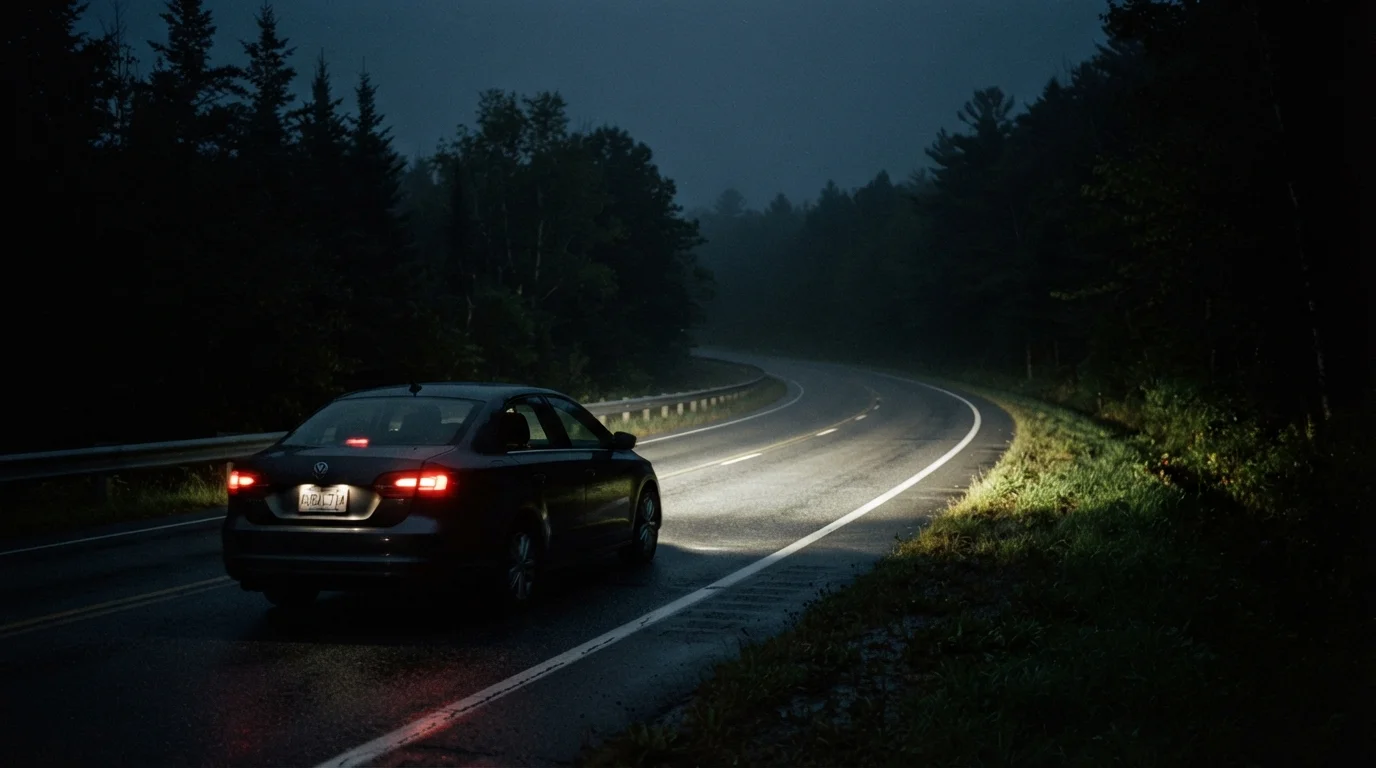
Rural highways and interstates are disproportionately represented in crash data. Monotonous environments - steady road, minimal stimulation, little variation in speed - accelerate the onset of drowsiness far faster than city driving. This is sometimes called the highway hypnosis effect, where reduced cognitive engagement allows fatigue to take hold even when a driver felt alert at the start of a trip.
Drowsy driving risk also compounds when combined with other impairments. Low visibility at night, for example, demands more from an already-fatigued visual system - a combination worth understanding alongside the common myths about night driving that can lead drivers to underestimate that risk.
Plan Trips Around Your Circadian Rhythm
If you're driving a long distance, schedule the bulk of your driving during your natural peak alertness hours - typically mid-morning to early afternoon. Avoid scheduling solo driving segments between midnight and 6 a.m. or in the 2-4 p.m. window whenever possible. Building in a planned rest stop every 2 hours on long drives is a practical safeguard, not an inconvenience.
What Actually Helps - and What Doesn't
Several strategies are commonly promoted as drowsy driving countermeasures. The evidence behind them varies significantly.
- Caffeine: Can temporarily reduce subjective sleepiness and modestly improve alertness, but effects are limited in duration and don't address underlying sleep debt. Caffeine also takes 20-30 minutes to take effect.
- Short naps (10-20 minutes): More effective than caffeine alone. A brief nap followed by caffeine - sometimes called a "nap-a-ccino" in sleep research literature - has shown measurable alertness improvements in controlled studies. This is a short-term tool, not a substitute for adequate sleep.
- Opening windows or turning up music: Largely ineffective at countering significant fatigue. These are distractions from the sensation of sleepiness, not treatments for it.
- Pulling over to rest: The most reliable option when fatigue is significant. Stopping at a rest area or safe location is not a sign of weakness - it's the right call.
Planning long trips to avoid overnight or mid-afternoon driving, sharing driving duties, and prioritizing 7-8 hours of sleep before a major drive remain the most effective preventive strategies. Drowsy driving doesn't announce itself cleanly - it's far better addressed before it starts.
For drivers working on building a broader set of safe habits, defensive driving principles offer a useful framework - because recognizing when you shouldn't be behind the wheel is itself a core defensive skill.