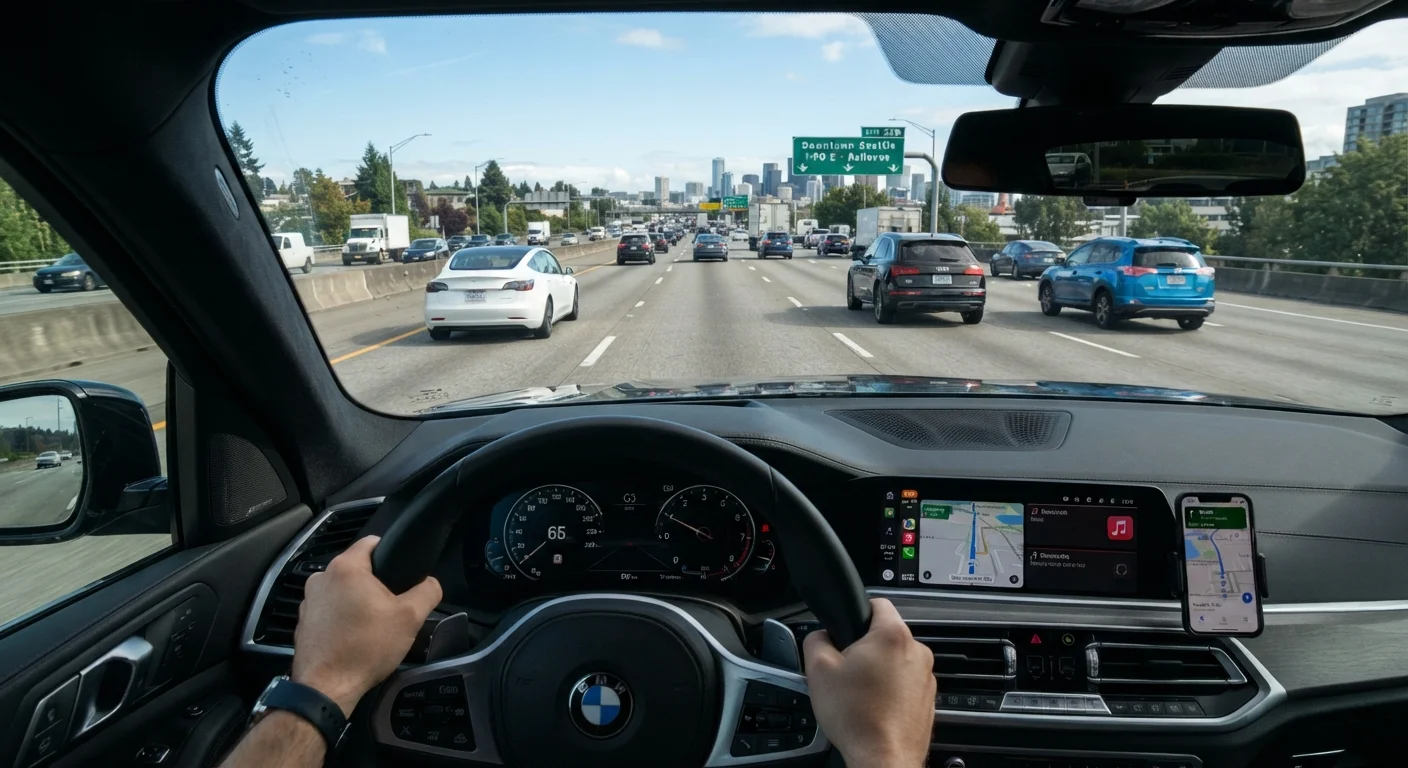
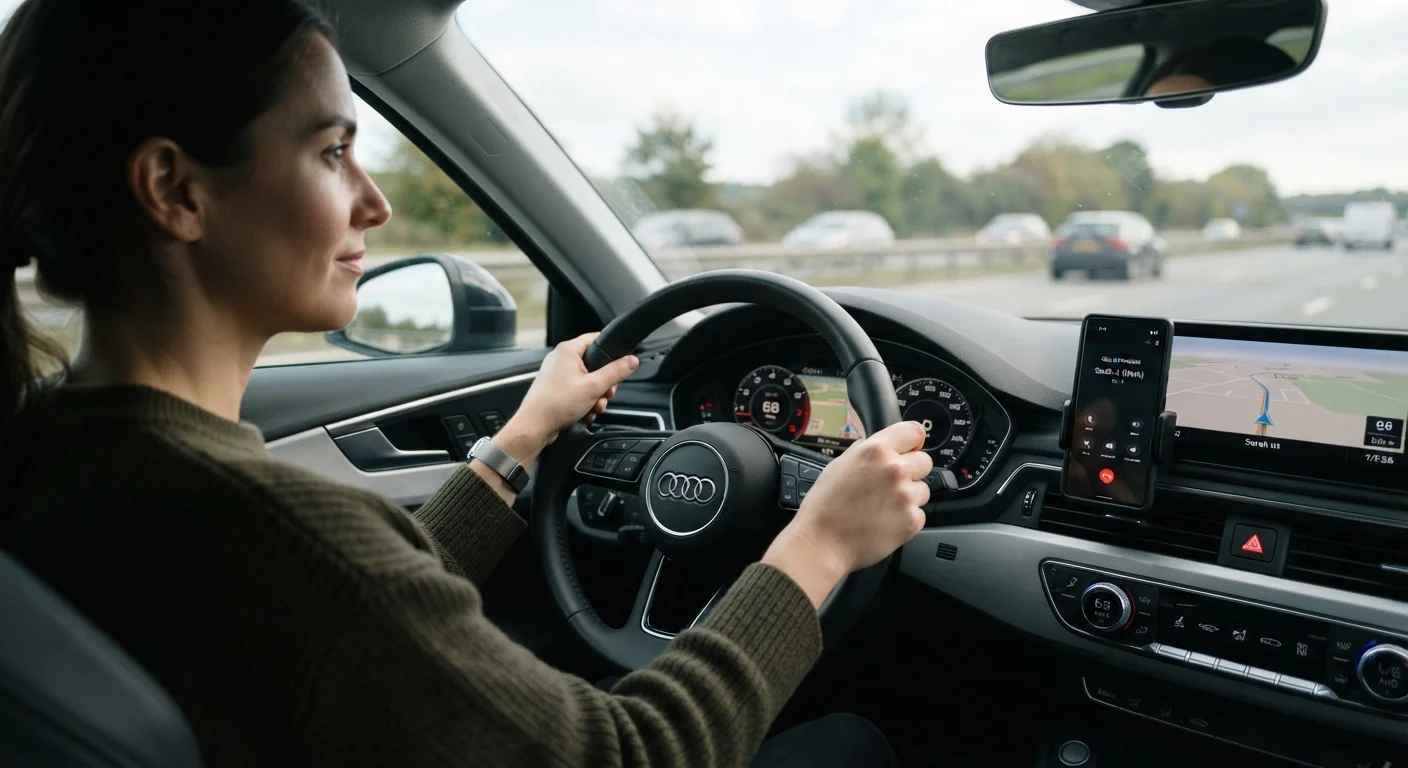
The Legal Reality vs. The Safety Reality
Most U.S. states have enacted laws banning handheld phone use while driving, and many encourage or require hands-free alternatives. This created a widespread assumption: if hands-free is legal, it must be safe. That's a significant overstep from the evidence.
Laws are designed to address the most obvious, enforceable risk - a driver visibly holding a phone. But distracted driving researchers have long distinguished between three types of distraction: manual (hands off the wheel), visual (eyes off the road), and cognitive (mind off the task of driving). Hands-free calling eliminates the first two while doing almost nothing about the third.
Understanding this distinction is essential. It explains why studies consistently find that hands-free phone users still show meaningful performance impairments compared to undistracted drivers - even when their hands are on the wheel and their eyes are forward. For a broader look at how attentional factors affect road safety, see our comprehensive road safety overview.
What the Research Shows on Cognitive Distraction
The cognitive distraction argument isn't theoretical. Research from the University of Utah and the AAA Foundation for Traffic Safety has documented that phone conversations - hands-free included - measurably slow reaction times, narrow the driver's visual field, and reduce awareness of hazards encountered on the road.
One key insight from this research: a phone conversation is fundamentally different from talking to a passenger. A passenger shares the driver's environment, naturally pauses the conversation when traffic demands attention, and can even serve as a second set of eyes. A remote caller has none of that context and makes no such adjustments.
4x
Increased crash risk while using a phone
Research cited by the National Safety Council estimates drivers using a phone - including hands-free - are approximately four times more likely to be involved in a crash.
37%
Of drivers admit to talking on a handheld phone
According to AAA Foundation for Traffic Safety survey data, a substantial share of drivers acknowledge using a handheld phone while driving despite knowing the risks.
27 seconds
Cognitive distraction lingering after a voice command
AAA Foundation research found cognitive distraction from voice-based interactions can persist for up to 27 seconds after the task is completed - well into subsequent driving.
This finding matters because it challenges the intuitive logic that hands-free calling is equivalent to having a conversation in the car. It isn't - and treating it that way leads drivers to underestimate how compromised their attention actually is during a call. Similar impairment patterns appear in drowsy driving; drowsy driving research reveals how reduced alertness degrades performance in ways drivers rarely notice in themselves.
Head-to-Head: How the Two Approaches Compare
Here's a direct look at how hands-free calling and phone-free driving compare across the factors that matter most on the road.
| Criterion | Hands-Free Calling | Phone-Free Driving |
|---|---|---|
| Manual distraction | Eliminated (hands on wheel) | Eliminated |
| Visual distraction | Mostly eliminated | Eliminated |
| Cognitive distraction | Present - often significant | Eliminated |
| Legal status (most U.S. states) | Permitted for adults | Permitted |
| Reaction time impact | Measurably slower than baseline | Baseline maintained |
| Situational awareness | Reduced during conversation | Fully available |
| Passenger-equivalent safety | No - caller lacks road context | N/A - no call occurring |
| Practical ease of adoption | High - built into most vehicles | Requires habit change |
The table makes clear that hands-free calling represents a partial improvement over handheld use - but it doesn't close the safety gap relative to undistracted driving. Phone-free driving is the only approach that fully removes mobile-phone distraction from the equation.
Building Habits That Actually Reduce Risk
Knowing the research is useful. Changing behavior based on it is the harder step. A few practical approaches hold up well:
- Activate Do Not Disturb While Driving - Both iOS and Android offer modes that silence notifications and auto-reply to callers and texts while the vehicle is moving. Using them removes the temptation to engage entirely.
- Pull over for complex calls - If a conversation is emotionally charged, requires decision-making, or is simply unavoidable, stopping the vehicle is the responsible choice. A parked car is not a distracted driving risk.
- Set expectations with frequent callers - Letting colleagues and family know you don't take calls while driving normalizes the habit and reduces pressure to pick up.
- Treat hands-free as a last resort, not a default - The evidence doesn't support treating hands-free as equivalent to undistracted driving. Reserving it for genuinely brief, low-stakes exchanges is a more accurate application of what the research shows.
Defensive driving is built on the principle of anticipating what you cannot control. Removing avoidable distractions is one of the most direct ways to put that principle into practice.
Laws Vary Significantly by State
Distracted driving laws differ across U.S. states in meaningful ways - some ban all handheld use, others focus on texting only, and rules for teen or commercial drivers are often stricter. Check your state's current statutes before assuming what's permitted. Legal compliance and safe driving are related but not identical considerations.
This article is for general informational and educational purposes only. Always consult applicable local laws and exercise your own judgment about safe driving practices.