A practical checklist covering tires, lights, mirrors, fluids, and more—so small issues don't become roadside emergencies.
Key Takeaways
A brief pre-trip check catches small problems before they become roadside emergencies.
Tires, lights, and fluid levels are the highest-priority items to review before any drive.
Most checks take under a minute each and require no special tools.
Consistent habits-not one-time inspections-are what keep vehicles roadworthy over time.
Some issues discovered during a walkaround warrant a mechanic visit before you drive.
Why a Walkaround Matters Before Every Trip
Most roadside breakdowns and preventable accidents share a common thread: an early warning sign that went unnoticed. A cracked wiper blade, a softening tire, a dim taillight-individually minor, collectively dangerous. The good news is that a structured pre-trip check takes five to fifteen minutes and requires nothing more than your eyes, your hands, and a basic awareness of what to look for.
This checklist is designed for everyday use, not just long hauls. If you're building safer driving habits from the ground up, the fundamentals of car ownership is a strong foundation to pair with this routine. For a deeper inspection before a long highway drive, see our pre-road-trip mechanical walkthrough.
Don't Skip This Because You're in a Hurry
The most common reason drivers skip pre-trip checks is time pressure - and that's exactly when fatigue, distraction, and vehicle issues are most likely to combine badly. Building this habit into your morning routine (before you've started the engine) removes the friction. Attach it to something you already do, like a coffee stop or gathering your bag.
What You'll Need
Keep these items in or near your vehicle so the check stays fast and low-friction.
Required
Tire pressure gauge
Accurately measures PSI in each tire so you're not relying on guesswork or a dashboard sensor alone.
Required
Penny (or tread depth gauge)
Used to perform the quick tread depth check on all four tires.
Optional
Small flashlight or phone torch
Helps you see under the hood and inspect tires in low-light driveways or garages.
Required
Clean rag or paper towels
Needed to wipe the oil dipstick cleanly before re-inserting for an accurate reading.
The Full Pre-Trip Checklist
Work through these groups in order. The first two cover the items most likely to affect your safety immediately. If you discover something in the must category that you can't resolve on the spot, assess whether it's safe to drive at all before proceeding.
Tires
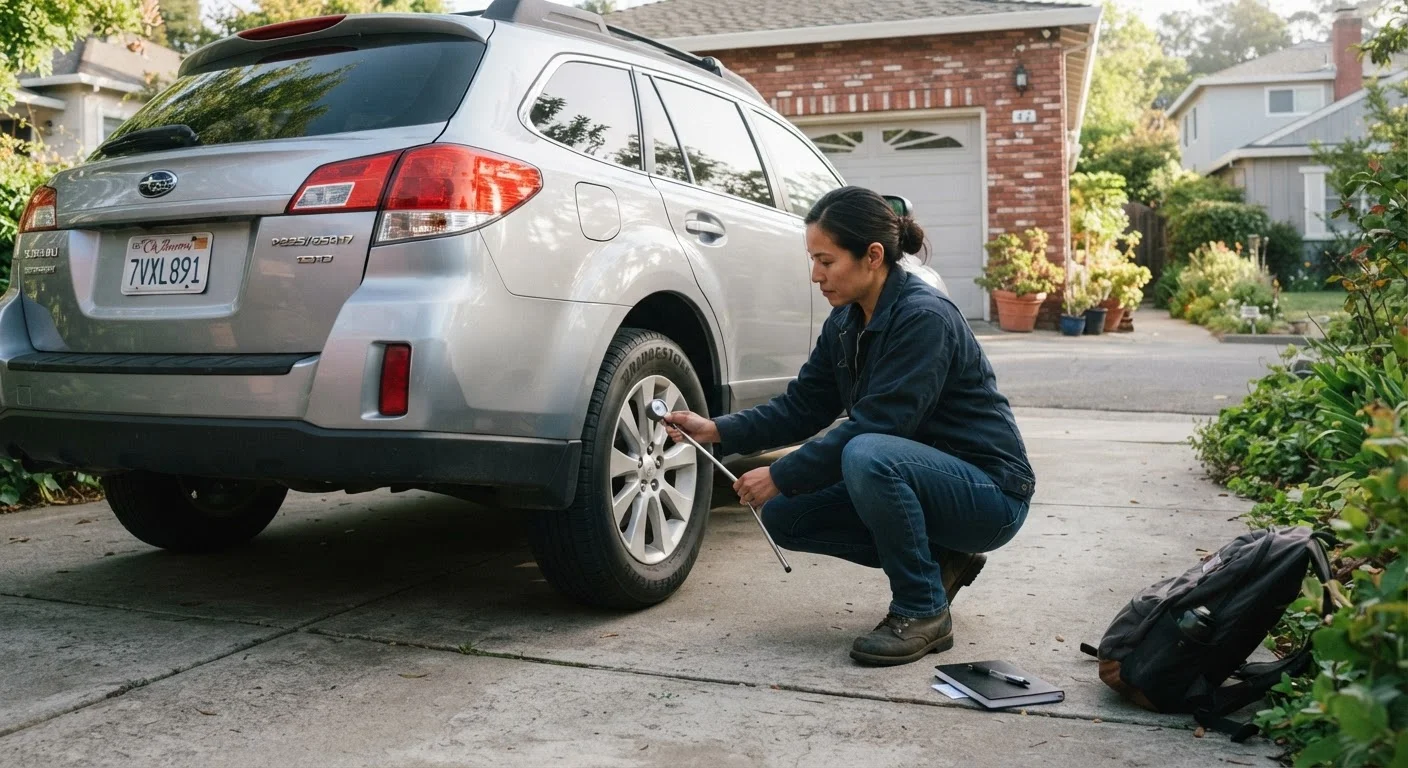
Walk around the vehicle and visually inspect all four tires for obvious flats, bulges, or embedded objects like nails or glass.Must
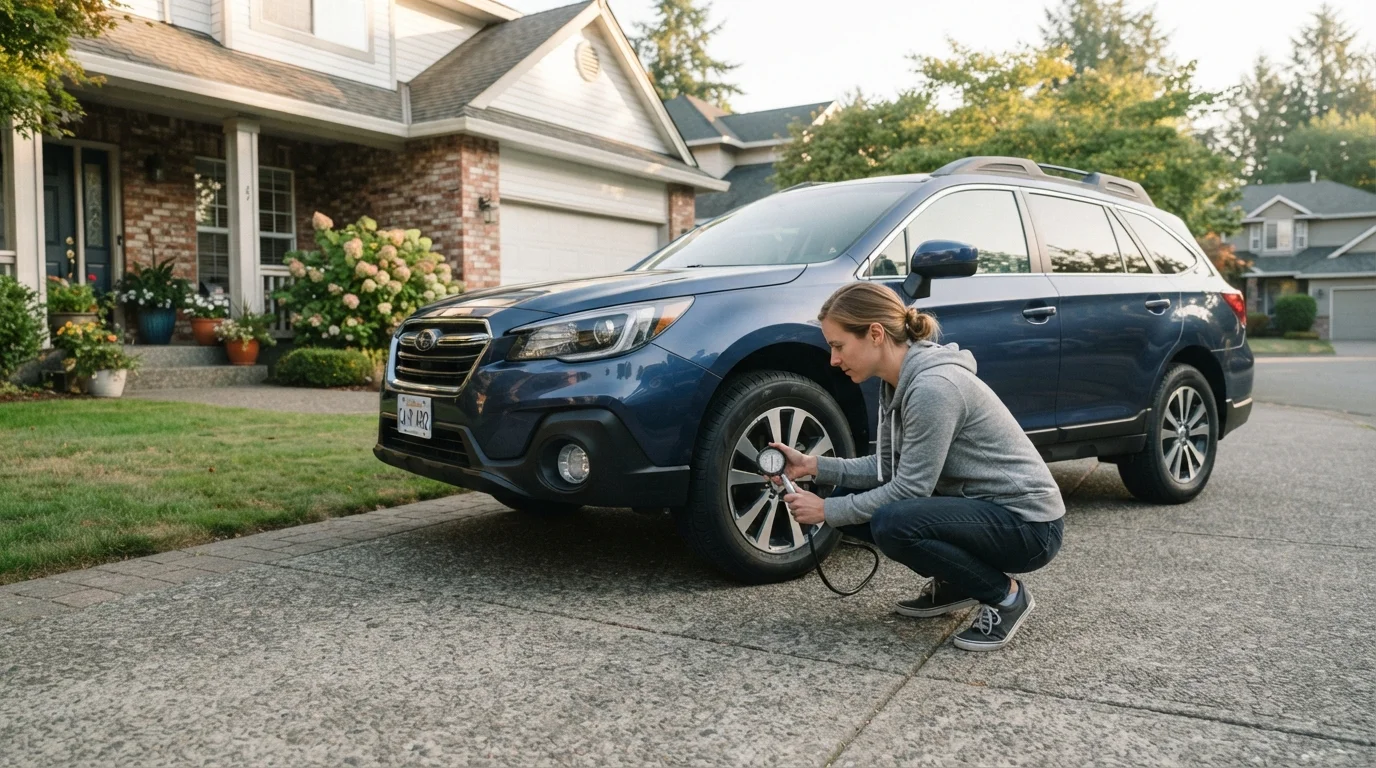
Check tire pressure with a gauge and compare to the placard inside the driver's door jamb - not the number molded on the tire sidewall.Must
Inspect tread depth using the penny test: insert a penny with Lincoln's head pointing down - if you can see the top of his head, the tread is dangerously worn.Must
Glance at the spare tire and confirm you know where the jack and lug wrench are stored.Should
Lights and Visibility
Turn on headlights and walk to the front to confirm both low beams are lit and aimed correctly.Must
Activate brake lights by pressing the pedal while a passenger or reflective surface behind the car confirms they're working.Must
Test turn signals front and rear, and verify the hazard flashers activate on both sides.Must
Check that windshield washer fluid is topped off and spray a test burst to confirm the nozzles aren't clogged.Should
Inspect wiper blades for streaking, chattering, or visible cracking - replace if they're not clearing cleanly.Should
Under the Hood Fluids
Check the engine oil level on the dipstick - wipe it, re-insert fully, and pull again to get an accurate reading.Must
Inspect the coolant reservoir (only when the engine is cold) to ensure the level falls between the MIN and MAX marks.Must
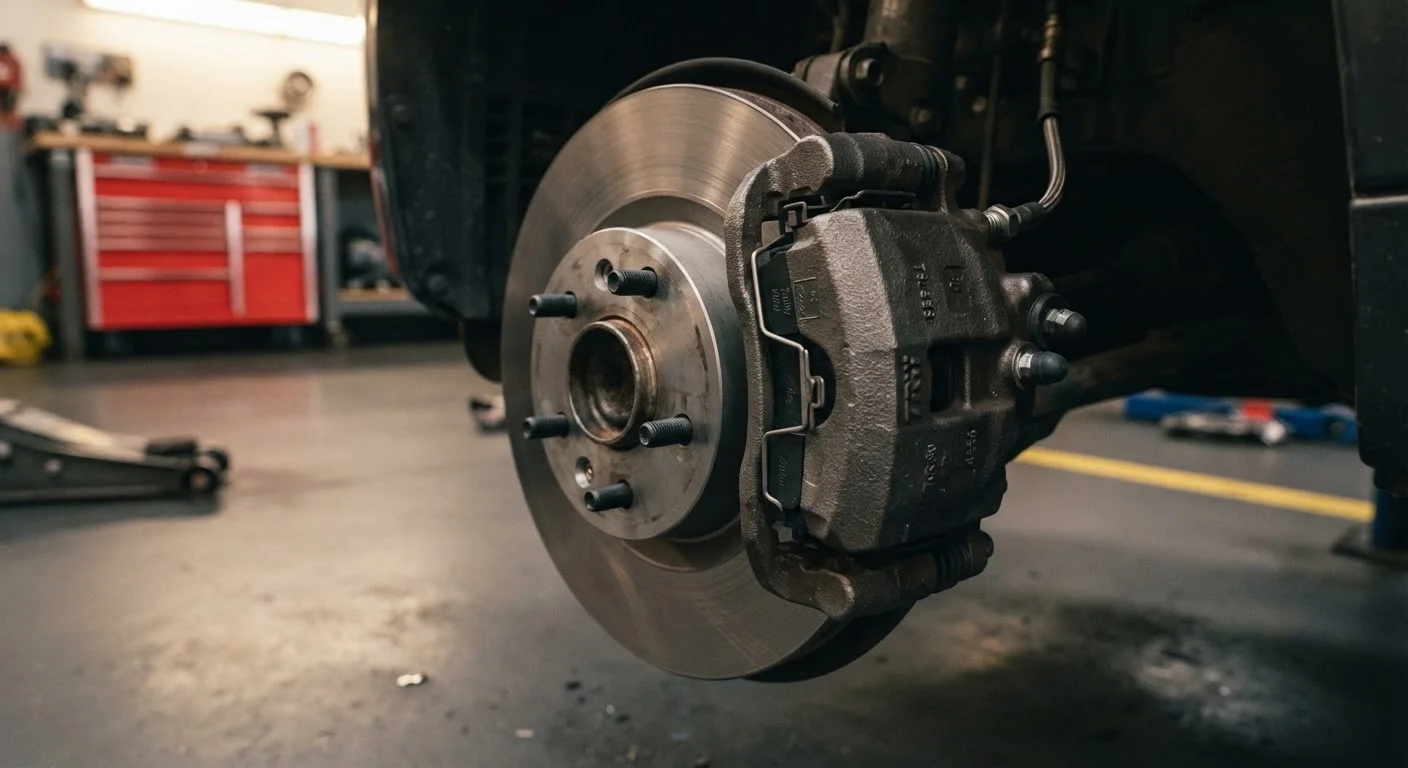
Verify the brake fluid reservoir is at the correct level - a noticeably low level can signal a leak or heavily worn brake pads.Must
Check power steering fluid if your vehicle has a hydraulic system (most modern cars use electric steering and won't have this reservoir).Nice to have
Mirrors, Seatbelts, and Interior
Adjust the driver's seat, steering wheel, and all three mirrors before pulling out - never while moving.Must
Ensure all passengers are buckled before moving the vehicle, including rear-seat occupants.Must
Scan the dashboard for any warning lights that remain illuminated after startup - address unfamiliar icons before driving.Must
Confirm your phone is connected to a mount or hands-free system and notifications are silenced or on Do Not Disturb.Should
Emergency Readiness
Confirm your registration and proof of insurance are current and accessible in the glove compartment.Must
Verify your vehicle has a functioning jack, lug wrench, and either a spare tire or a tire inflation kit.Should
Keep a basic emergency kit in the trunk: jumper cables or a jump starter, a flashlight, and a reflective triangle or flares.Should
Pack a small first-aid kit and a phone charging cable rated for your vehicle's USB or 12V outlet.Nice to have
When to Stop and Call a Mechanic
If you discover a brake fluid level that has dropped significantly, a warning light you can't identify, a tire with a visible bulge or sidewall crack, or any fluid leak on the driveway, do not assume it's safe to drive. Some of these conditions can cause sudden loss of vehicle control. When in doubt, have the vehicle inspected by a qualified mechanic before driving - towing costs far less than a collision.
Autos & Driving Editorial Team is the collective byline for our editorial team and contributor network. Articles published under this byline or an editorial pen name are researched, written, and reviewed according to our editorial standards for clarity, consistency, and independence before publication.
The content on this site is for informational purposes only and is not a substitute for professional advice. Always consult a qualified professional for guidance specific to your situation.