The Warning Signs That Show Up Before a Dead Battery
A dead battery rarely comes out of nowhere - it usually telegraphs its decline for days or weeks before it refuses to start. The problem is that the signs are easy to dismiss or attribute to something else entirely.
Slow or labored engine cranking is the most telling early indicator. If your engine turns over more sluggishly than usual when you start the car - especially on a cold morning - the battery is struggling to deliver its peak amperage. This is the clearest mechanical signal that capacity is dropping.
Dimming headlights or interior lights are another giveaway. When a battery weakens, it can't sustain consistent voltage, which shows up as lights that seem noticeably dimmer, especially at idle. If your lights brighten when you rev the engine, that points directly to the battery struggling to hold charge independently of the alternator.
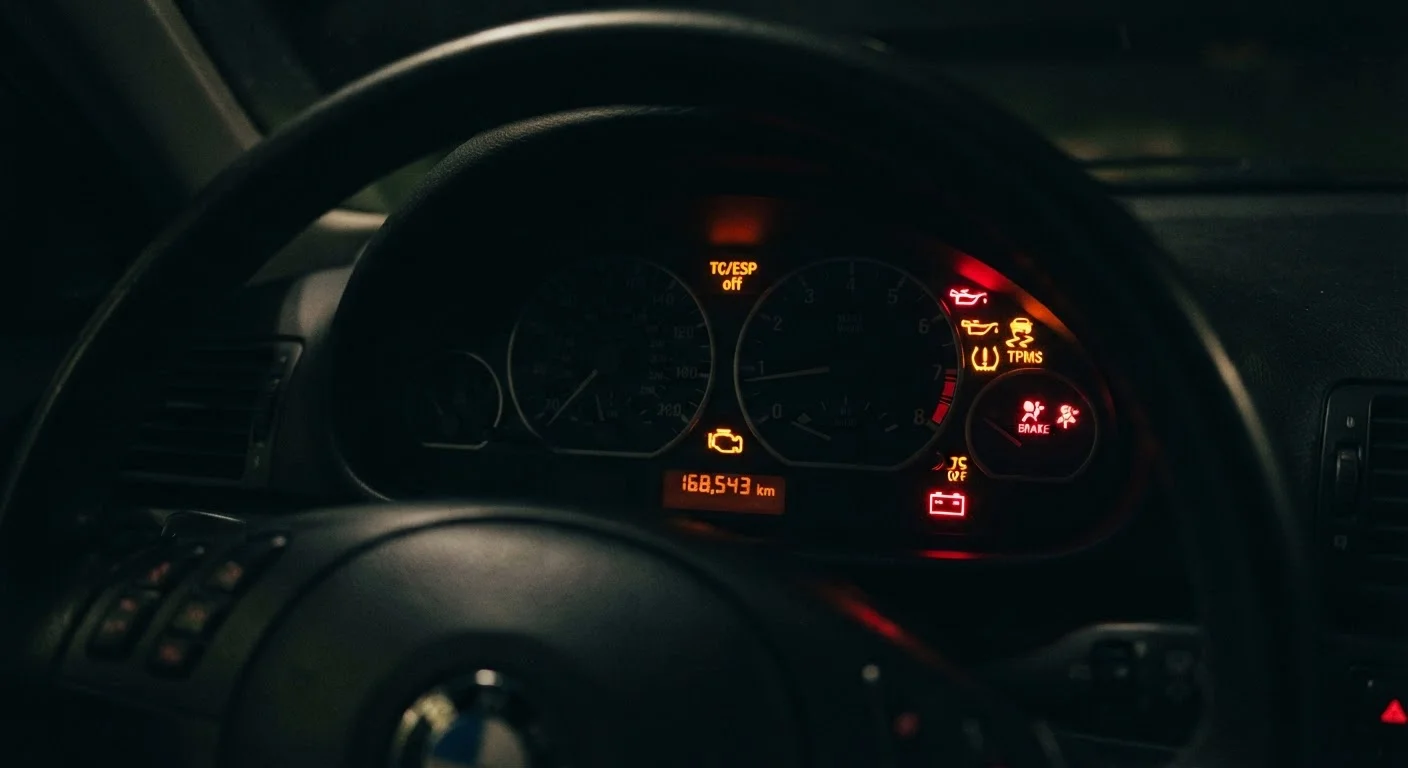
Electrical gremlins - things like power windows moving slowly, the infotainment system resetting, or dashboard lights flickering - can also be battery-related. Modern vehicles are heavily reliant on stable voltage, and a weakening battery can cause seemingly unrelated electronic systems to behave erratically. See our guide to dashboard warning lights if you're also seeing unfamiliar warning indicators appear.
Check Your Battery Before Every Winter
Have your battery load-tested before temperatures drop each fall - even if it seems fine. Cold weather dramatically reduces a battery's cranking power, and a battery that barely passes in October may fail in January. Most auto parts stores offer free testing in under 10 minutes.
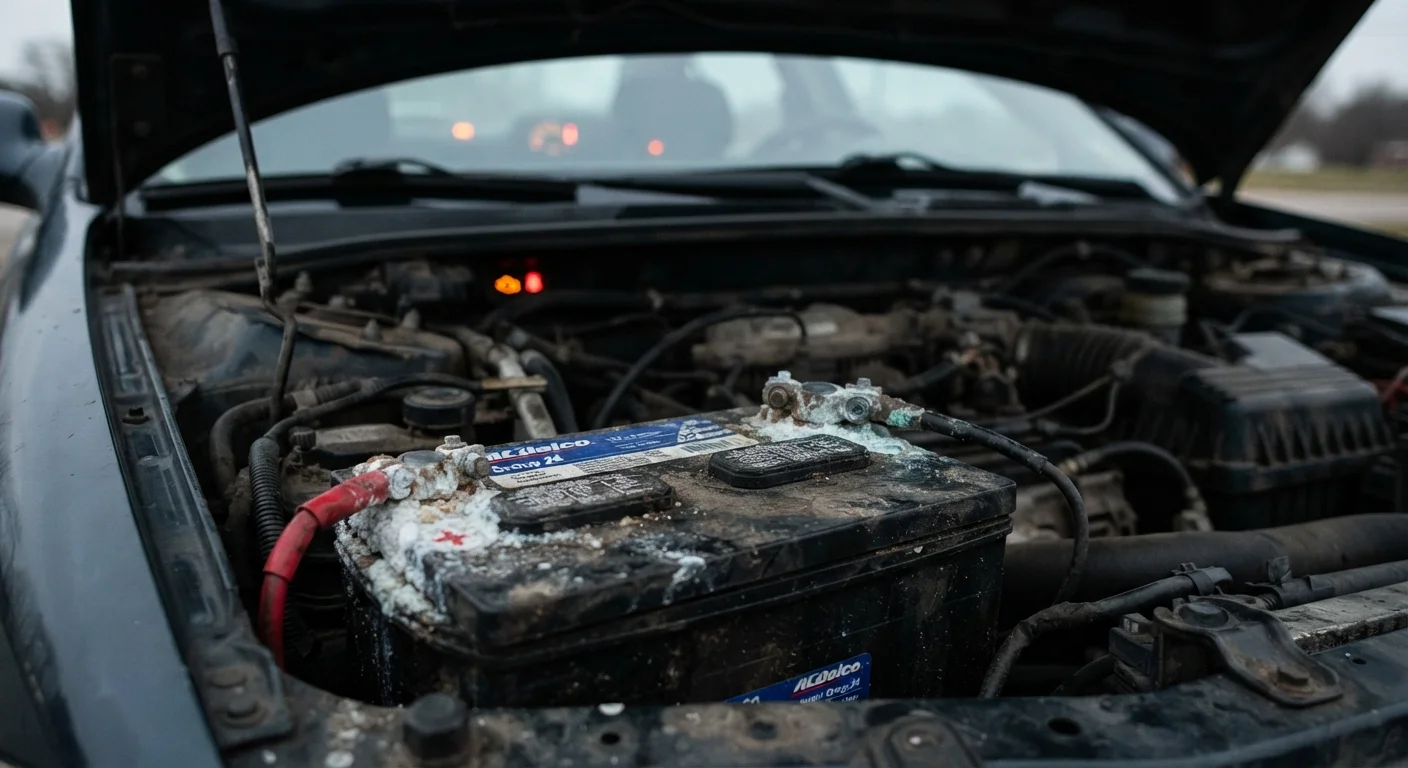
Physical warning signs round out the picture. A swollen or bloated battery case - caused by excess heat or overcharging - is a clear sign the battery is compromised. Visible corrosion on the terminals (white or bluish powder) increases resistance and degrades connection quality. A sulfur or rotten-egg smell near the battery suggests it may be leaking or venting gas, which warrants immediate attention from a mechanic.
What Actually Shortens a Battery's Life
Understanding what drains a battery prematurely helps you avoid the habits that quietly accelerate failure.
Extreme temperatures are the biggest culprit. Heat - not cold - does the most cumulative damage to battery chemistry, causing internal fluid to evaporate and accelerating plate corrosion inside the cells. Cold weather, however, reduces the battery's ability to deliver power on demand, which is why failures often surface on the first cold morning of winter even though the damage built up over summer.
Short trips are an underappreciated killer. Every engine start draws a significant burst from the battery. The alternator is supposed to replenish that charge during driving - but if your typical drive is under 10-15 minutes, the alternator may never fully recover what the startup used. Over time, this creates a cumulative deficit that degrades battery capacity.
3-5 years
Typical lead-acid car battery lifespan
The Battery Council International cites three to five years as the general service life for standard automotive batteries under normal conditions.
~50%
Battery capacity loss in extreme cold
At 0°F, a lead-acid battery can lose up to half its rated cranking capacity, according to industry testing standards - making cold-weather failures far more common.
Top 5
Causes of roadside breakdowns
Battery-related failures consistently rank among the leading causes of roadside assistance calls across major U.S. motor clubs.
Parasitic drain - electrical loads that pull power when the car is off - can also deplete a battery faster than expected. Common culprits include faulty door sensors, aftermarket electronics, or a trunk light that stays on. If a battery keeps going flat without explanation, a parasitic drain test by a mechanic can identify the source.
Long periods of inactivity are equally damaging. A battery left uncharged for weeks will self-discharge and may sulfate - a process where lead sulfate crystals build up on the plates - permanently reducing its capacity. If you store a vehicle for extended periods, a battery maintainer (sometimes called a trickle charger) can prevent this. Before any extended drive, it's worth reviewing the pre-trip mechanical checklist, which includes battery condition.
How to Check Your Battery's Health
Knowing the signs is useful - but getting an actual reading of your battery's condition removes the guesswork entirely.
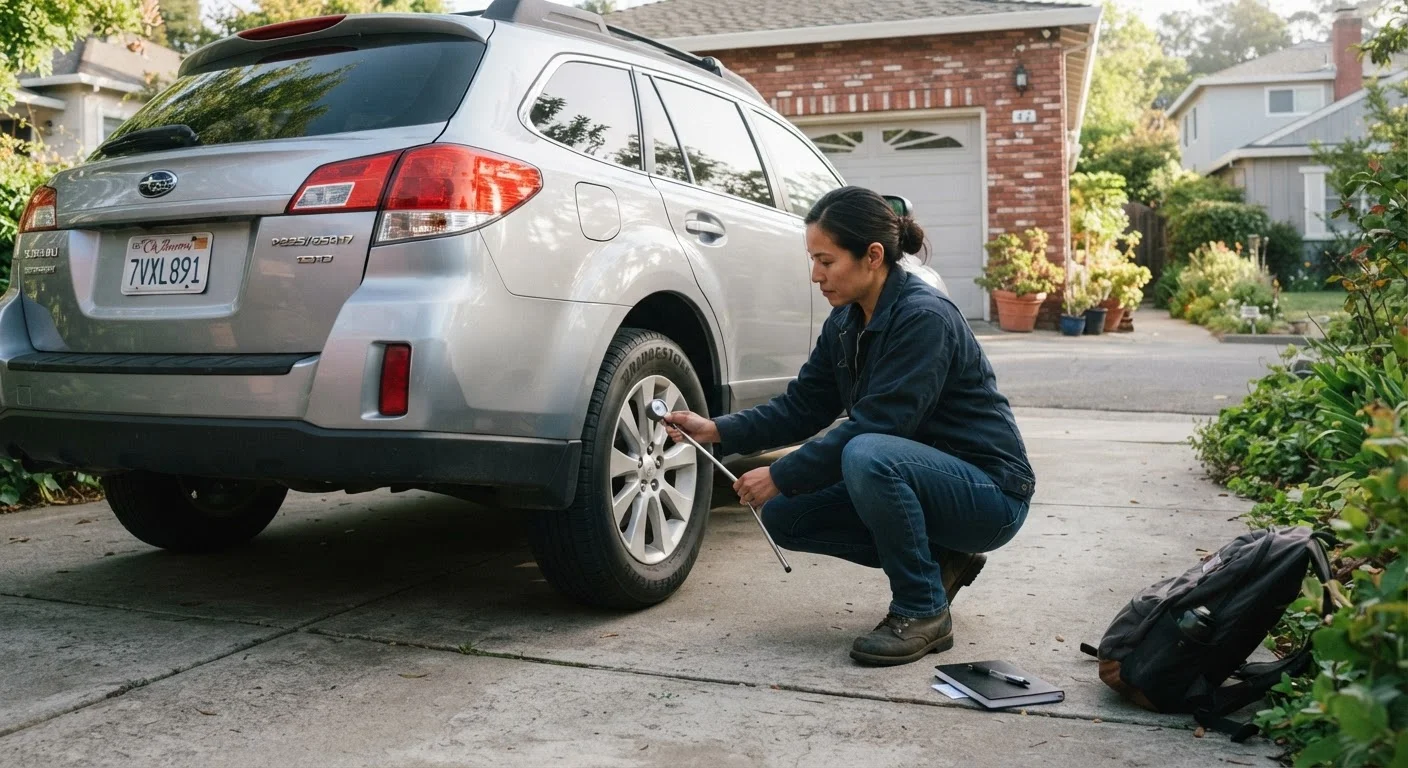
A basic voltage test with an inexpensive multimeter gives you a starting point. With the engine off, a healthy battery should read between 12.4 and 12.8 volts. Anything below 12.0 volts at rest suggests significant discharge. This doesn't tell the whole story, though - a battery can show adequate voltage while resting but fail under load.
That's why a load test is the gold standard. Many auto parts stores offer free battery testing using a load tester that simulates the demands of starting the engine. This reveals whether the battery can actually sustain voltage under real-world conditions, which a simple voltage reading won't catch. A battery that passes a voltage check but fails a load test is a battery living on borrowed time.
Look at the age. If your battery is more than three years old and you're noticing any of the warning signs described above, proactive testing makes sense - especially before winter or a long trip. For a broader pre-drive safety review, our pre-trip vehicle safety check walks through all the essentials, including electrical systems.
When a battery does need replacing, have the job done by a qualified mechanic or someone with experience in your specific vehicle. On many modern cars, battery replacement requires a computer reset or relearn procedure for systems like the power windows, radio, and idle control - skipping this step can cause issues that seem unrelated to the battery swap.
This article provides general vehicle maintenance information for educational purposes. For diagnosis, repair, or battery replacement, consult a qualified automotive technician.