
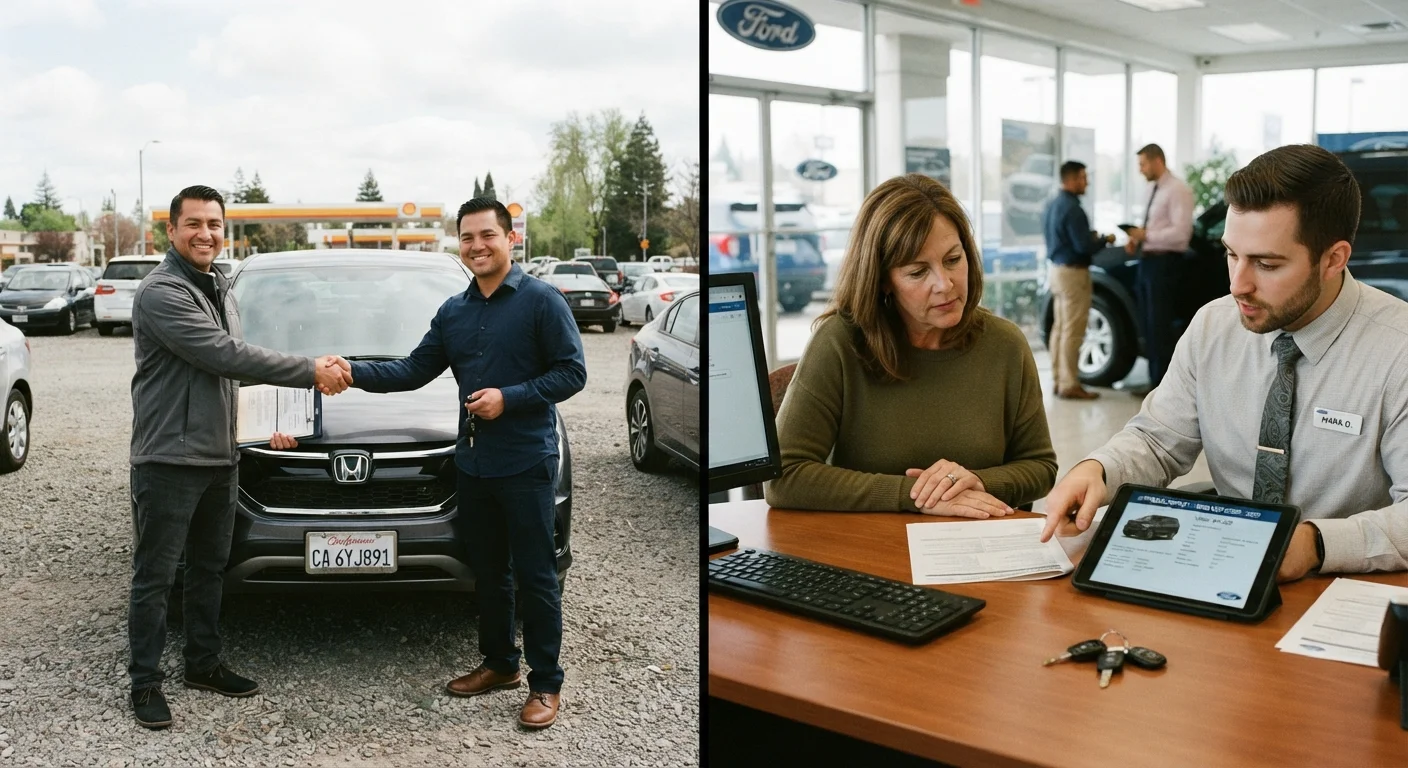
The Core Difference Between the Two Paths
When it's time to let go of a vehicle, most owners face the same fork in the road: sell it privately to another individual, or hand the keys to a dealership in exchange for credit toward your next car. Both are legitimate, widely used approaches - but they involve very different commitments of time, paperwork, and financial outcome.
A private party sale means you're the seller. You set the price, field inquiries, arrange test drives, vet buyers, and handle all documentation. A trade-in means the dealer takes your car as partial payment and manages the transaction on their end. The convenience gap is real, and so is the price gap - understanding both is the starting point for a good decision.
For context on the full arc of vehicle ownership, see our complete guide to car ownership.
The Financial Reality: What You're Likely to Get
Private party listings almost always command a higher selling price than dealer trade-in offers. Dealers need to profit on resale, cover reconditioning, and manage inventory risk - so their offers are structured accordingly. The gap varies by vehicle age, condition, and market demand, but it's common for a trade-in offer to run several hundred to a few thousand dollars below private-sale value.
That said, the financial comparison isn't always as one-sided as it appears. Many states allow buyers to deduct the trade-in value from the taxable purchase price of a new vehicle. If your state offers this, a $4,000 trade-in could reduce your sales tax bill enough to close part of the gap with a private sale - sometimes significantly, depending on your local tax rate.
$1,000-$3,000+
Typical private sale premium over trade-in
Industry estimates vary widely, but private party prices commonly exceed dealer trade-in offers by this range depending on vehicle type and condition.
Varies by state
Trade-in tax deduction value
Many U.S. states allow buyers to subtract trade-in value from the taxable price of a new purchase - the benefit depends on local sales tax rates.
It's worth running the actual numbers for your situation, including local tax rules, before assuming private sale is always the financially dominant choice.
Time, Effort, and Risk: The Hidden Costs of Going Private
Selling privately means taking on tasks a dealer handles automatically. You'll need to price the vehicle accurately using market data, write a compelling listing, photograph the car, respond to inquiries (including plenty of no-shows), arrange safe meeting locations for test drives, and screen buyers for seriousness.
There are also real safety and fraud considerations. Meeting strangers, accepting payment, and verifying funds all require care. Cashier's checks can be forged; large cash transactions carry their own risks. Payment via a verified escrow or bank wire transfer is generally safer, but adds friction.
Verify Payment Before Signing Over the Title
Never hand over the signed title until payment has fully cleared. Cashier's checks and money orders can be counterfeited, and personal checks carry obvious risk. For large transactions, a verified bank wire or in-person bank visit to confirm funds is strongly advisable. Once the title is signed over, reversing a fraudulent sale is extremely difficult.
The time investment can range from a few days to several weeks depending on vehicle demand, asking price, and your local market. If you're simultaneously shopping for your next car, managing two transactions in parallel adds complexity.
Paperwork: Who Handles What
Trade-ins are administratively streamlined. The dealer manages title transfer, handles the DMV filings, and processes the transaction as part of buying your next vehicle. Your primary responsibility is confirming you hold a clear title (no outstanding loan balance) before the sale.
Private sales require you to coordinate the title transfer directly with the buyer. This includes signing over the title correctly, submitting a Notice of Transfer to your state DMV, and - in many states - providing a bill of sale. Errors or omissions in this process can expose sellers to liability for incidents involving the vehicle after the sale.
For a detailed breakdown of how this process works, see our guide to transferring a car title.
Which Path Fits Your Situation
The right choice is practical, not theoretical. Consider these factors honestly:
- How urgently do you need to sell? A trade-in can close in hours. A private sale may take weeks.
- Is your vehicle in high demand? Popular models in good condition sell faster and closer to asking price privately.
- Do you have a loan on the car? Selling privately with an outstanding loan adds complexity - the lender must be paid off before or at the time of sale. Dealers are experienced at handling this.
- What does your state's tax structure look like? The trade-in tax deduction can change the effective financial comparison meaningfully.
If you're also weighing how you'll finance your next vehicle, that decision intersects with this one. See how dealer financing compares to direct lending for a clearer picture of the full transaction.
| Private Party Sale | Trade-In | |
|---|---|---|
| Typical sale price | Higher - closer to market value | Lower - dealer margin applied |
| Time to complete | Days to weeks | Same day in most cases |
| Seller effort required | High - listing, screening, negotiating | Low - dealer manages process |
| Title/paperwork burden | Seller coordinates with buyer | Dealer handles transfer |
| Loan payoff complexity | Requires coordination with lender | Dealer experienced at handling this |
| State sales tax benefit | None | Possible deduction on next purchase |
| Buyer vetting risk | Seller bears all risk | No buyer risk for seller |