How Each Arrangement Is Structured
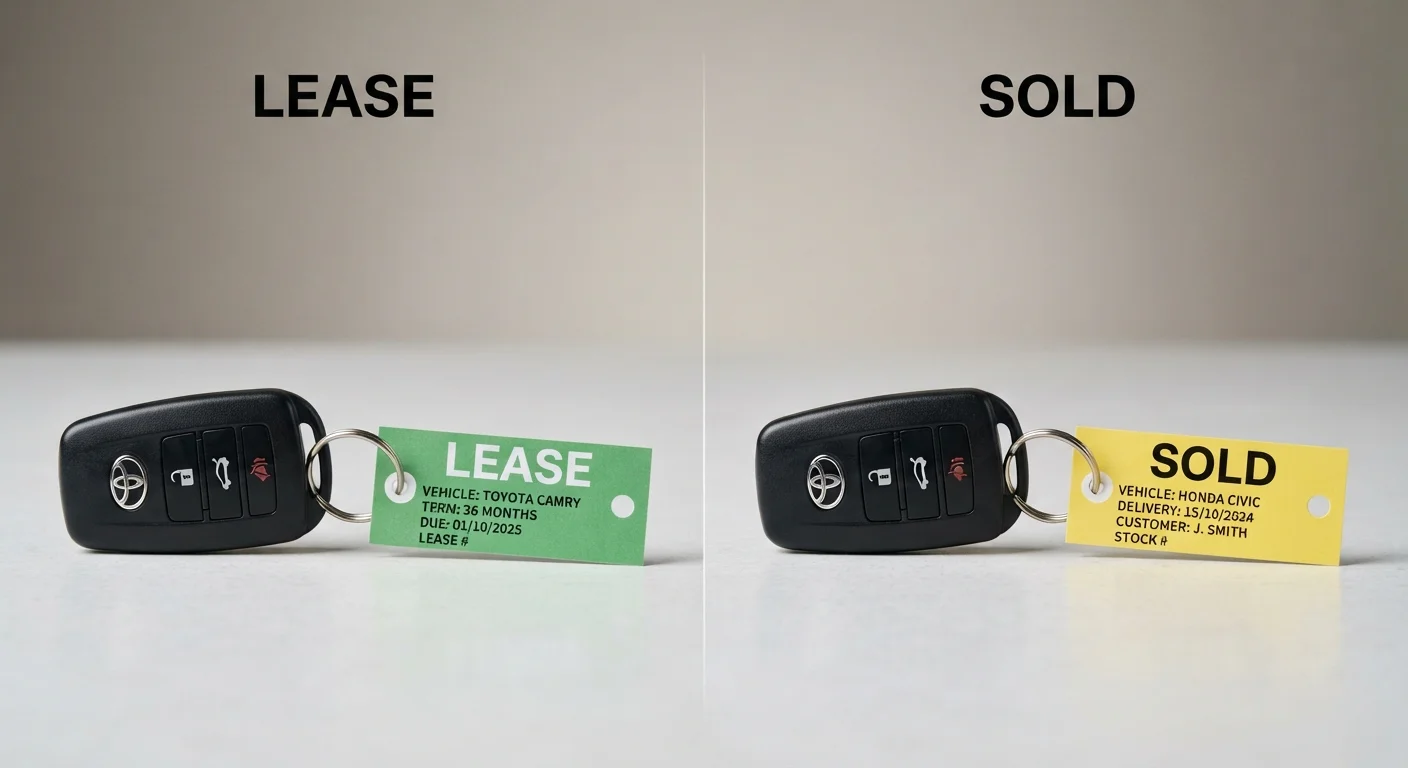
When you lease a vehicle, you're essentially renting it for a fixed term - typically two to four years. Your monthly payment covers the vehicle's depreciation during that period, plus interest (called the money factor) and fees. At lease end, you return the car, with the option to buy it at a predetermined residual value or walk away and start a new lease.
When you buy - whether with cash or through a loan - you own the vehicle outright or are paying down ownership over time. Once the loan is paid off, there are no further monthly obligations tied to the car itself. You can keep it, sell it privately, or trade it in. For a full picture of what financing through a loan looks like, see our guide on financing through a dealership vs. a bank or credit union.
Lease-End Purchase Option
Most lease agreements include a predetermined buyout price, sometimes called the residual value, that lets you purchase the vehicle at the end of the term. Whether that price represents fair value depends on current market conditions at the time. It's worth researching comparable vehicle prices before deciding whether to buy out a lease or walk away.
The Case for Leasing
Leasing appeals to drivers who want predictable costs and a fresh vehicle on a regular cycle. Because you're only financing depreciation rather than the full purchase price, monthly payments on a lease are generally lower than on an equivalent loan for the same vehicle.
Lower monthly payments than a comparable loan
Because lease payments cover depreciation rather than the full vehicle value, they're typically lower than loan payments on the same car.
Drive a newer vehicle every few years
Lease cycles let you upgrade to a current model regularly, keeping you in vehicles with the latest safety and technology features.
Warranty coverage often spans the full lease term
Most new-vehicle warranties align with typical lease lengths, reducing exposure to large out-of-pocket repair costs during the agreement.
No trade-in negotiation at the end
Returning a leased vehicle is straightforward - you're not responsible for selling it or negotiating its depreciated value with a dealer.
Warranty coverage typically overlaps with most or all of a standard lease term, which limits exposure to major repair costs. When the lease ends, you hand back the keys - there's no need to deal with negotiating a trade-in value or selling privately.
The Case for Buying
Buying rewards patience. Once your loan is paid off, your transportation cost drops sharply - you own an asset with real resale or trade-in value. Drivers who put high annual mileage on their vehicles, or who want to modify or customize their car, will find ownership far less restrictive.
No equity or ownership at lease end
Monthly lease payments build no ownership stake. At the end of the term, you have nothing to sell or trade unless you opt to purchase the vehicle.
Mileage limits can generate unexpected fees
Exceeding the contracted mileage allowance triggers per-mile overage charges, which can add up significantly for high-mileage drivers.
Restrictions on modifications and customization
Leased vehicles must be returned in a stock, acceptable condition - any alterations or significant wear can result in end-of-lease penalties.
Long-term cost can exceed buying outright
Continually cycling through leases means perpetual monthly payments, whereas owning a paid-off vehicle can dramatically reduce ongoing transportation costs.
Over a long enough time horizon, the per-mile cost of owning a vehicle you've paid off can be significantly lower than continually cycling through leases. For a broader view of what vehicle ownership actually costs year over year, our article on the true cost of owning a car beyond the sticker price breaks it down in detail.
~49%
Share of new vehicles financed by lease
Lease penetration has historically hovered near half of new vehicle transactions in certain market segments, according to industry tracking data.
~11.5 years
Average age of vehicles on U.S. roads
S&P Global Mobility data has found the average American vehicle on the road is over a decade old, suggesting many owners hold vehicles well past initial loan payoff.
Key Restrictions and Hidden Costs to Know
Leases come with built-in constraints that buyers don't face. Mileage limits - commonly 10,000 to 15,000 miles per year - can trigger per-mile overage fees if you exceed them. Wear-and-tear standards mean returning a vehicle with more than normal wear can result in charges at lease end. You also can't modify the vehicle without risking penalties.
Buyers face a different set of costs: depreciation, which is steepest in the first few years, and eventual repair bills as the vehicle ages. Before finalizing any deal - lease or purchase - review all contract terms carefully. Our pre-signing checklist covers the key items to verify before you commit.
This article provides general financial and consumer information and is not personalized financial or legal advice. Consult a qualified financial professional before making significant financial decisions.