Why the Finance Office Deserves Your Full Attention
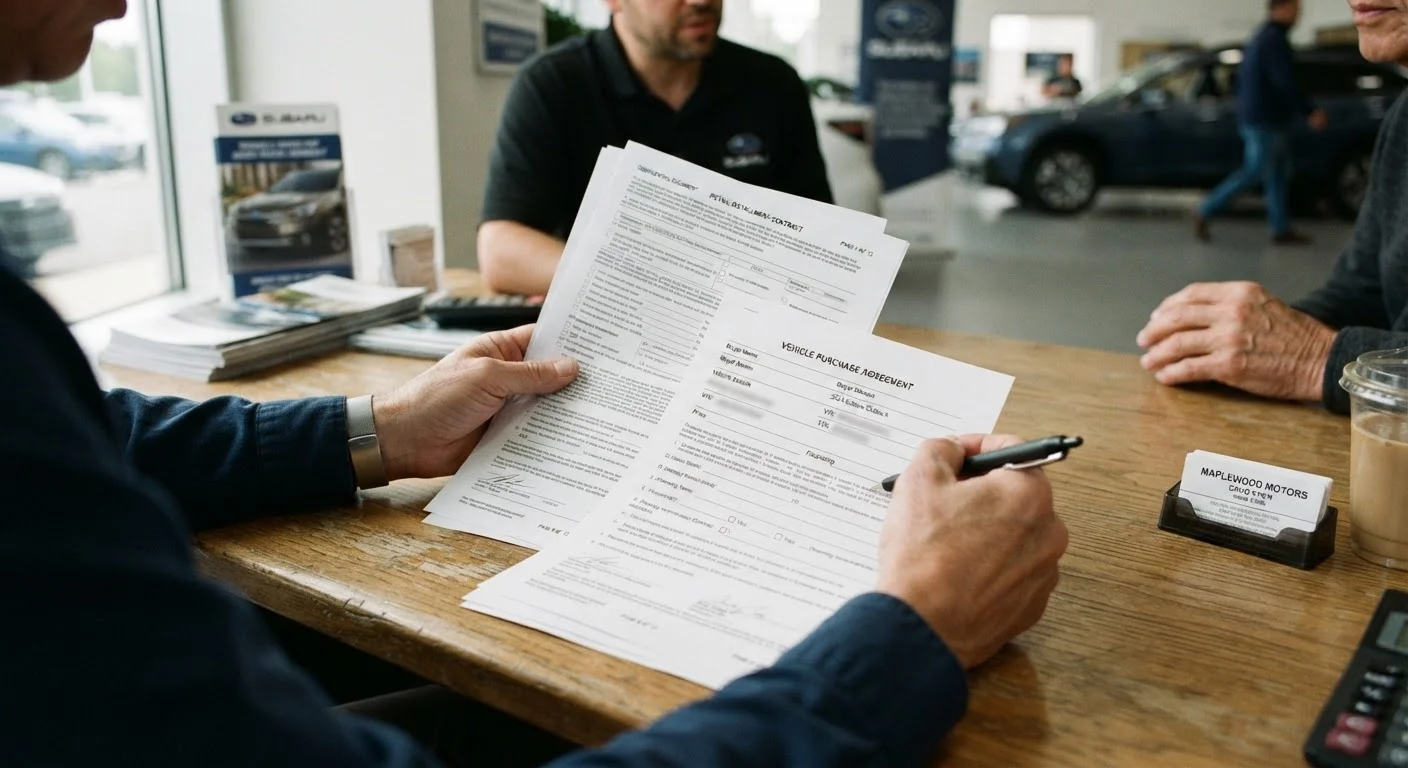
Most of the hard work in a car deal happens on the lot - the test drive, the negotiation, the trade-in dance. By the time you sit down with the finance and insurance (F&I) manager to sign paperwork, buyers are often tired and ready to be done. That's exactly when mistakes happen.
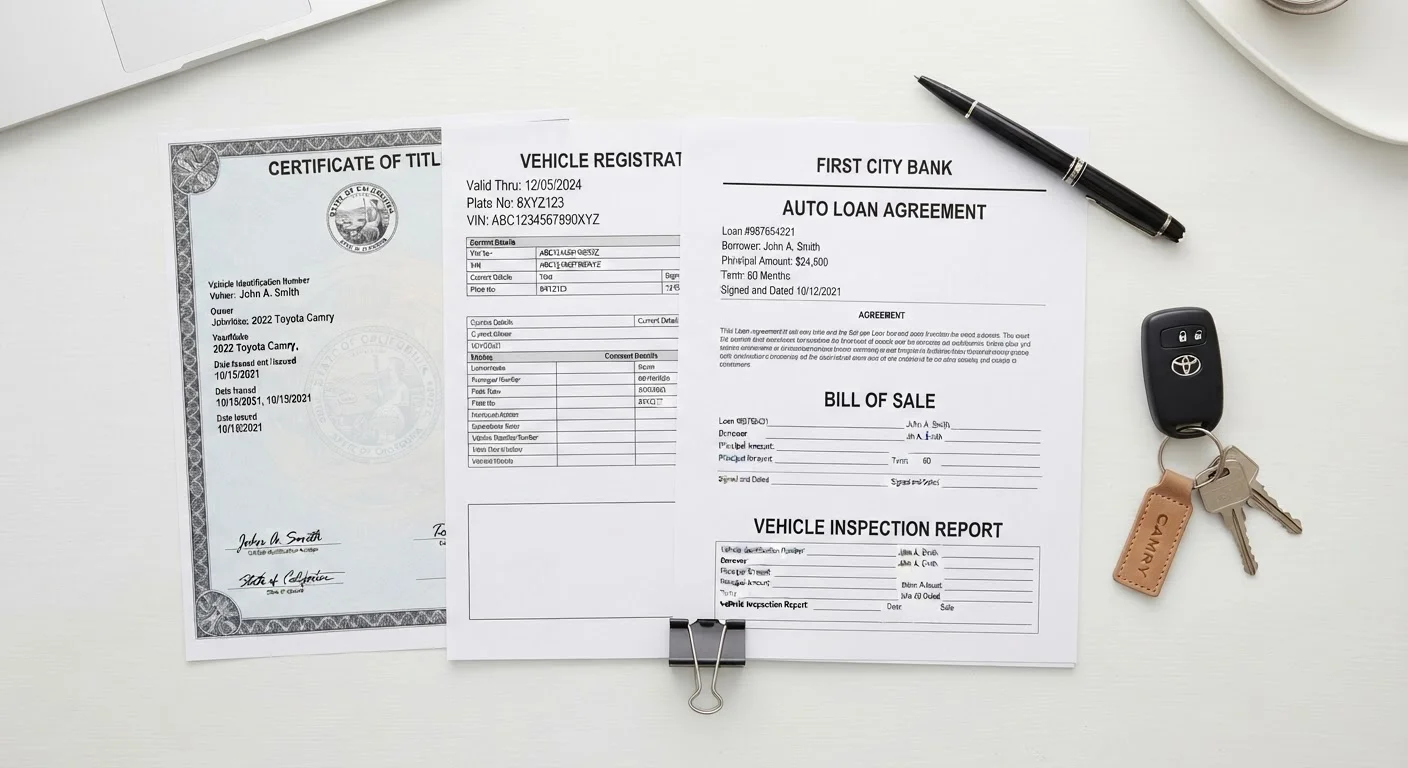
A car purchase agreement is a legally binding contract. Once signed, unwinding unfavorable terms is difficult or impossible. The checklist below gives you a structured way to review everything before you commit. For an overview of the full ownership journey - from this moment through registration, insurance, and eventual resale - see our complete car ownership guide.
If you encounter unfamiliar terms in the paperwork, the Car Ownership Glossary is a plain-language reference covering APR, lien, odometer disclosure, GAP, and more.
Pre-approval letter from your bank or credit union
Gives you an independent rate to compare against the dealer's financing offer.
Your current credit report or score
Helps you assess whether the APR you're offered is appropriate for your credit profile.
Calculator (phone or dedicated)
Lets you independently verify monthly payment figures based on the price, rate, and term.
Notepad or phone for notes
Record verbal promises made during negotiation so you can cross-check them against the written contract.
Your Pre-Signature Checklist
Work through these items methodically. Don't let time pressure rush you - a dealership that won't give you adequate review time is itself a warning sign.
Vehicle Details
Purchase Price and Trade-In
Financing Terms
Fees and Taxes
Add-On Products
Final Review
Never Sign a Document With Blank Fields
Blank lines anywhere in a contract can be filled in after you leave. Draw a line through any blank field that doesn't apply and confirm all applicable fields are complete before you sign. This is a basic protection that applies to every page, not just the signature page. If the F&I manager can't explain why a field is blank, that's a problem worth resolving before you leave.
A Few Things Worth Knowing Before You Walk In
Preparation reduces the chance of a surprise at the signing table. Before your appointment, get a copy of your credit score so you have a baseline for the interest rate you should expect. If you're financing through a bank or credit union, obtain a pre-approval letter - it gives you a rate to compare against whatever the dealer's lender offers.
Add-on products sold in the F&I office - extended service contracts, GAP insurance, paint protection packages, tire-and-wheel plans - are almost universally optional and negotiable in price. Each one raises your monthly payment and the total cost of the vehicle. Evaluate them individually against your actual situation rather than accepting the bundle. For more guidance on reading warranty documents before agreeing to them, see Reading a Warranty Without a Law Degree.
Car financing is a financial commitment that sits alongside your broader budget. Understanding how a monthly payment fits into your overall spending is worth thinking through before you sign - Budgeting Basics and Saving & Debt are practical starting points if you want to pressure-test the numbers.
Watch for "Spot Delivery" or Conditional Financing
Some dealers allow buyers to drive off the lot before financing is fully approved - a practice sometimes called "yo-yo financing" or spot delivery. Days or weeks later, the buyer may be told the original terms fell through and a new, less favorable loan is offered. If you're asked to sign a conditional financing agreement, read it carefully and ask directly whether the rate and terms are final. If they're not, consider waiting until financing is confirmed before taking the vehicle.
This article is for general informational and educational purposes only and does not constitute financial, legal, or professional advice. Consult a licensed professional for guidance specific to your situation.