
Why Pet Emergency Preparedness Cannot Wait
Emergencies don't announce themselves. Whether it's a hurricane evacuation order, a sudden house fire, a severe illness in the middle of the night, or a multi-day power outage, pet owners who have prepared in advance consistently report better outcomes - for themselves and their animals. Yet most households with pets have no formal plan in place.
This checklist is designed to close that gap. It draws on veterinarian-informed guidance and covers the four domains that matter most during any crisis: supplies, documentation, evacuation logistics, and financial readiness. Work through each group methodically, and revisit the list at least twice a year. You can also use the monthly pet care checklist to build preparedness tasks into your regular routine.
Act Before You Need This Kit
The single most common mistake pet owners make is waiting until a crisis is imminent to start preparing. Evacuation orders, power outages, and sudden illness give little lead time. Assembling your kit now - when there is no pressure - means every decision is made calmly and thoroughly. A few hours of preparation today can meaningfully change what is possible during an emergency.
What to Assemble and How to Use This Checklist
Each item below is marked by priority: must items are non-negotiable for basic safety, should items are strongly recommended for most households, and nice-to-have items offer meaningful support if resources allow. Start with every "must" item before moving on to the others.
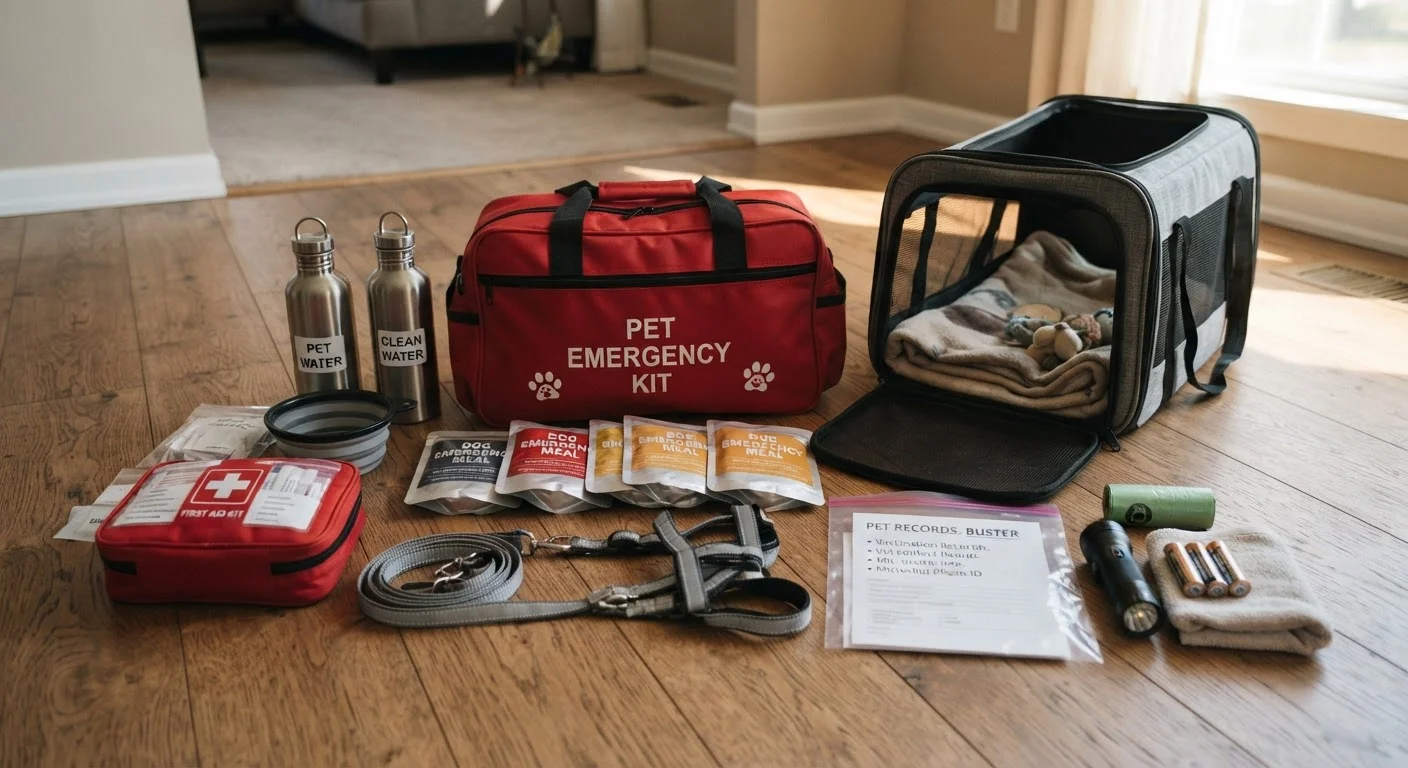
Store physical supplies in a clearly labeled, waterproof container kept in an accessible location - not buried in a closet. For medications or medical records, keep copies both digitally (a secure cloud folder works well) and in print inside your kit.
If you haven't yet thought through the financial side of pet emergencies, the financial preparedness checklist offers a useful companion framework for emergency fund planning.
Emergency Supplies Kit
Medical Records and Identification
Evacuation and Shelter Planning
Financial Readiness
Don't Let Medications Expire Unnoticed
Prescription medications stored in an emergency kit can expire before you ever need them - which defeats their purpose entirely. Check expiration dates every six months and coordinate with your veterinarian to refresh supplies proactively. Never give a pet expired medication or adjust dosages without veterinary guidance.
After the Emergency: What Comes Next
Once a crisis has passed, your pet may need time to decompress. Displacement, loud noises, and disrupted routines are genuine stressors for animals. If your pet shows prolonged behavioral changes after an emergency - hiding, aggression, appetite loss, or repetitive behaviors - contact your veterinarian. These responses can be signs of acute stress that benefit from professional assessment. For background on how stress manifests in pets, the pet mental health guide explains what to watch for and when to act.
Also take time to restock your kit promptly. Replace any used medications, expired food, or depleted supplies within a week of returning home. Emergency preparedness is not a one-time task - schedule a kit review every six months alongside your regular pet care calendar. Unexpected costs that arise after a crisis are also worth reviewing; expenses pet owners often overlook covers several financial categories that catch owners off guard.
This article is for general informational and educational purposes only. It is not a substitute for advice from a licensed veterinarian. Always consult a qualified veterinary professional for guidance specific to your pet's health needs.