
Why the Indoor vs. Outdoor Question Actually Matters
Where a pet spends most of its time is one of the most consequential decisions an owner makes - yet it often defaults to habit rather than deliberate choice. The environment shapes exposure to disease, injury risk, behavioral development, and even lifespan. For cats especially, research consistently associates indoor living with significantly longer average life expectancy compared to cats allowed to roam freely outdoors. For dogs, the calculus is different: most dogs require outdoor time for exercise and mental stimulation, but how much unsupervised freedom they have varies widely.
Understanding the real differences between these lifestyles - not just the instinctive assumptions - helps owners make choices that genuinely serve their pet's needs. For a broader look at the financial side of pet decisions, see our Pet Ownership Costs hub.
The Case for Keeping Pets Indoors
Indoor living offers a controlled environment that eliminates or reduces many of the most common causes of injury and premature death in companion animals.
Significantly reduced risk of traffic-related injury
Indoor pets have no exposure to vehicles, one of the leading causes of death in free-roaming cats and dogs. This alone accounts for a substantial portion of the lifespan gap between indoor and outdoor cats.
Lower exposure to infectious disease
Many serious illnesses, including feline leukemia, feline immunodeficiency virus, and distemper, spread through contact with infected animals encountered outdoors. Controlled indoor environments dramatically reduce this transmission risk.
Protection from predators and environmental hazards
Coyotes, birds of prey, and other predators pose real threats to small pets in many US regions. Indoors, pets are also shielded from toxic plants, pesticides, and antifreeze commonly found in outdoor environments.
Easier health monitoring by owners
When a pet is always present, changes in eating, drinking, elimination, or behavior are noticed sooner - which often means earlier veterinary intervention and better outcomes.
Longer average lifespan for cats
Studies and veterinary data consistently show that indoor-only cats live significantly longer on average than cats with outdoor access, with some estimates suggesting two to three times longer lifespans.
10-15 years
Average indoor cat lifespan
Veterinary and animal welfare organizations consistently report indoor-only cats live significantly longer than outdoor or free-roaming cats, whose average lifespan is often cited at 2-5 years.
~60%
US pet cats kept primarily indoors
According to the American Pet Products Association, the majority of owned cats in the United States are kept indoors, reflecting growing owner awareness of the associated safety benefits.
Beyond safety, indoor pets tend to have more consistent veterinary histories. Owners notice changes in appetite, behavior, or litter box habits more readily when the animal is always nearby. Indoor cats, for example, are far less likely to contract feline leukemia virus (FeLV) or feline immunodeficiency virus (FIV), both of which spread through contact with infected outdoor cats.
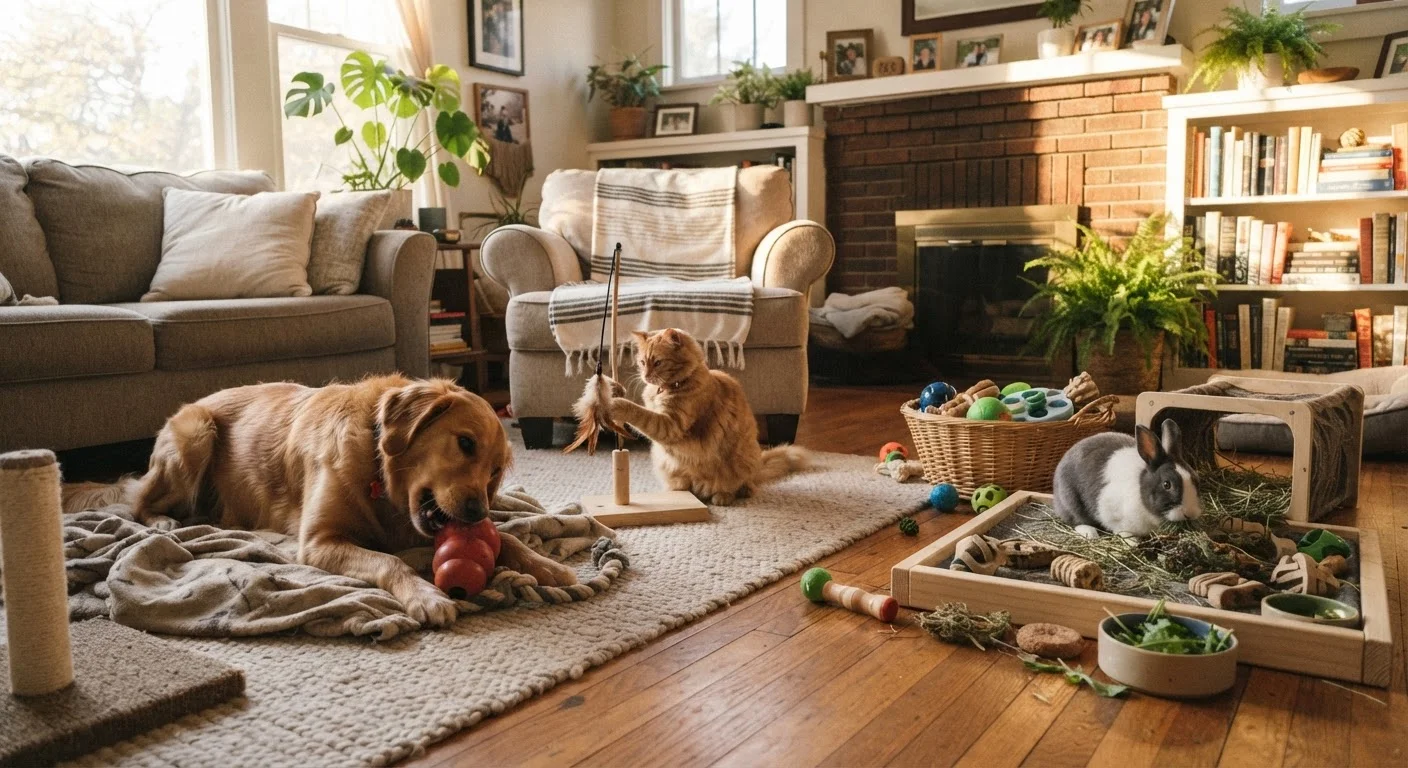
That said, indoor living requires owners to compensate deliberately for what the environment removes. Enrichment - through play, climbing structures, puzzle feeders, and social interaction - becomes the owner's responsibility rather than the environment's. Our guide on enrichment ideas across life stages offers practical strategies for keeping indoor pets mentally engaged.
The Case for Outdoor or Semi-Outdoor Living
For many animals, outdoor access is genuinely beneficial - not just tolerated. Dogs need sustained physical activity and sensory variety that indoor spaces rarely provide on their own. Outdoor environments offer natural stimuli: smells, sounds, and movement that engage instincts in ways no toy fully replicates.
Limited natural enrichment and sensory stimulation
Indoor environments remove access to varied smells, textures, and movement that stimulate animal cognition. Without deliberate enrichment from owners, boredom-related behavioral issues such as destructive scratching or anxiety can develop.
Higher risk of obesity without sufficient exercise
Indoor pets, particularly cats, have fewer natural opportunities for sustained physical activity. Obesity is one of the most common preventable health conditions in companion animals and can lead to diabetes, arthritis, and reduced quality of life.
Increased owner responsibility for mental stimulation
The environmental complexity that outdoors provides automatically must be deliberately created indoors through toys, climbing structures, play sessions, and social interaction - all of which require consistent owner effort and time.
Higher exposure to parasites, wildlife, and toxins
Outdoor and semi-outdoor pets encounter fleas, ticks, mosquitoes, and other parasites at much higher rates, requiring more rigorous and ongoing preventive treatment throughout the year.
Elevated injury risk from vehicles, predators, and fights
Free-roaming pets face traffic, territorial conflicts with other animals, and predator encounters. Wounds from animal bites carry infection risk and can require expensive veterinary care.
Greater likelihood of getting lost or stolen
Pets with outdoor access are far more likely to wander beyond familiar territory. Even microchipped animals can remain lost for extended periods if not wearing visible ID or tracked by GPS.
Cats with supervised outdoor access - through enclosed catios, leash walks, or fenced yards - can experience meaningful enrichment without the highest-risk exposures of free-roaming. Rabbits, guinea pigs, and other small animals may also benefit from supervised time on grass, provided predator threats are managed carefully.
Owners should weigh local conditions honestly. Urban environments with heavy traffic, dense wildlife populations, or neighbors who use pesticides or rodenticides carry different risk profiles than rural or suburban settings. Identification methods become especially important for any pet with outdoor access - microchipping, tags, and GPS trackers each offer different tradeoffs worth understanding.
Veterinary and Cost Implications of Each Lifestyle
The environment your pet lives in directly shapes what veterinary care they are likely to need. Outdoor and semi-outdoor pets typically require more frequent parasite prevention - flea, tick, and heartworm protocols become non-negotiable rather than optional. They also face higher odds of wounds, infections, and toxin exposure that may require urgent care.
Vaccination Needs Differ by Lifestyle
Veterinarians typically recommend different vaccine protocols depending on whether a pet lives primarily indoors or has regular outdoor exposure. Outdoor cats, for instance, are generally advised to receive vaccines against feline leukemia virus, while some core vaccines recommended for outdoor pets may be considered optional for strictly indoor animals. Always discuss your pet's specific vaccination schedule with your vet based on their actual environment and risk level - guidelines are not one-size-fits-all.
Indoor pets are not low-maintenance by default, however. Without sufficient exercise and mental stimulation, they are more prone to obesity and related conditions such as diabetes and joint problems. These are real, costly health consequences that develop gradually and are easy to overlook until they're serious. For a broader view of costs that quietly accumulate, see expenses pet owners often overlook.
Regardless of lifestyle, preventive care - annual exams, vaccinations appropriate to risk level, dental care, and reproductive health decisions - remains foundational. Your veterinarian is the right resource for calibrating a preventive care plan to your pet's specific environment and risk profile.
This article is for general informational purposes only and does not constitute veterinary or medical advice. Always consult a licensed veterinarian for guidance specific to your pet's health, environment, and individual needs.