It's Rarely the Product - It's the Context
When a moisturizer that once worked well starts feeling like it's doing nothing, the instinct is to replace it. But the formula hasn't changed. What's more likely is that something around it has - your skin's condition, your routine, or your environment. Understanding what actually shifts can save you from a frustrating and expensive cycle of product-hopping.
Skin is not static. It responds to weather, hormones, stress, sleep, diet, and the other products you use alongside your moisturizer. A formula perfectly matched to your skin in one context may underperform in another - not because it failed, but because the conditions it was solving for no longer apply in the same way. This is why reassessing your full routine matters more than chasing a new jar.
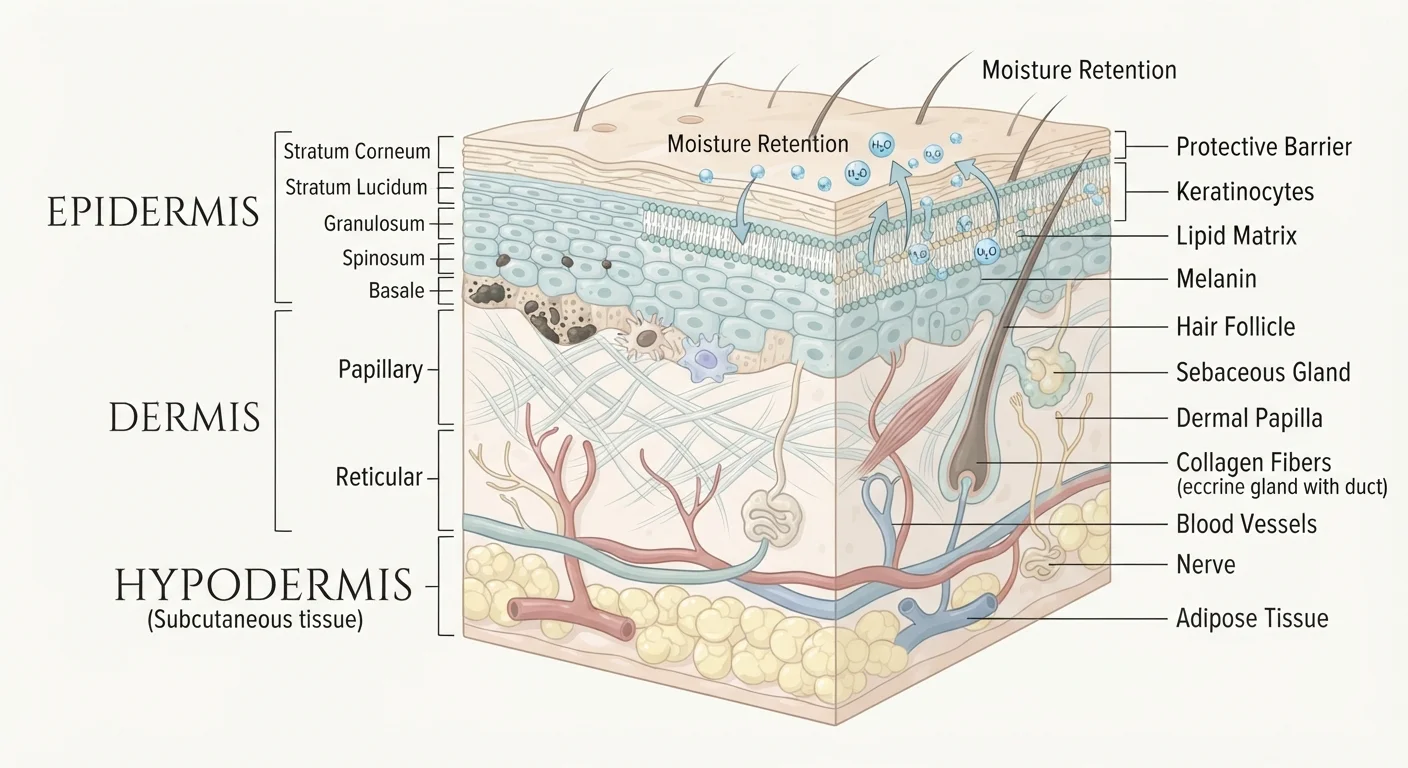
To understand the skin's role in this, it helps to understand the structure doing the work. Learn what the skin barrier is and why it breaks down - because a compromised barrier will undercut even a well-formulated moisturizer.
Assuming your skin has built a tolerance to your moisturizer.
Why it happens: The idea of "skin tolerance" to topical products is a common misconception, often reinforced by marketing language. Skin doesn't develop immunity to hydration ingredients the way the body can to certain medications.
Not adjusting your moisturizer for seasonal changes in humidity and temperature.
Why it happens: Most people find a product they like and stick with it year-round out of convenience. Winter air, heating systems, and reduced ambient humidity all dramatically increase transepidermal water loss.
Over-layering actives that disrupt the skin barrier, then blaming the moisturizer.
Why it happens: Skincare enthusiasm often leads people to stack multiple exfoliating acids, retinoids, and brightening actives simultaneously. The resulting barrier disruption makes skin harder to hydrate effectively.
Applying moisturizer at the wrong time in the routine - or on fully dry skin.
Why it happens: Many people apply moisturizer as an afterthought, sometimes long after cleansing, when skin has already lost surface moisture to evaporation.
Ignoring how changes to your cleanser can affect moisture retention downstream.
Why it happens: Cleansers are often treated as neutral, when in fact harsh or high-pH cleansers strip the skin's natural oils and disrupt its acid mantle - making it much harder for any moisturizer to compensate.
How to Actually Reassess Your Routine
Rather than starting over with new products, work through the likely causes systematically. Start with timing: has anything in your environment or life changed since the moisturizer stopped feeling effective? Seasonal transitions are an obvious trigger - a lighter lotion that worked in summer often can't keep up with dry winter air.
~30-50%
Drop in skin hydration in dry winter months
Dermatology research consistently shows significant reductions in skin surface hydration levels during low-humidity winter conditions compared to summer.
2-4 weeks
Time needed to assess a routine change fairly
Skin cell turnover averages roughly 28 days in younger adults, meaning meaningful improvements from routine changes often take at least two to four weeks to become visible.
Next, audit what you're layering. Actives like retinoids, exfoliating acids, and vitamin C can sensitize the skin over time, leaving it in a reactive state that makes even gentle moisturizers feel insufficient. Pulling back on actives for a week or two can clarify whether product interactions are the issue.
Finally, consider whether you're applying moisturizer correctly. On damp skin - right after cleansing, before it fully dries - most moisturizers absorb more effectively. This single adjustment makes a measurable difference for many people without requiring any new products at all.
Don't Over-Exfoliate While Troubleshooting
When moisturizer feels ineffective, some people add exfoliating steps thinking buildup is the issue. This can worsen a compromised barrier and make skin significantly more reactive. If your skin feels tight, stings, or looks red after applying your usual products, pull back on all actives and focus on gentle, supportive care until it settles. If irritation persists, consult a licensed dermatologist.
Consistent habits in skincare, much like in health, tend to outperform dramatic overhauls. If you're tempted to scrap your routine entirely, consider why consistency tends to outperform intensity across long-term routines of any kind.