How Each Type Actually Works
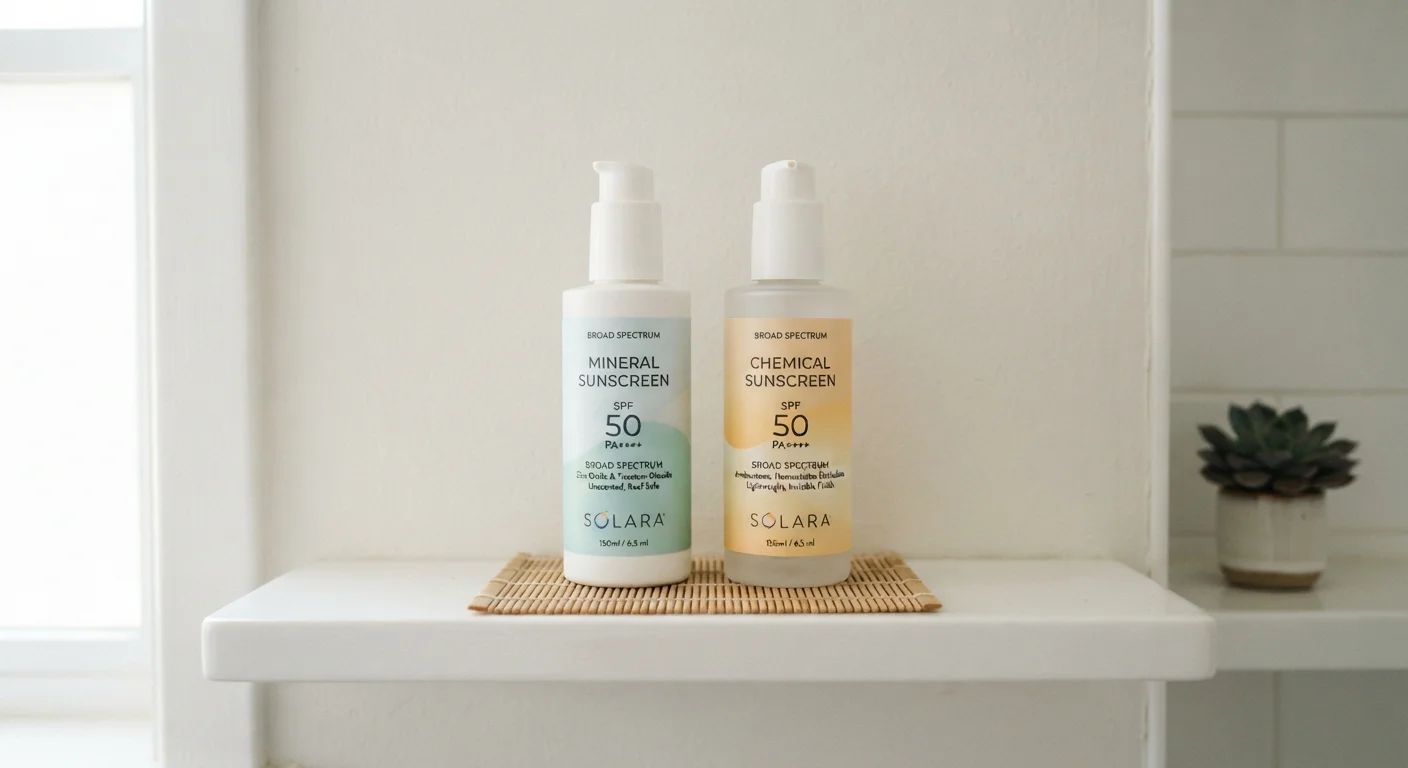
The core difference between chemical and mineral sunscreens isn't about strength - it's about mechanism. Understanding this helps you shop smarter and use sunscreen more effectively.
Chemical sunscreens contain organic (carbon-based) filter compounds such as avobenzone, octinoxate, homosalate, or oxybenzone. When UV radiation hits these molecules, they absorb the energy and release it as a small amount of heat. The process is essentially photochemical - a reaction happens inside the product, triggered by sunlight.
Mineral sunscreens use inorganic physical filters - zinc oxide, titanium dioxide, or both - that form a barrier on the skin's surface. Rather than absorbing UV, they scatter and reflect it. This is why mineral formulas have historically been called "physical" sunscreens, though the FDA has moved away from that terminology in its regulatory guidance.
One practical implication: chemical sunscreens typically require about 15-20 minutes after application before they reach full efficacy, since the filters need to bind to skin. Mineral sunscreens are generally considered effective immediately after application. For both types, what the SPF number means on the label is the same regardless of filter type.
| Criterion | Chemical Sunscreen | Mineral Sunscreen |
|---|---|---|
| Protection mechanism | Absorbs UV, releases as heat | Reflects and scatters UV |
| Key active ingredients | Avobenzone, oxybenzone, octinoxate | Zinc oxide, titanium dioxide |
| Time to effectiveness | ~15-20 min after application | Effective immediately |
| Texture and finish | Lightweight, sheer, invisible | Can leave white cast; tinted options available |
| Sensitive skin tolerance | Varies; some filters may irritate | Generally well-tolerated |
| Wearability under makeup | Blends easily, minimal residue | May require blending; tinted versions help |
| Reef and environmental concerns | Some filters flagged for aquatic impact | Widely considered reef-safer |
Skin Compatibility and Common Concerns
Skin type is often the most decisive factor when choosing between these two categories.
Sensitive skin: Mineral filters - particularly zinc oxide - have a long track record of being well-tolerated. They don't penetrate skin in the same way chemical filters do, which makes them a common recommendation for people prone to redness, rosacea, or contact reactions. Chemical filters, by contrast, can occasionally trigger irritation, especially formulas relying on older actives like oxybenzone.
Oily or acne-prone skin: Some people find chemical sunscreens - especially thick or heavily emollient formulas - feel comedogenic. Mineral options, particularly lightweight or gel-based mineral formulas, may feel less occlusive. That said, formulation matters enormously; the base of a sunscreen (the emulsifiers, silicones, and humectants) often affects breakouts more than the active filter itself.
Darker skin tones: Traditional mineral sunscreens leave a visible white cast that is more pronounced on deeper skin tones. Modern tinted mineral formulas have improved significantly, using iron oxides to reduce cast and provide additional protection against visible light. If you're evaluating ingredient lists more broadly, decoding skincare labels can help you identify what's actually in the formula.
FDA Regulatory Status of Sunscreen Filters
The U.S. Food and Drug Administration has been reviewing sunscreen active ingredients under its monograph process. As of its most recent published guidance, only zinc oxide and titanium dioxide have been categorized as Generally Recognized as Safe and Effective (GRASE). Several chemical filters remain under review, pending additional safety data. This does not mean chemical sunscreens are unsafe to use - it means the regulatory evaluation is ongoing. Consult a dermatologist if you have specific ingredient concerns.
Everyday Use: Texture, Application, and Reapplication
Beyond skin type, daily wearability shapes which formula most people stick with consistently - and consistency matters far more than formula type for actual sun protection.
Chemical sunscreens are typically thinner, more cosmetically elegant, and easier to apply to large areas of skin quickly. They tend to sit well under makeup without pilling and are widely available in SPF-incorporated moisturizers and foundations. For daily commuters or office workers who want protection without a skincare step that feels burdensome, this is often the path of least resistance.
Mineral sunscreens have improved substantially in texture over the past decade. Lightweight mineral lotions, fluid mineral formulas, and mineral powders designed for reapplication over makeup now offer more practical options than older, chalky formulations. They can require more blending effort, particularly on the face, but for people who prefer them for skin or ingredient reasons, the cosmetic gap has narrowed.
2 hrs
Standard sunscreen reapplication interval
The American Academy of Dermatology recommends reapplying sunscreen at least every two hours during sun exposure, regardless of formula type.
1 oz
Recommended full-body application amount
Most dermatology guidance suggests about one ounce - roughly a shot glass - of sunscreen to adequately cover an adult's entire body.
Regardless of formula, both types require reapplication roughly every two hours of sun exposure, and sooner after heavy sweating or swimming. No sunscreen formula - chemical or mineral - eliminates the need for reapplication.