
Why Recovery Signals Matter
Exercise, work, and daily stress all place demands on your body. Recovery is the process that allows muscles to repair, energy systems to recharge, and your nervous system to reset. Without adequate rest, those demands accumulate into a deficit that shows up in predictable, recognizable ways.
Most people are taught to push through fatigue - but not all tiredness is a cue to keep going. Some signals are your body's way of asking for a deliberate pause. Learning to distinguish healthy effort from harmful overreaching is one of the most practical skills in long-term health management.
This article is general health information and education, not medical advice. If you are experiencing persistent or severe symptoms, consult a qualified healthcare professional.
Common Signs You May Need More Recovery Time
The following signals don't confirm a diagnosis - they are patterns worth paying attention to. If several apply consistently, it may be time to reassess your rest habits.
Persistent Fatigue That Sleep Doesn't Fix
Feeling tired after a poor night is expected. But waking up unrefreshed day after day - despite adequate sleep hours - often points to cumulative physical or mental strain. Sleep quality matters as much as sleep duration, and even good sleep can't fully compensate for chronic overtraining or stress load.
Stalled or Declining Performance
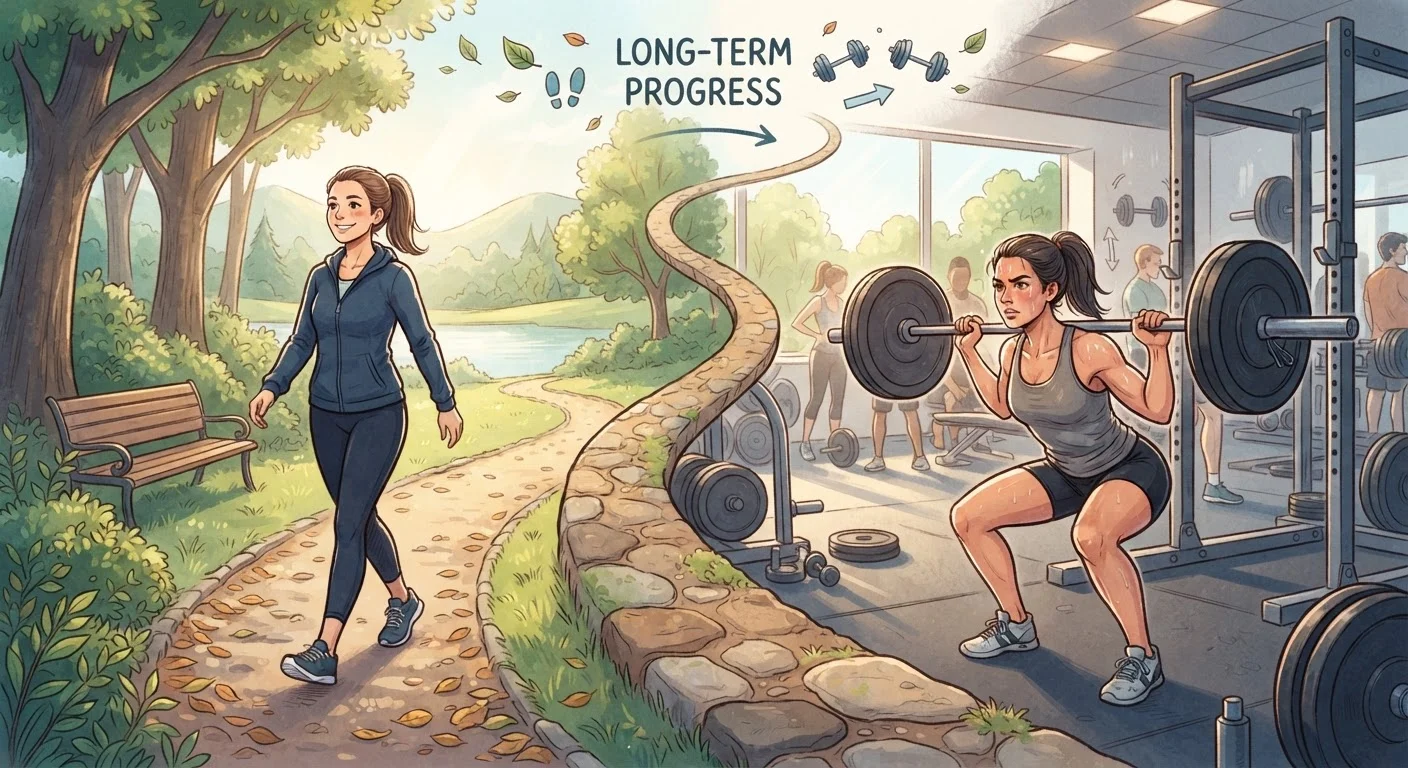
When workouts that once felt manageable suddenly feel harder, or when your strength, speed, or endurance plateaus or drops without a clear reason, inadequate recovery is a common culprit. This is sometimes called overreaching - a state where training stress outpaces the body's ability to adapt. See how consistency and intensity interact for sustainable progress.
Unusual Muscle Soreness or Joint Discomfort
Delayed onset muscle soreness (DOMS) after a new workout is normal. But soreness that lingers beyond 72 hours, spreads to joints, or appears without a matching spike in activity suggests your tissues aren't recovering between sessions.
Mood Changes, Irritability, or Low Motivation
Recovery affects mental state as directly as physical performance. Unexplained irritability, low drive, difficulty concentrating, or a flat emotional tone can all reflect under-recovery. These mood shifts often overlap with stress load - recognizing stress signals can help you distinguish the two.
Elevated Resting Heart Rate
For people who track it, a resting heart rate that runs noticeably higher than your baseline - for several days in a row - can indicate that your cardiovascular system is still under strain from recent exertion or illness.
Disrupted Sleep Despite Feeling Tired
Paradoxically, overtraining or chronic stress can make sleep harder to initiate or maintain, even when exhaustion is obvious. If this pattern sounds familiar, a structured wind-down routine may help signal your nervous system to downshift.
Overreaching
A short-term state in which training volume or intensity exceeds the body's ability to adapt, resulting in declining performance and increased fatigue. It typically resolves with adequate rest.
DOMS (Delayed Onset Muscle Soreness)
Muscle aching or stiffness that appears 24-72 hours after unfamiliar or high-intensity physical activity. It is a normal response to mechanical stress on muscle fibers.
Resting Heart Rate
The number of times your heart beats per minute when you are at complete rest. A sustained rise above your personal baseline can indicate ongoing physical stress or illness.
Recovery Deficit
An accumulated shortfall in rest relative to physical and mental demands, leading to compounding fatigue, mood changes, and impaired performance over time.
What to Do When You Notice These Signs
Recognizing the signals is the first step. Acting on them constructively is the second.
- Scale back intensity, not consistency. Taking a lighter week doesn't mean stopping altogether. Reducing load while maintaining movement frequency can preserve habit without deepening the deficit.
- Audit your habits holistically. Recovery isn't only about sleep - nutrition, hydration, and stress levels all affect how quickly your body bounces back. A daily wellness audit can surface gaps you may have overlooked.
- Track patterns, not single days. One rough workout or one poor night doesn't signal a problem. Look for patterns across a week or more before drawing conclusions.
- Know when to seek professional input. If persistent fatigue, mood changes, or performance decline continue beyond a few weeks of intentional rest, speak with a healthcare provider. These symptoms can occasionally indicate conditions - such as thyroid dysfunction or anemia - that require evaluation rather than lifestyle adjustment alone.
Recovery Looks Different for Everyone
Age, fitness level, sleep quality, nutrition status, and life stress all affect how long recovery takes. There is no single universal timeline. What matters is learning your own baseline and noticing meaningful departures from it. If you have a chronic condition or are in a special population (such as pregnancy or older adulthood), consult your healthcare provider before adjusting exercise or rest routines.