What Each Practice Actually Involves
Meditation and deep breathing are often mentioned in the same breath (so to speak), but they operate through distinct mechanisms and ask different things of the practitioner.
Deep breathing - sometimes called diaphragmatic breathing, controlled breathing, or breathwork - involves deliberately slowing and deepening your breath to engage the body's parasympathetic nervous system. This is the branch of the autonomic nervous system responsible for the "rest and digest" response. Techniques like box breathing (inhale for 4 counts, hold, exhale, hold) or the 4-7-8 pattern are straightforward to learn and require no equipment. The physiological response is relatively rapid: slower breathing can help lower heart rate and blood pressure within minutes.
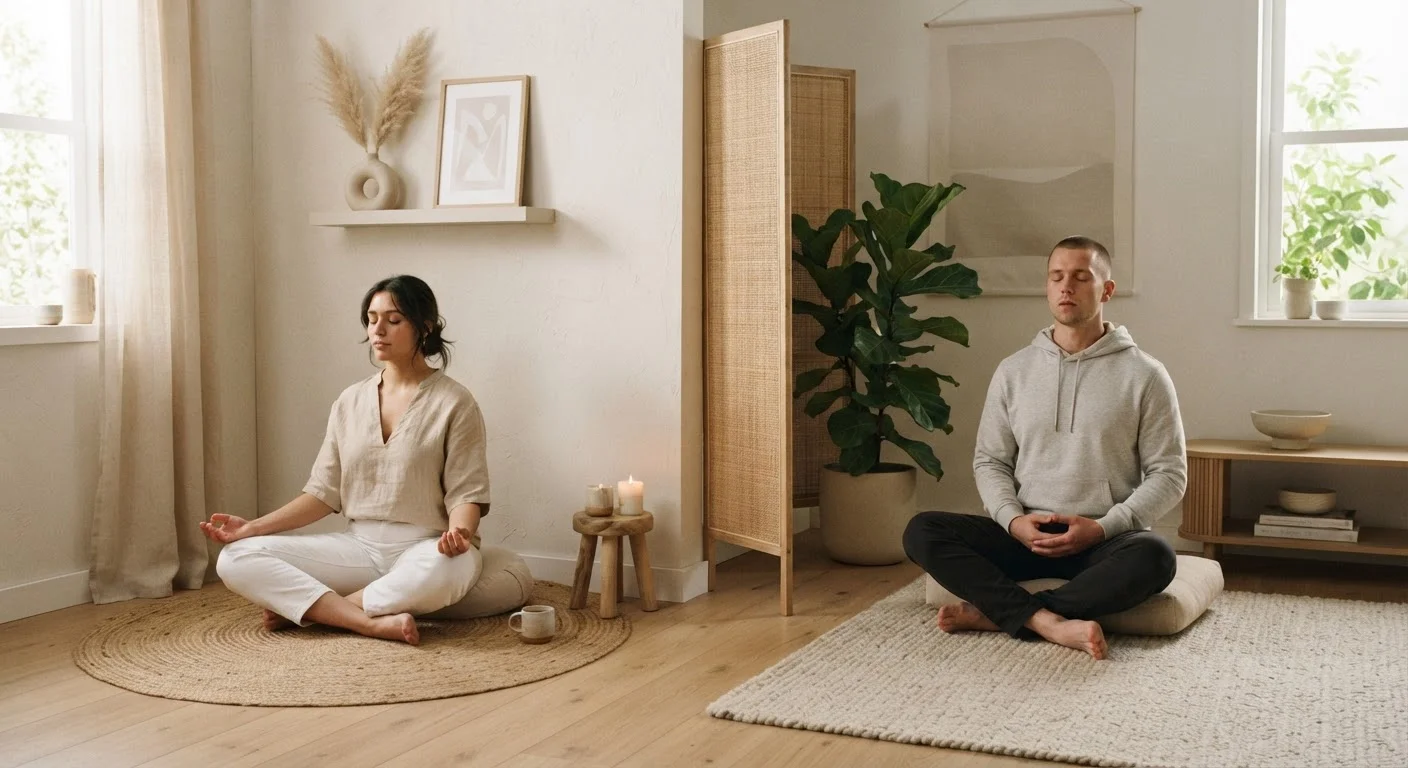
Meditation is a broader category of mind-training practices. Most forms - including mindfulness meditation, focused attention, and body scan - involve sustained, intentional awareness over a period of time, typically 10 to 30 minutes. Unlike deep breathing, the goal is not a specific physical outcome in the moment, but the gradual development of mental skills: attention control, emotional regulation, and nonjudgmental awareness. Many meditation styles incorporate breath as an anchor point, which is why the two practices overlap and are often confused.
Understanding this distinction matters because it shapes which tool is right for which situation - and for which person.
How the Research Compares
Both practices have meaningful bodies of research behind them, though the depth of evidence varies.
| Criterion | Meditation | Deep Breathing |
|---|---|---|
| Time needed per session | 10-30 minutes typical | 2-5 minutes effective |
| Learning curve | Moderate; takes weeks to feel natural | Low; learnable in minutes |
| Immediate stress relief | Limited; benefits build over time | Strong; rapid physiological response |
| Long-term resilience | Strong evidence with consistent practice | Moderate; depends on daily repetition |
| Equipment or setting | Quiet space; optional app or guide | None required; works anywhere |
| Incorporates the other? | Often uses breath as anchor point | Can serve as entry point to meditation |
Research on deep breathing consistently shows acute effects on physiological stress markers - including reduced cortisol response, lower heart rate, and improved self-reported calm. Studies have examined techniques like slow-paced breathing in clinical and everyday settings, finding benefits across populations including people managing anxiety, hypertension, and work-related stress. The effects are real and relatively fast, but they are also short-lived without repeated use.
Research on meditation suggests more durable changes with sustained practice. Neuroimaging studies have observed structural differences in the brains of long-term meditators, particularly in areas associated with attention and emotional processing. Mindfulness-based programs (such as Mindfulness-Based Stress Reduction, or MBSR) have been studied extensively and are linked to reductions in anxiety, depression symptoms, and perceived stress - though benefits typically emerge over weeks, not days.
8 weeks
Typical MBSR program length for measurable stress reduction
Mindfulness-Based Stress Reduction programs studied at institutions including Harvard Medical School generally run 8 weeks, with participants showing reduced anxiety and stress symptoms.
~5-6 breaths/min
Slow breathing pace linked to HRV benefits
Research published in peer-reviewed cardiovascular journals suggests breathing at roughly 5-6 breaths per minute can improve heart rate variability, a marker of nervous system balance.
It's worth noting that study quality varies across both fields, and individual results will differ. Neither practice is a substitute for professional mental health treatment when that is warranted. If stress is consistently affecting your daily life, speaking with a healthcare provider is the right first step.
Practical Fit: Time, Skill, and Lifestyle
Science aside, a practice only helps if you actually use it. Here's how the two compare on real-world usability.
Time commitment: Deep breathing wins for brevity. A meaningful session can be as short as two to three minutes. Meditation generally benefits from longer, uninterrupted sessions - most evidence-based programs recommend 20-30 minutes daily, though even 10 minutes has shown value in some research.
Learning curve: Deep breathing is nearly immediate to learn. Meditation takes more patience; the mind wanders, and building the skill of returning attention without frustration is part of the practice - one that often feels unrewarding early on.
Flexibility: Deep breathing can be done almost anywhere without anyone noticing - a key advantage in busy American work environments. Meditation typically requires a quiet space and a degree of privacy that not everyone can access during the day.
Consistency tends to matter more than intensity in building any wellness habit. A two-minute breathing routine done daily is likely to provide more benefit than a 30-minute meditation session done once a month. Consider reviewing your current daily wellness habits to see where either practice might realistically fit.
These Practices Aren't Mutually Exclusive
Many people find that deep breathing serves as an accessible entry point that gradually builds interest in longer meditation practice. Equally, experienced meditators often use breathwork techniques as a quick reset during stressful moments. You don't have to choose one permanently - your needs may shift depending on the season, workload, or life circumstances.
Chronic stress can disrupt even the best-intentioned routines - so be realistic about what you can sustain. Starting small with one practice consistently beats ambitious plans that fade after a week.