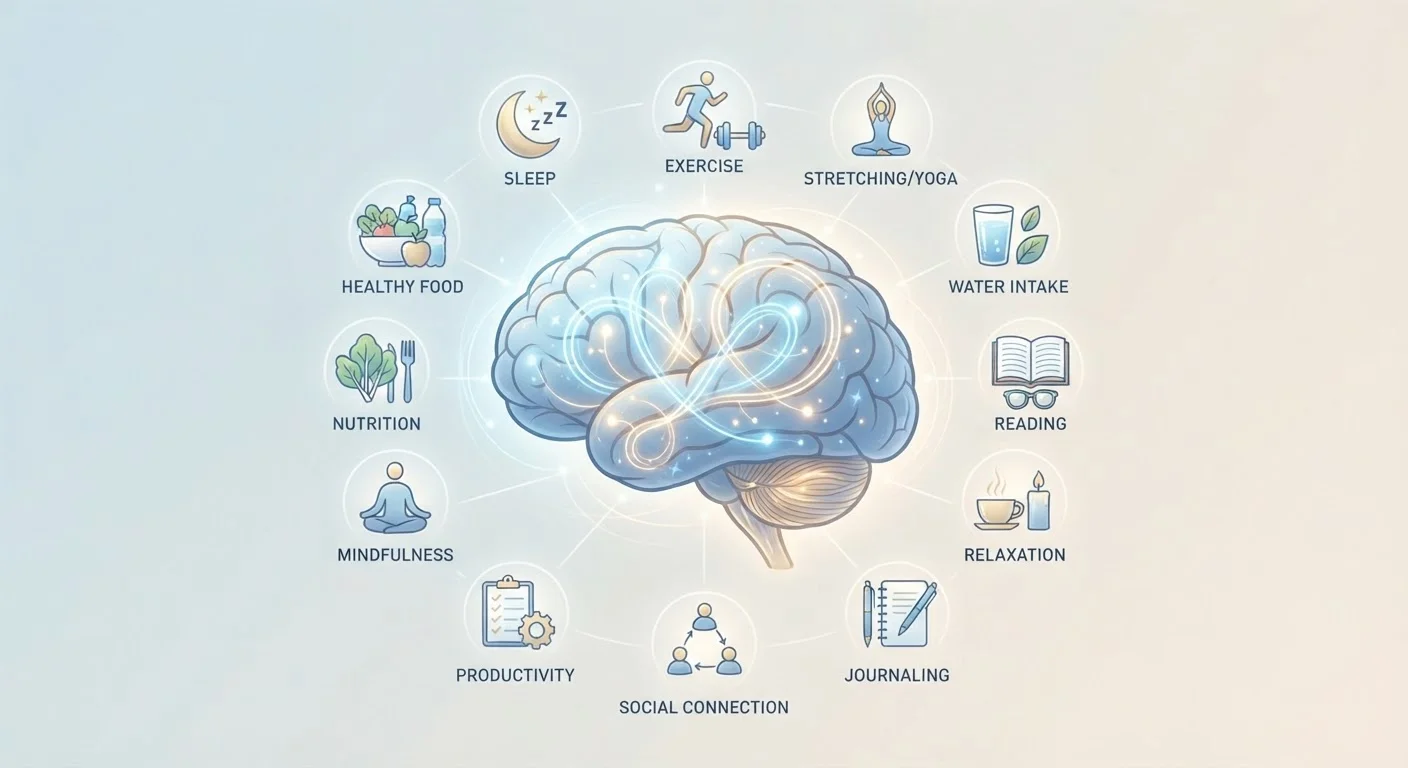

Resilience Is Built, Not Born
Many people assume emotional resilience is something you either have or you don't - a personality trait locked in early in life. Research in behavioral science and psychology tells a different story. Resilience is dynamic, meaning it can grow or erode depending on the conditions and habits that surround it.
This matters practically, because it means everyday choices - how you sleep, how you move, who you talk to, and how you process difficult moments - are not just self-care routines. They are the actual building blocks of your capacity to handle adversity without being overwhelmed by it.
Understanding why certain habits stick can help you approach resilience-building more strategically. The habits below are grounded in behavioral research and are accessible to most people as starting points - not prescriptions.
Resilience Habits Work Best in Combination
No single habit on this list is a complete solution for emotional wellbeing. These practices work synergistically - sleep supports the effectiveness of mindfulness; social connection reinforces the benefits of routine; movement enhances sleep quality. Think of them as a system rather than a menu of independent options. Building even two or three consistently is more valuable than doing all six sporadically.
Habits That Research Connects to Greater Emotional Resilience
Prioritize Consistent, Quality Sleep
Sleep is one of the most well-documented influences on emotional regulation. During sleep, the brain processes emotional experiences and consolidates memory - functions that are directly relevant to how we respond to stress the next day. Disrupted or insufficient sleep tends to heighten reactivity and reduce the capacity for measured, calm responses.
Behavioral research consistently links regular sleep schedules - going to bed and waking at roughly the same time - with better mood stability and lower perceived stress. The connection is so direct that sleep and mental health are deeply intertwined at a neurological level. Protecting your sleep is not indulgent; it is foundational.
Consistent sleep schedules support the brain's ability to regulate emotion and process stress.
Move Your Body Regularly - In Ways You Enjoy
Physical movement influences brain chemistry in ways that directly support emotional wellbeing. Regular aerobic activity is associated with reduced anxiety, improved mood, and lower baseline stress responses. The mechanism involves neurotransmitters like serotonin and norepinephrine, as well as the body's stress-response systems becoming more efficient over time.
Critically, the type of movement matters less than consistency and enjoyment. A daily walk, dancing in your kitchen, or a recreational sport can all contribute. Exercise you dread is harder to sustain. Choosing movement that fits your life is part of what makes it work. For ideas on anchoring movement to your existing day, habit stacking is a practical approach supported by behavioral research.
Movement you genuinely enjoy is far more sustainable - and more likely to strengthen resilience - than exercise you force.
Maintain Meaningful Social Connection
Human beings are wired for social connection, and research consistently shows that perceived social support is one of the strongest buffers against the psychological impact of stress. This doesn't require a large social network - depth of connection matters more than breadth. Even a few reliable, trusting relationships provide significant resilience benefits.
Regular, low-stakes contact - a text check-in, sharing a meal, a brief phone call - maintains those connections without requiring large time investments. When someone in your life is struggling, knowing how to be present for them also deepens bonds. Showing up for a loved one who is struggling is itself a resilience-building act for both people involved.
A few deep, trusting relationships provide more resilience support than a large but shallow social network.
Practice Brief Daily Reflection or Mindfulness
Mindfulness - the practice of intentionally paying attention to the present moment without judgment - has a substantial and growing body of research behind it. Regular practice, even in short sessions, is associated with reduced rumination, lower perceived stress, and improved ability to respond rather than react to emotional triggers.
This doesn't require formal meditation. Brief reflection practices - like writing three sentences about your day, pausing for a few slow breaths before responding to a stressful message, or simply noticing your surroundings on a walk - build the same underlying skill: the ability to observe your emotional state rather than be controlled by it.
Even brief daily reflection trains the brain to respond to stress more deliberately rather than reactively.
Build Routines That Create a Sense of Predictability
Uncertainty is one of the most consistent psychological stressors. Routine counteracts this by creating predictable anchors throughout the day - moments that your nervous system can rely on regardless of what else is happening. This predictability reduces background stress and frees cognitive and emotional resources for handling genuine challenges.
The routines themselves can be simple: a consistent morning ritual, a regular mealtime, an end-of-day wind-down sequence. What matters is that they are reliable. Research into why habits fall apart early often points to a lack of environmental structure - which is exactly what deliberate routine provides.
Predictable daily routines reduce background stress by giving your nervous system reliable anchors to return to.
Limit Chronic Exposure to News and Distressing Content
Staying informed is reasonable and important, but habitual, passive scrolling through distressing news or social media content has been linked to elevated anxiety and a phenomenon sometimes called "vicarious stress" - feeling the emotional weight of events you are not directly experiencing. This can wear down emotional reserves over time.
Research suggests that intentional, time-limited news consumption - checking once or twice daily rather than continuously - is associated with better emotional outcomes without meaningful reduction in actual awareness. This is about managing exposure thoughtfully, not avoiding reality. It's a small behavioral adjustment with real downstream effects on emotional steadiness.
Intentional, time-limited news consumption protects emotional reserves without meaningfully reducing your awareness of the world.
Start With One Habit, Not Six
It can be tempting to overhaul multiple routines at once when motivation is high. Behavioral science consistently suggests a more effective approach: choose one habit, practice it until it feels automatic, then add another. Small, compounding changes are more durable than ambitious plans that collapse under the weight of daily life. See habit stacking as a practical method for adding new behaviors without overwhelm.
Building resilience through habit is an ongoing process, not a one-time fix. If you're unsure whether your current routines are supporting your mental wellness, a daily wellness audit can help you identify gaps. And if you find that stress itself is making it hard to build new habits, it's worth exploring how chronic pressure disrupts routine - and what evidence-informed strategies can help.
This article is for general informational and educational purposes only and is not a substitute for professional mental health advice, diagnosis, or treatment. If you are experiencing significant emotional distress, please speak with a qualified healthcare or mental health professional.